
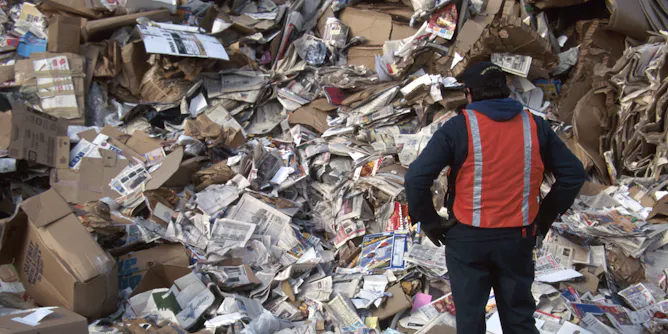
New research shows that Americans may have absorbed public messaging about the importance of recycling too well.
Articles on US Environmental Protection Agency
Displaying 41 - 60 of 92 articles
In Sackett v. EPA, a suit filed by two homeowners who filled in wetlands on their property, the Supreme Court has drastically narrowed the definition of which wetlands qualify for federal protection.
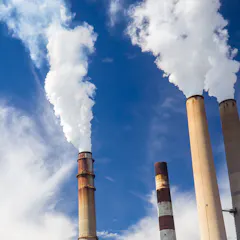
Fossil fuel power plants can avoid most emissions by capturing carbon dioxide and pumping it underground. But to be a climate solution, that carbon has to stay stored for thousands of years.
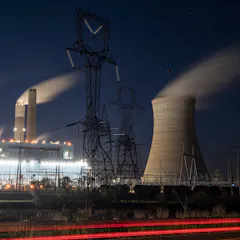
After the Supreme Court overturned the Obama administration’s strategy for reducing power plant carbon emissions in 2022, the Biden administration is taking a narrower but still ambitious approach.
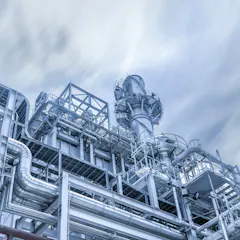
Carbon capture and storage could keep fossil fuel power plants running under newly proposed federal emissions standards, but it faces high hurdles.
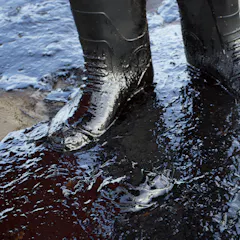
A new study reveals wide disparities among state-issued Clean Water Act fines, and even among federal fines from regions to region. A law professor explains why it may be illegal.

The Biden administration is finalizing the first federal limits on two compounds, PFOA and PFOS, in drinking water. These so-called ‘forever chemicals’ have been linked to numerous health effects.

The Supreme Court opens its 2022-2023 session with a high-profile case that has major implications for both wildlife and landowners.
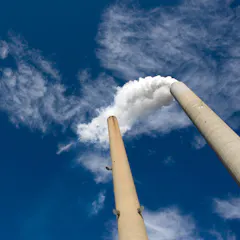
In a 6-3 ruling, the Supreme Court held that an Obama administration plan to regulate carbon emissions from power plants exceeded the power that Congress gave to the Environmental Protection Agency.
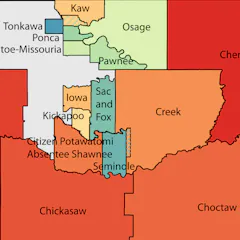
Local governments in Oklahoma are adapting to a 2020 Supreme Court ruling, but state officials have chosen a different path.
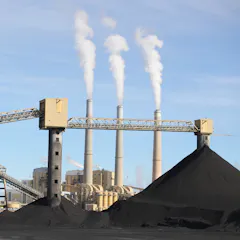
West Virginia v. EPA could be the opportunity that conservative justices have been seeking to curb federal power.
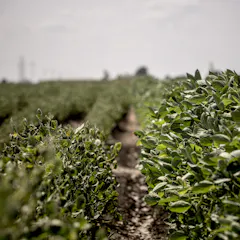
Farmers are stuck in a chemical war against weeds, which have developed resistance to many widely used herbicides. Seed companies’ answer – using more varied herbicides – is causing new problems.
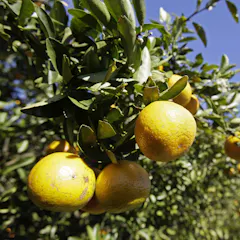
What kind of evidence does it require to get a widely used chemical banned? A professor of medicine and former state regulator explains how the case for chlorpyrifos as a threat to public health developed.
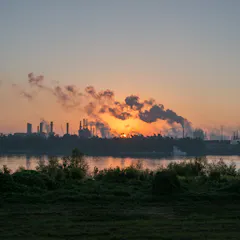
The US environmental justice movement dates back to the early 1980s, but federal support for it has been weak and inconsistent. Here are four things Biden’s EPA can do to improve that record.
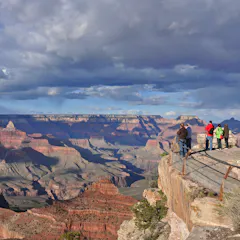
The Trump administration has used executive orders, deregulation and delays to reduce environmental regulation. Biden administration officials will use many of the same tools to undo their work.
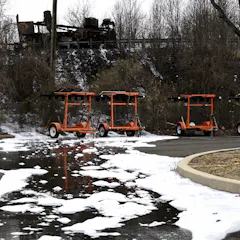
PFAS chemicals are toxic, widespread and persistent in the environment, and the federal government has been slow to regulate them. A scientist explains why evaluating them one by one isn’t working.
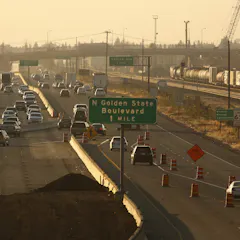
A new study shows that while fine particle air pollution has declined nationwide over the past 40 years, the health and environmental benefits haven’t been shared evenly.

After a 5-year review, the EPA is leaving US standards for fine particle air pollution unchanged, even though recent studies suggest that tightening them could save thousands of lives yearly.
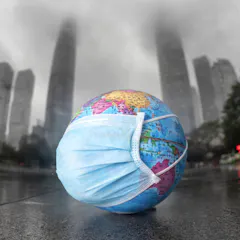
Thousands of Americans took part in the first Earth Day 50 years ago. What has changed since then?

A new study takes an innovative approach to reducing fine particle air pollution and spotlights key sources: factories that burn coal and oil, petrochemical plants and burning wood for home heating.
Top contributors
-

Professor of Environmental Engineering, North Carolina State University
-
Professor of Law Emeritus, Vermont Law & Graduate School
-
Visiting Professor of Law and Environmental Affairs, Indiana University
-
Professor of Law, University of California, Davis
-
Executive Director, Sabin Center for Environment and Sustainability, Wake Forest University
-
Professor of Law and Associate Dean for International Affairs, Wake Forest University
-
Professor of Law, University of Kansas
-
Associate Professor of Civil and Environmental Engineering, University of California, Davis
-
Associate Professor of Public Policy and Economics, University of Virginia
-
Professor of Environmental Law, University of Maryland
-
Professor of Environmental Sciences and Engineering, University of North Carolina at Chapel Hill
-
Clinical Professor of Medicine, University of California, San Francisco
-
Assistant Professor of Economics, University of Virginia
-
Associate Professor of Preventive Medicine, University of Southern California
-
Lynton K. Caldwell Professor of Public Affairs, Indiana University