
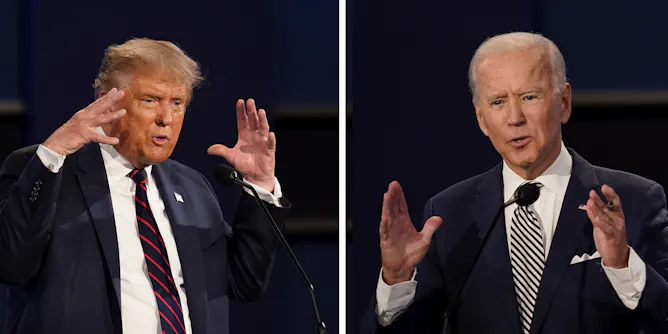
The U.S. presidential election is again serving as a symptom and a symbol of a troubled society. Whatever the outcome, history suggests anything but a quick resolution to deeply rooted problems.
Articles on US elections
Displaying 141 - 160 of 273 articles
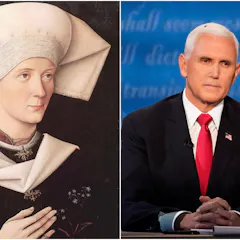
Flies have long held symbolic meaning in the history of art. In portraits made in Renaissance Europe, the presence of a fly symbolizes the transience of human life.
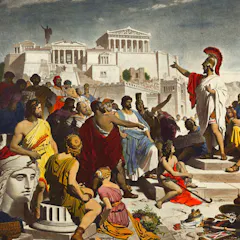
To overhaul an election redistricting process tainted by gerrymandering, Michigan has adopted a governance mechanism prominent 2,500 years ago in ancient Athens, the birthplace of democracy.
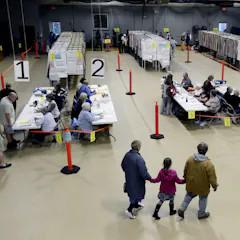
An army of mostly older, white volunteers run America’s voting sites. They’re reluctant to work during a pandemic. So new recruits are signing up to run the polls, for better and for worse.
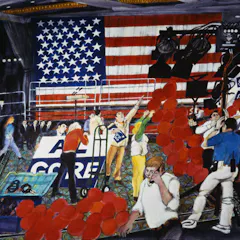
No, it’s not the TV news networks. The American election certification process is a lot more complicated than that.
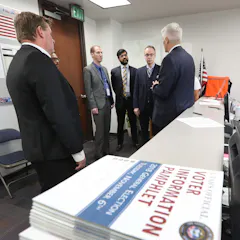
Many US states forbid foreign observers to monitor their elections, but as the 2020 presidential election nears, a poll finds broad public support for international election observers.
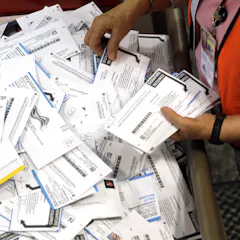
Oregon’s experience shows that mail-in voting can be safe and secure, providing accurate and reliable results the public can be confident in.

The United States Postal Service plays a vital role in US civic life, one that helped shape American society more than 250 years ago and continues to characterize it today.
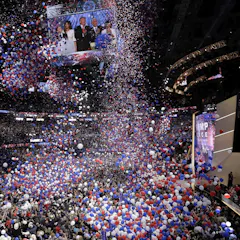
This year’s technological adaptations may signal a permanent shift in the way nominating conventions meet and the way voters watch them – but it’s not the first time.
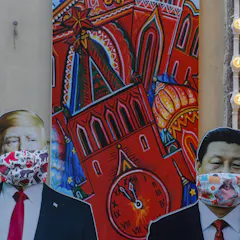
From the US kicking out Huawei to China’s Hong Kong crackdown, there is a lot standing in the way of happy east-west relations just now.
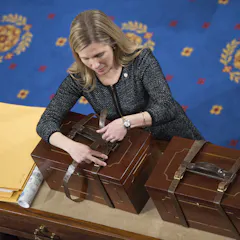
With a Supreme Court ruling rejecting one of the founders’ two reasons for creating the Electoral College, only one reason remains: racism.
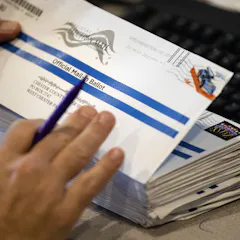
Voting by mail is rarely subject to fraud, does not give an advantage to one political party over another and can in fact inspire public confidence in the voting process.
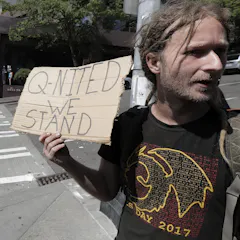
Believers of QAnon fringe conspiracy theories have moved into the mainstream political arena, including several who will be running as Republican candidates in the U.S. elections this fall.
Electors may not vote their consciences, which means the Electoral College will continue to operate how most Americans think it does.
Many Americans are surprised to learn that Electoral College members do not necessarily have to pick the candidate their state’s voters favored. Or do they?
There are many more ways to elect a president than the US method – and several alternatives beyond the popular vote.
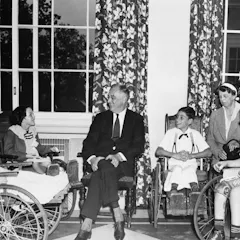
Franklin Delano Roosevelt’s personal battle with polio, and his steady hand while overseeing a national eradication campaign, highlights decisive leadership against a virus that terrified America.
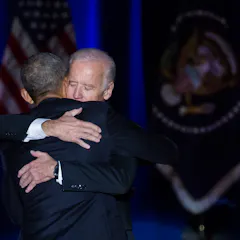
In his endorsement of Biden, Obama gave his consent for his former running mate to go beyond the policy platform they built. It also freed Obama to use his rhetorical powers in the upcoming election.
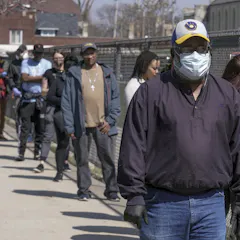
The Supreme Court under Chief Justice John Roberts has reversed its decadeslong practice of protecting voters’ rights and removing barriers to casting ballots.
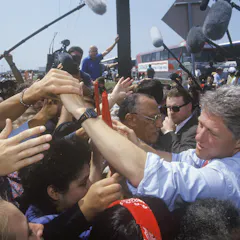
Coroanvirus has ended politics as normal. What will campaigning look like without handshaking, high fives and the kissing of babies?
Top contributors
-

Associate Professor of Political Science, Westminster College
-
Professorial Fellow, University of Canberra
-
Professor and Co-Director of the Center for an Independent and Sustainable Democracy; School of Public Affairs, Arizona State University
-
Executive Director of the Sine Institute of Policy and Politics, American University
-
Professor Emeritus of Communication, American University School of Communication
-
Lecturer in International Studies and Politics, Ulster University; Queen's University Belfast
-
Lead Academic Teacher - Politics & Social Science (Swinburne Online), Swinburne University of Technology
-
Professor of American Civics, University of Tennessee
-
Professor, Department of Government, University of Essex
-
Associate Professor of Political Science, Clarkson University
-
Associate Professor and Director of the Centre on US Politics, UCL
-
Law Professor in Constitutional Law, Criminal Law, Election Law, University of Memphis
-
Professor of Government, American University School of Public Affairs
-
Honorary Reader in MIgration and Politics, University of Kent
-
Professor of Human Centered Design & Engineering, University of Washington