

There are opportunities at every level of the US energy market to save consumers money – if governments, companies, communities and individuals choose to act.
Articles on US Department of Energy
Displaying all articles
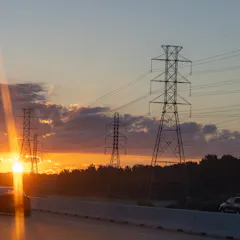
Many of the canceled grants were investments in the science and infrastructure necessary to keep the lights on in coming years, especially when the grid is under stress.

The 2009 finding that greenhouse gases endanger public health underpins many U.S. climate policies. A new report meant to challenge it may run afoul of several laws.

When presidential administrations turn over, funding levels and project priorities change. A look at one specific government office demonstrates how these shifts in direction waste time and money.
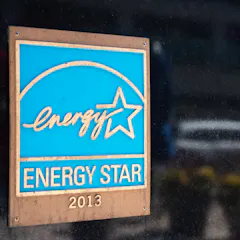
The small blue Energy Star label has become one of the most recognizable environmental certifications in the US.

The Energy Department has a dual mission with a heavy science focus and manages large, expensive programs, many of which are behind schedule and over budget.

Years of research about the people who work in the federal government finds that most of them are devoted civil servants who are committed to civic duty without regard to partisan politics.
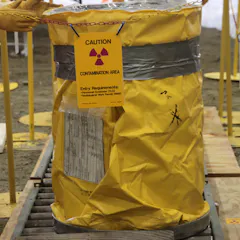
Nuclear weapons production and testing contaminated many sites across the US and exposed people unknowingly to radiation and toxic materials. Some have gone uncompensated for decades.
Similar arrangements already support the National Park Service, the National Institutes of Health and other federal agencies.

The Trump administration is rolling back a regulation that requires showerheads to conserve water, which saved owners an average of US$70 and nearly 3,000 gallons of water yearly per showerhead.

The Trump Whitehouse’s weaponising of words has won them many battles – but whether ‘molecules of US freedom’ are aimed at foreign buyers or domestic supporters, this marketing ploy misses the mark.

During the Cold War, the US built nuclear weapons at a network of secretive sites across the nation. Some are still heavily polluted and threaten public health today.
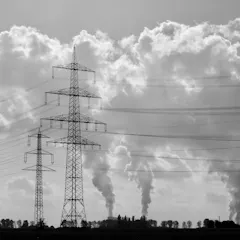
Two moves by the Trump administration signal a dramatic shift in energy policy to favor coal and nuclear, but markets forces and legal challenges mean changes could take years.
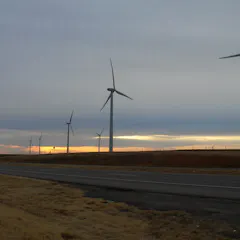
If history is a guide, policies that promote wind power expansion will lead to lower prices – potentially beating fossil fuels in the US by 2030.

Energy Secretary Rick Perry wants to know if wind and solar are compromising the reliability of the grid and hurting coal power. The answer lies in his home state of Texas.
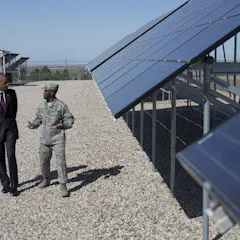
The Trump administration has the tools to slow the momentum Obama started on clean energy. Countering Trump are global market forces and state-level action.

Former Texas Gov. Rick Perry has experience with energy, but if confirmed as secretary of energy, he should get ready to learn a lot about DOE’s big jobs: nuclear security and basic science research.

A historian of science and technology says Trump team’s request for names of Department of Energy employees working on climate change recalls worst excesses of ideology-driven science in government.
Top contributors
-

Professor Emeritus of Communication, North Carolina State University
-
Associate Professor of Public Policy, Rochester Institute of Technology
-
Josey Centennial Professor of Energy Resources, The University of Texas at Austin
-
Professor, Texas A&M University
-
William J. Perry Fellow in International Security, Center for International Security and Cooperation, Stanford University
-
Research Associate, Energy Institute, The University of Texas at Austin
-
Graduate Research Assistant, The University of Texas at Austin
-
Professor of Law, Penn State
-
Professor of Sustainability, Rochester Institute of Technology
-
Senior Fellow, Belfer Center for Science and International Affairs, Harvard Kennedy School, Harvard University
-
Dean, Distinguished Professor of Law, Professor of International Affairs, Professor of Geography, Penn State
-
Professor of Public Policy, George Mason University
-
Senior Lecturer in Marketing, University of Nottingham
-
Professor of Public and Environmental Affairs Emeritus, Indiana University
-
Associate Professor of Sociology, Hamilton College