

A new report lays out steps communities can take to help their residents survive heat waves as the risk of dangerous temperatures rises.
Articles on Urban heat islands
Displaying 21 - 40 of 64 articles

Food forests are urban oases that pack a lot into small spaces, including food production, local cooling and social connections.

Very hot days in Western Sydney are typically 5 degrees hotter than parts of the city close to the coast and are becoming more common, but only in the west. Four climate drivers explain the difference.

In 2015, 6,700 premature deaths were caused by urban heat – this can be reduced by a third by planting more trees.

Australian cities remain woefully unprepared for the more extreme weather we are already seeing with climate change. But some cities overseas stand out for having developed readymade solutions.

As the FIFA World Cup kicks off, researchers take a look at the impact of climate change on the future of soccer.
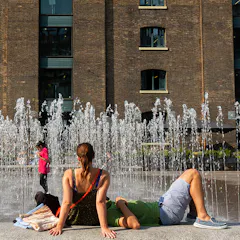
After living one of the hottest summers in European history, we have to look to the population suffering these temperatures. How does heat affect our physical and mental health?

Well-designed residential developments with abundant tree cover can help protect cities against urban heat and flooding.
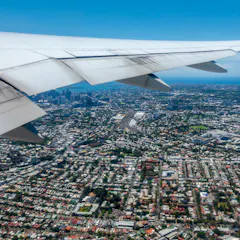
Seen from above, parts of our cities now have very little green space, and we’re losing the green corridors that enable wildlife to move between the remaining urban habitats.

With decades of images and data from the same locations, these satellites can show changes over time, including deforestation, changes in waterways and how loss of trees corresponds to urban heat.
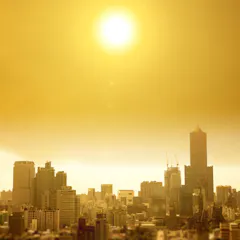
North America’s 2021 extreme heat event should compel governments to scale innovations from leading cities and countries to advance resilient, restorative and renewable cities.
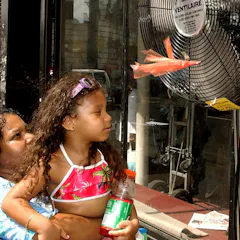
Extreme heat waves are putting lives in danger, with some of the hottest urban neighborhoods 10 degrees hotter or more than their wealthier neighbors. Often, these are communities of color.
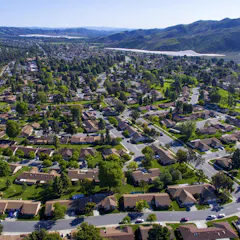
During heatwaves, the highest temperatures are often found in urbanized areas. Small green spaces are often overlooked as a way to cool urban areas.
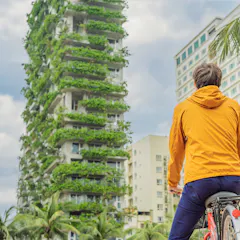
Urban gardens, parks and green walls are crucial ways to tackle flash floods and city heat. But new global research finds its effectiveness varies from city to city.
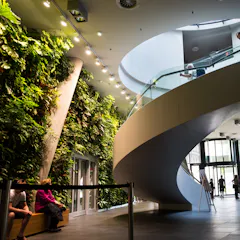
Green buildings can cost more than conventional structures, but the small increase has noticeable benefits for those working and living within them.

In cities across Europe, 62% of the population doesn’t have access to the amount of nature the World Health Organisation recommends.
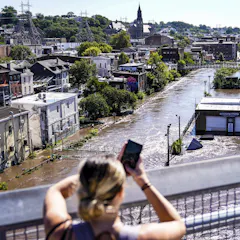
More than half of the world’s population lives in cities, and that share is growing. Rapid climate change could make many cities unlivable in the coming decades without major investments to adapt.
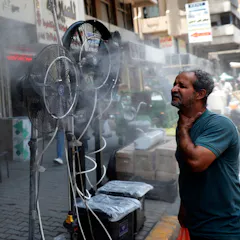
Hot, humid population centers are becoming epicenters of heat risk as climate changes worsens. It’s calling into question the conventional wisdom that urbanization uniformly reduces poverty.
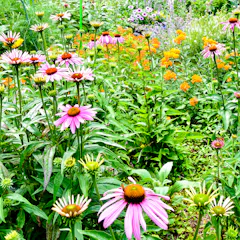
Cities are among the harshest habitats on Earth. But when planned properly, private gardens can help improve their liveability.

Cities occupy just 3% of the Earth’s surface, yet more than half the world’s population live in urban environments. We need nation-wide plans to keep our cities cool so no one gets left behind.
Top contributors
-

Associate Professor of Geography, Indiana University
-
Research Professor ISGlobal Barcelona and Professorial Fellow, ACU Melbourne, Australian Catholic University
-
Research Associate, MRC Epidemiology Unit, University of Cambridge
-
Vice-Chancellor's Research Fellow, Centre for Urban Research, RMIT University
-
Lecturer, Bangor University
-
Senior Research Associate, School of Agriculture, Food and Ecosystem Sciences, The University of Melbourne
-
Illinois Research Climatologist, University of Illinois Urbana-Champaign
-
Lecturer and Researcher, Urban Design and Town Planning, University of the Sunshine Coast
-
Assistant Professor
-
Associate professor, Universidad de Alcalá
-
Professor, School of Mathematical And Physical Sciences, University of Technology Sydney
-
Associate Professor of Geography, Environment and Society, University of Minnesota
-
Professor and Head of School of Architecture and Built Environment, University of Newcastle
-
Professor of Anthropology, University of Connecticut
-
Associate Professor of Environmental Studies, Brandeis University