
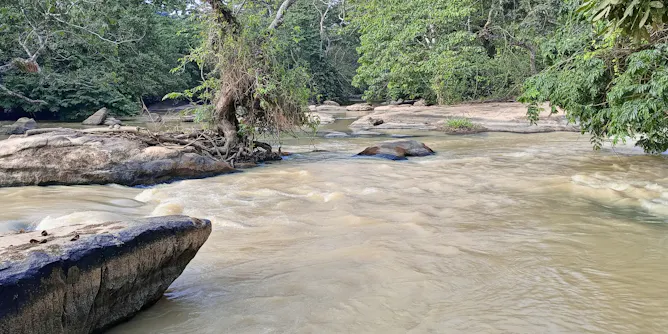
The level of microplastic pollution in Osun River may be the highest in the world. Banning single-use plastics may help.
Articles on UNESCO World Heritage sites
Displaying 21 - 40 of 158 articles
Researchers, managers and Traditional Owners are joining forces to understand and combat climate threats to Australia’s many unique World Heritage sites.

Trans-border collaboration is required to recover protected areas that transverse Niger, Burkina Faso and Benin Republic from armed groups.
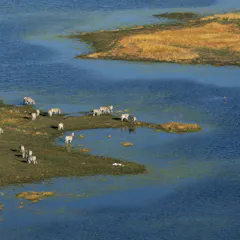
Oil and gas exploration pose a threat to the Okavango River Basin water resources. The Namibian and Botswana governments need to properly assess the risk of contamination.

Once the capital of the Mughal empire, Old Delhi is now under threat. Geo-information technology can reveal its previous form, function, and context, however, and so help preserve and bring it back to life.
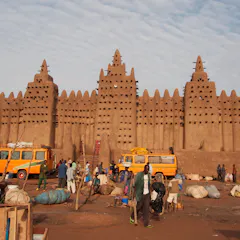
The Covid-19 pandemic will long be remembered for the lockdowns it imposed and the millions of lives it stole. A recent Unesco report reveals that it has also took a large toll on world heritage sites.

Nigerians and Ghanaians have all claimed authorship of Jollof rice. But a new book points out that the “Senegality” of this dish is established by the reference to “Jolof”.
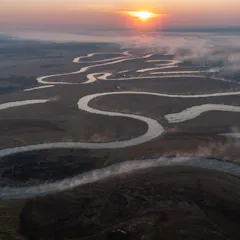
The Angolan Highlands are hydrologically and ecologically important - and the region’s newly mapped peatlands are valuable “carbon sinks”.

Designed to act as a call for ideas and projects by all of Genoa’s stakeholders, Rolli Lab seeks to enhance the World Heritage site’s impact on city’s cultural, social and economic activity.

A grand new memorial park walks a fine line - between teaching about slavery and becoming a tourist trap.
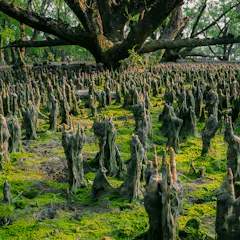
On the border between India and Bangladesh, the Sundarbans suffer from overexploitation and rising sea levels. With a “Climate Wall” project, a virtual museum is raising awareness and increasing resiliency.
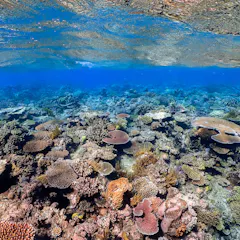
Environment ministers from both sides are determined not to see the Barrier Reef listed as in danger. The question is – why?

Often thought of as eternal, mountains are vulnerable to climate change and tourism. To protect them, they should be recognised for their cultural values, not just their natural characteristics.
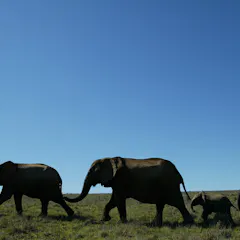
Political and social instability in the country, as seen in frequent mass protests and xenophobia, threaten the flow of African tourists.
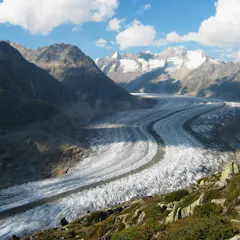
Rising temperatures and extreme weather pose an existential threat to many UNESCO World Heritage sites, but widespread discussion is needed for meaningful change.

Local communities and national authorities are working to develop sustainable tourism in Colombia’s Chiribiquete National Natural Park, a Unesco World Heritage Site since 2018.
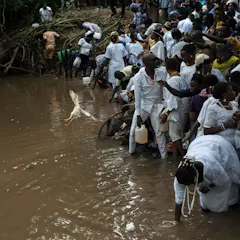
The ability of the Osun River to support biodiversity is being threatened by pollution and can only be rescued if the contamination ends.

World heritage sites play an essential role in advancing Unesco’s goals, but more foresight is needed to imagine and enable promising strategies that address the needs of future generations.

Urban farming is an ancient tradition in Bamberg, and the gardeners’ district is an integral part of the World Heritage City, growing food, promoting sustainability and fighting climate change.

Senegal’s colonial heritage has been interpreted to conceive an African future, turning colonial heritage into an archive of a possible Afrotopia.
Top contributors
-

Adjunct Principal Research Fellow, College of Science and Engineering, James Cook University
-
UNESCO Chair on Climate Change Variability of Natural and Cultural Heritage and Professor in Physics, James Cook University
-
Distinguished Professor, James Cook University
-
Professor, Director of Centre for Rock Art Research + Management, The University of Western Australia
-
Professor of Pyrogeography and Fire Science, University of Tasmania
-
Professor in Conservation Science, School of the Environment, The University of Queensland
-
Associate Professor in Environmental Science, Western Sydney University
-
Professor, School of the Environment, The University of Queensland
-
Corporate governance lecturer, University of Tasmania
-
Senior Lecturer in Architectural HIstory and Theory, UNSW & Honorary Research Fellow, Australian Centre for Architectural History, Urban and Cultural Heritage (ACAHUCH), UNSW
-
Postdoctoral research fellow, School of Biological Sciences, The University of Queensland
-
Honorary Fellow in Economics, The University of Queensland
-
Professorial Fellow, ARC Centre of Excellence for Coral Reef Studies, James Cook University
-
Postdoctoral Research Fellow, The University of Western Australia
-
Professor of Environmental Management, The University of Queensland