

The problem is deeper than any one failed summit.
Articles on UN Climate summit
Displaying 1 - 20 of 47 articles
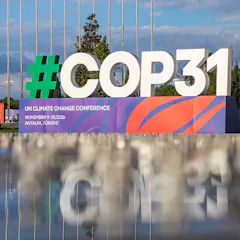
The collapse of Cop31 may become a historical opportunity for global climate governance to tackle its structural problems.

Small island states are pushing for urgent discussions about removing carbon dioxide and deliberately cooling the planet.

Policy jargon, though often dense and alienating, can serve as an effective springboard for discussing difficult realities.
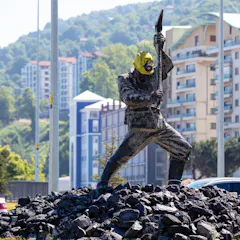
The Cop31 host wants to accelerate electrification, but its dependence on coal tells another story.
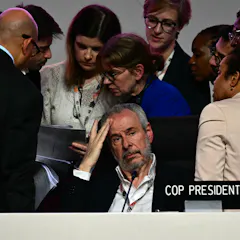
The methods can be subtle but effective at slowing progress, particularly when fossil fuels are involved. Here’s what to watch for as the latest global climate talks get underway.
Electrification alone won’t deliver a clean energy transition. Two major challenges remain.
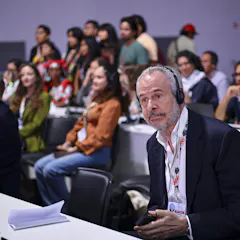
Global environmental talks are in crisis.

Can a country so key to the global oil and gas trade help broker a deal that accelerates the end of fossil fuels?

Deals were agreed but with crucial elements missing.

This needs to be the Cop of implementation. We already have enough paperwork and knowledge, now it’s time to put those insights into practice and make change happen.
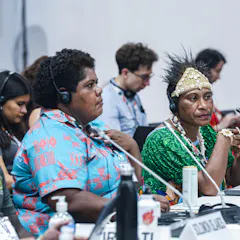
An insider explains the Alliance of Small Island States and what’s made it so effective.

From Paris in 2015 to Belem in Brazil in 2025, soil is slowly becoming part of climate policy but more can be done.

Cop30 will have 50,000 delegates. But bigger Cops are not better Cops.

Brazil’s Amazon COP30 climate summit will test if a resource-based nation can lead on climate action. It’s a dilemma Australia also faces.
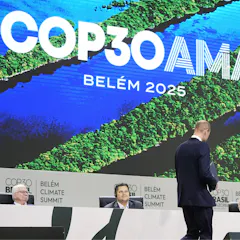
Many say UN climate summits are pointless. They’re wrong.

Experts explain the tension between stability and politicisation in climate governance.

The Brazilian Cop30 presidency has a critical role to play as mediator and bridge builder to increase the collective ambition of governments.
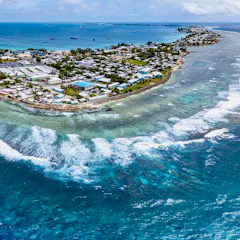
A review of countries’ new climate pledges shows who is leading efforts to protect the climate their economies were built on and who is sliding.
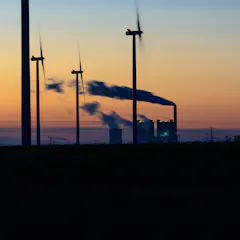
The International Energy Agency expects global renewable energy capacity to double by 2030, even with lower growth in the US, but fossil fuels still dominate.
Top contributors
-

Professor (Teaching) of Environmental Studies, Political Science and International Relations, USC Dornsife College of Letters, Arts and Sciences
-
Professor of Earth System Science, UCL
-
Lecturer in International Development, UCL
-
Research Associate, Institute for Climate Risk and Response, UNSW
-
Professor of Infrastructure Engineering and International Development, UCL
-
Professor of Political Economy, University of Sheffield
-
Lecturer in Development Economics, SOAS, University of London
-
Lecturer in Environmental Politics, Cardiff University
-
Lecturer in Climate Change, Politics and Society, University of Bristol
-
Doctoral Fellow, The Fletcher School, Tufts University
-
Senior Lecturer in Climate Justice, University of Bristol
-
Professor of Practice in Climate Policy, University of Oxford
-
Associate Professor in Sustainable Development
-
Professor of Hydrogeology, UCL
-
Canada Research Chair in Economy and Environment, Queen's University, Ontario