
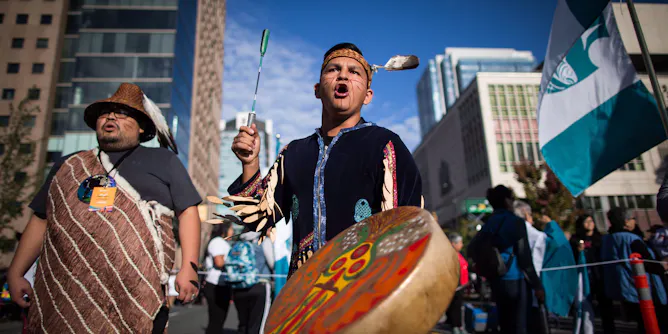
It’s been three years since the TRC released its report on the lasting impact of residential schools in Canada but responses to the 94 Calls to Action have been slow. A new framework hopes to change that.
Articles on Truth and Reconciliation Commission of Canada
Displaying 21 - 32 of 32 articles
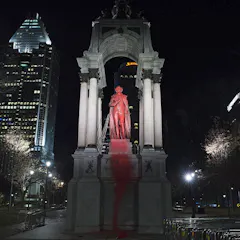
Removing statues of historical figures may be important symbolic statements when it comes to reconciliation, but action on important Indigenous issues like land claims and education are needed more.

A right-to-roam movement has never developed in Canada the way it has in the U.K. Here’s how it could benefit Canadian society as a whole, including reconciliation efforts with the Indigenous.
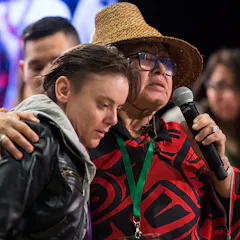
University “Indigenization” efforts using Massive Open Online Courses promise to reach wide audiences. They also raise critical questions about how to embody Indigenous ways of knowing and relating.
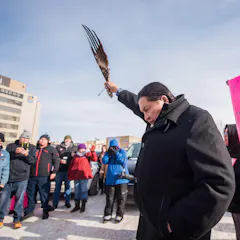
It’s time for an overhaul of the justice system in Canada: How juries are selected, how Indigenous victims are treated and to challenge embedded racism within police forces and courts.
No project for reconciliation can succeed unless the federal and provincial governments roll back their power and create space for Indigenous control over their own self-determining futures.
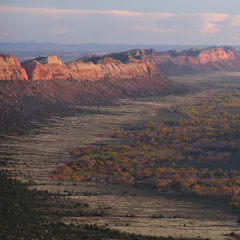
The Trump administration recently reduced the size of Bears Ears in Utah, opening millions of acres to mining and other uses. This threatens Indigenous heritage and can be seen as a form of violence.
Inquests into atrocities committed under apartheid are important because many South Africans are beginning to question whether justice was done under the country’s truth and reconciliation process.
“What have we failed to know and at what cost?” An education professor draws upon Indigenous literature to support a personal journey into classroom decolonization.
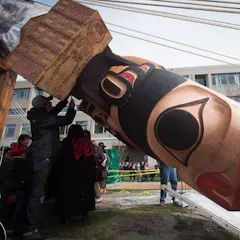
Many Canadian teachers worry about how to incorporate Indigenous content into the classroom. For one sociology professor, finding Indigenous mentorship was richly rewarding.
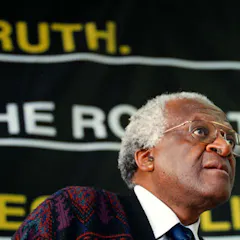
If violent contexts aren’t taken into account, restorative justice does not serve broader society. Instead it serves as a peacemaking process within a paradigm stacked against the poor and vulnerable.
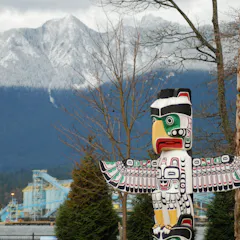
The relationship between Canada’s Aboriginal peoples and non-indigenous population has never been an equal one, even though the 1982 national constitution recognises Aboriginal rights.
Top contributors
-

Associate Professor in Curriculum, Teaching and Learning, Ontario Institute for Studies in Education, University of Toronto
-
Professor, Faculty of Education, University of Manitoba
-
Assistant Professor, Sociology Department, University of Lethbridge
-
Professor of Political Science, University of Guelph
-
Professor and Impact Chair in Transformative Governance for Planetary Health, School of Public Administration, University of Victoria
-
Associate Professor of Gender, Religion and Critical Studies, University of Regina
-
Associate professor, Brock University
-
Senior Lecturer, Department of Historical and Heritage Studies, University of Pretoria
-
Assistant Professor, Criminology, Toronto Metropolitan University
-
Professor Emeritus of History, University of Saskatchewan
-
Senior Lecturer in International Law, The University of Western Australia
-
Independent conflict and social justice practitioner/researcher. Currently Senior Staff Associate in the Faculty of Law, University of Cape Town
-
Distinguished Professor, Department of Curriculum, Teaching and Learning, Ontario Institute for Studies in Education, University of Toronto
-
Associate Professor & Canada Research Chair, Indigenous Peoples' Health and Well-being, Dalhousie University
-
Adjunct professor, Theological Studies, Concordia University