

Canada must act to support Indigenous governing autonomy and capacity in education and other matters, and also to reform public schooling.
Articles on Truth and Reconciliation Commission of Canada
Displaying 1 - 20 of 32 articles
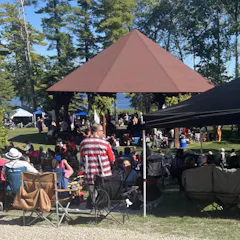
Archives are full of letters from Curve Lake dating back to the 19th century, demanding better pay for teachers, requesting Indigenous teachers and even asking for their own school boards.

Residential schools denialism is harmful on many levels, and jeopardizes Canada’s ability to work with Indigenous Peoples to create a stronger future.
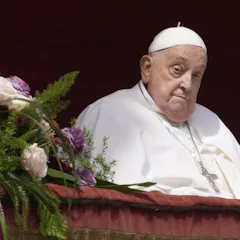
When Pope Francis visited Canada in July 2022, he consciously and intentionally began a journey into the complex and disturbing relationship between the Catholic Church and Indigenous Peoples.

Murray Sinclair’s firm approach to justice and reconciliation is part of what inspires me, as an intergenerational Survivor, to confront challenges rooted in colonization with strength and resolve.
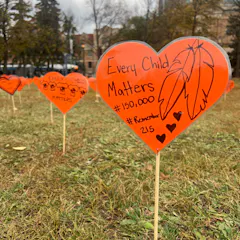
When universities declare commitments to reconciliation, these commitments must accompany changes necessary to ensure Indigenous students are truly welcomed and celebrated on campuses.
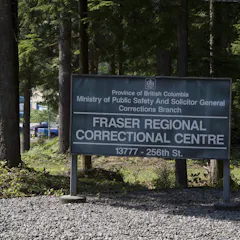
British Columbia’s proposed ban on name changes could impact people’s Charter rights and undermine the rehabilitation and reintegration of those convicted of crimes.

For Indigenous literature courses to be successful, Indigenous cultural safety must be centred, and commitment to teacher professional development is a must.
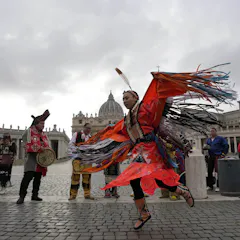
Pope Francis and the Catholic Church must make a plan with Indigenous Peoples, not for us, in order to walk the path of reconciliation. Some initial suggestions of what a plan might include.

The aim of transitional justice is to usher in a peaceful society after mass atrocity, periods of systemic human rights violations and violent authoritarian regimes. It should be a Canadian priority.

The MMIWG Inquiry two years later: What’s changed and what still needs to be done?
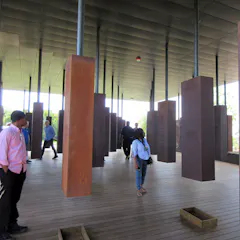
Research into how war-torn and fractured nations find justice and societal reconciliation finds ways to establish sustainable and lasting peace in divided societies.
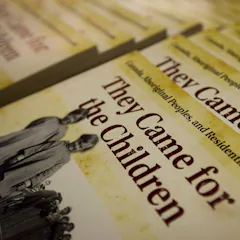
To make meaningful progress on the Truth and Reconciliation Commission of Canada’s Calls to Action, all provinces and territories should promptly follow B.C. and ban discriminatory ‘birth alerts.’

Project Reconciliation is a direct response to one of the Truth and Reconciliation Commission’s calls that Indigenous communities ‘gain long-term sustainable benefits from economic development projects.’

The presence of Indigenous peoples in conversations in Canada about the flourishing of Indigenous languages and critical Indigenous education is essential.
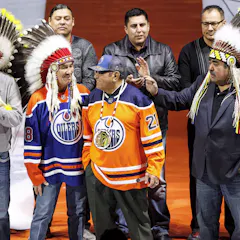
If hockey is to be a sport that brings people together and fosters what’s best about Canada, it needs to reckon with Canada’s – and hockey’s – history of racism and settler colonialism.

A new federal program aims to reduce diesel-dependency in remote Indigenous communities. But are these communities able to do this on their own terms?
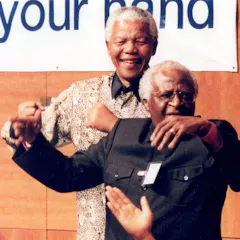
Wherever there is an ugly, unresolved injustice pulling at the fabric of a society, there is an opportunity to haul it out in public and deal with it through a truth commission.

To improve Indigenous health in Canada we need more Indigenous health professionals and more culturally competent health-care providers. We also need to listen properly to Indigenous stories.
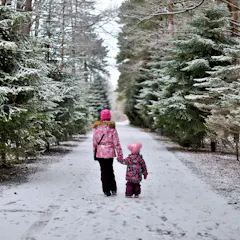
Until Canadians challenge the normalization of violence against children, we will continue to support, or at least tacitly condone, something that by all accounts is harmful.
Top contributors
-

Associate Professor in Curriculum, Teaching and Learning, Ontario Institute for Studies in Education, University of Toronto
-
Professor, Faculty of Education, University of Manitoba
-
Assistant Professor, Sociology Department, University of Lethbridge
-
Professor of Political Science, University of Guelph
-
Professor and Impact Chair in Transformative Governance for Planetary Health, School of Public Administration, University of Victoria
-
Associate Professor of Gender, Religion and Critical Studies, University of Regina
-
Associate professor, Brock University
-
Senior Lecturer, Department of Historical and Heritage Studies, University of Pretoria
-
Assistant Professor, Criminology, Toronto Metropolitan University
-
Professor Emeritus of History, University of Saskatchewan
-
Senior Lecturer in International Law, The University of Western Australia
-
Independent conflict and social justice practitioner/researcher. Currently Senior Staff Associate in the Faculty of Law, University of Cape Town
-
Distinguished Professor, Department of Curriculum, Teaching and Learning, Ontario Institute for Studies in Education, University of Toronto
-
Associate Professor & Canada Research Chair, Indigenous Peoples' Health and Well-being, Dalhousie University
-
Adjunct professor, Theological Studies, Concordia University