
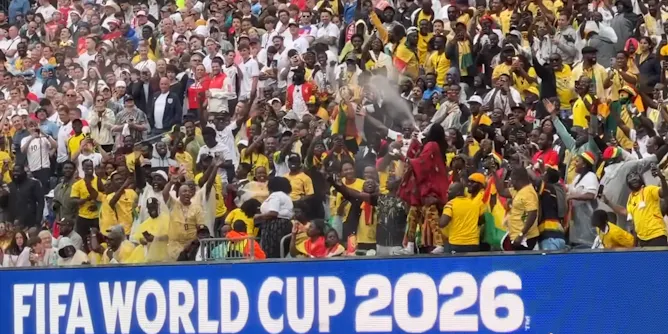
Although it may seem strange to westerners, soccer and esoteric rituals go hand in hand in Africa.
Articles on traditional healers
Displaying all articles
In Zimbabwe it was believed that if a woman went underground the gold seam would vanish, but above ground women held spiritual power over mines.
Korekore people in the Rushinga district have not wavered in their beliefs about and ways of healing mental illnesses.
Christianity is evolving. Mainstream churches like the Methodists and the Catholics are losing ground to indigenous and pentecostal groups.
Relying on donor funding means that the funder ultimately determines the health priorities. This is one reason why many programmes in Africa focus on a single disease such as HIV.
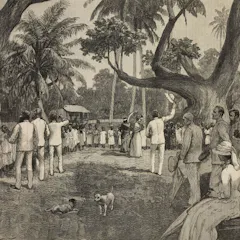
These medical volunteers have been closely associated with several kinds of non-human actors, whose behaviour is worth examining in more detail.
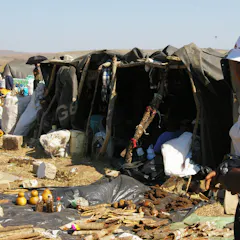
Most healers still practice in their houses where there is little privacy. Others use more private backrooms. But these spaces were not designed for the practice of traditional medicine.
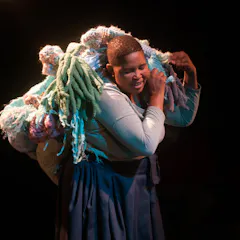
Empatheatre’s latest production is more than a play about three characters who live near the sea. It’s a model for collective consultation on how to save the ocean.
His life’s work was asserting the humanity and history of the Bantu people, while proposing that the soul was able to bring knowledge of the past and of the future into the present.

The World Health Organisation has a plan to halve deaths and disability from snakebites

Joseph Shabalala would grow world famous for his music. But it is shaped by the spiritual aspects of his life as much as it is by the hardships of black life - and by his dreams.

In the 1950s, the African yam was exploited by drugs firm Boots to produce cortisone. But South Africans fought back against the plundering of a plant that they used for traditional healing.
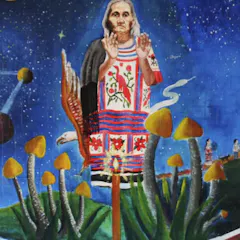
Before being qualified as “magic”, certain mushrooms were considered sacred by the ancient peoples of Mexico. We explore their history and relationship to Mesoamerican religion and medicine.
Koro is widely believed to be a culturally localised delusion. But a theory that it’s a fight-or-flight reflex might be corroborated by studying traditional healing treatments in Indonesia.
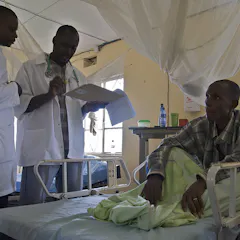
In countries where health systems are limited, collaboration between traditional healers and health professionals may help fill the gaps.
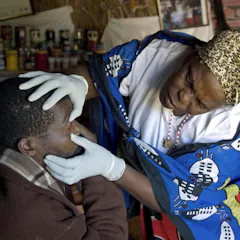
In rural areas where there are often fewer healthcare professionals available, traditional healers can have a role to play in promoting HIV treatment.
Africa’s complex and seemingly insurmountable social and economic problems are a golden opportunity to demonstrate the value that research can bring. Scientists need to rise to the challenge.
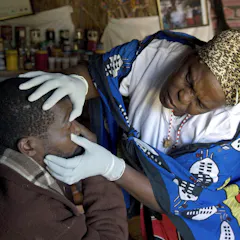
Newly proposed regulations in South Africa that would change the way traditional healers operate have come under fire.
Top contributors
-

Associate Professor (Reader), Wits School of Public Health, University of the Witwatersrand
-
Adjunct Senior Research Associate, Monash University
-
Assistant Professor in the Department of Health Policy at the Vanderbilt Institute for Global Health , Vanderbilt University
-
Senior lecturer, University of Edinburgh
-
Professor of Law, North-West University
-
Specialist scientist, South African Medical Research Council
-
Lecturer in the Department of Economics and Quantitative Methods, University of Westminster
-
Educator and Researcher, The Partnership for African Social and Governance Research (PASGR)
-
Senior Researcher, Chr. Michelsen Institute
-
PhD Candidate, Department of Biotechnology and Biomedicine, Technical University of Denmark
-
Post Doctoral Researcher, Technical University of Denmark
-
Professor, University of Oxford
-
Doctoral Fellow, University of the Witwatersrand
-
Senior researcher, Durban University of Technology
-
Assistant Professor of African Religions; Canada Research Chair (Tier 2) in the Globalization of African Religions and Yoruba Mythology, McGill University