
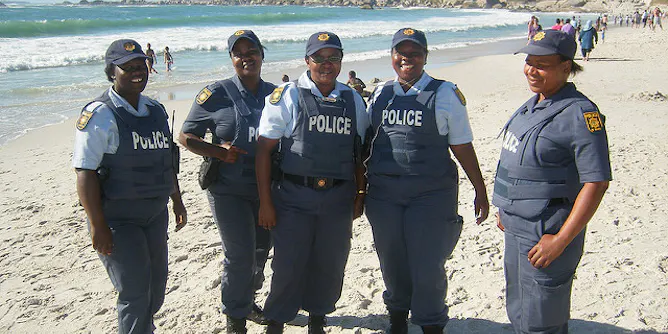
A tone of bitter disillusionment dominates the book, which combines self-deprecating anecdotes with reflections on the unique strangeness of policing a post-apartheid South African city.
Articles on South African police
Displaying 41 - 55 of 55 articles

South Africa has stubbornly high rates of violent crime. More concerning, though, is that the latest crime stats suggest the recent increase in murders is not slowing - it may even continue.
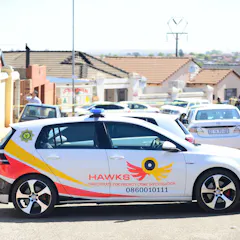
The main criticism leveled at the body that oversees the work of South Africa’s elite police unit, the Hawks, is that it lacks the power to initiate investigations, making it ineffective.
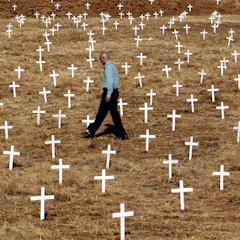
The widely-held assumption that murder rates have been increasing in South Africa in the past two decades is incorrect – and it may divert attention from a new problem that needs attention.
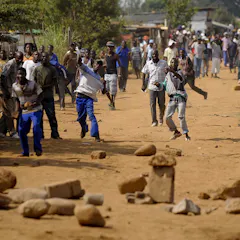
The past decade has shown a strong connection between political protests and the looting of foreign-owned shops in South Africa. Research shows that local leaders use protests to maintain their power.
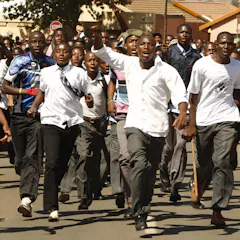
It is exactly forty years since the Soweto uprising in June 1976 where the South African police met the students with brutal force. How much has changed in terms of policing?
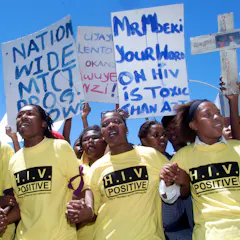
Seasoned social rights activist Mark Heywood argues that the constitution provides South Africans with more rights and entitlements than they may be aware of.
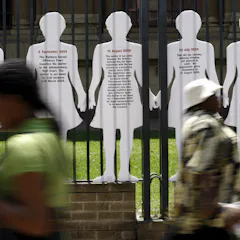
Rape complainants who are perceived to have precipitated their own victimisation, whether through their conduct or their relationship to the perpetrator, are at a particular disadvantage.
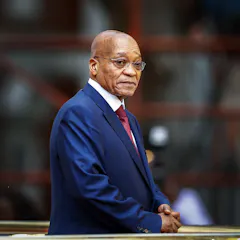
Jacob Zuma has backtracked on two major decisions in under two months – first after he fired his finance minister; now he says he’ll pay back public money spent on his lavish Nkandla homestead.
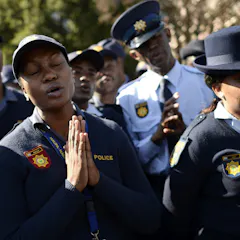
While the unacceptably high rate of police murders in South Africa attracts much media coverage, the bigger problem of suicide among police receives little focus.

Images of South African police on social media are part of a carefully scripted performance in which the police service is heavily invested.
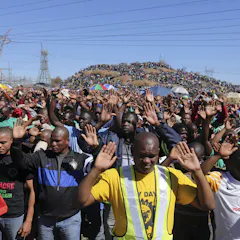
The reporting of the Marikana massacre was characterised by embedded journalism, sensationalism and polarisation of views. The media became a loudspeaker for powerful political and economic interests.

Police brutality is an ongoing problem in South Africa. Police-worn body cameras may help reduce such incidents by improving accountability. They may also contribute to the safety of officers.
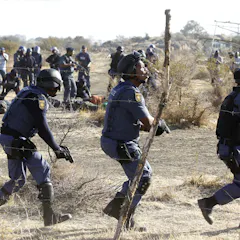
The Farlam Commission has called for implementation of plans to demilitarise the police to prevent a recurrence of the Marikana massacre. But, no-one, including Farlam, has set out what this involves.
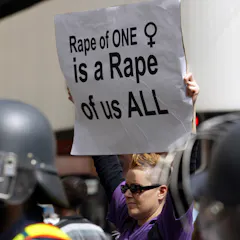
South Africa needs a new rape policy that will change the way the police collect statistics.
Top contributors
-

Research Associate at UCT's Centre of Criminology, Consultant at the Institute for Security Studies (ISS), University of Cape Town
-
Senior researcher, University of Cape Town
-
Criminologist / Senior Lecturer, Stellenbosch University
-
Lecturer in Political Science, Nelson Mandela University
-
Co-Director of the Wits-Oxford Mobility Governance Lab, University of the Witwatersrand
-
Professor of Sociology in the Department of Sociology and Social Anthropology., Stellenbosch University
-
Researcher, University of the Witwatersrand
-
Professor of Digital Society, University of Glasgow
-
PhD, University of Cape Town
-
Professor in Political Science, University of South Africa
-
Associate Professor Julie Berg and Director, Institute for Safety Governance and Criminology, University of Cape Town
-
Senior lecturer, University of Edinburgh
-
Director of the Centre of Criminology, University of Cape Town
-
Professor of Political Science, Department of Political Studies and Governance, University of the Free State
-
Senior Research Fellow, Centre for the Advancement of Scholarship, University of Pretoria., University of Pretoria