

A version of Australia’s eSafety Commissioner could be a better way to tackle the online harm experienced by under-16s – and New Zealanders of all ages.
Articles on Social media
Displaying 81 - 100 of 2600 articles

Imagine a world where nobody clicks on misleading content online. Media literacy can get us there.

This is just one example of an online trend with real-world health consequences.

Patients sharing their health journeys online are filling vital information gaps, but social media algorithms often bury their most useful posts.

Yet another longstanding mathematical question has been resolved by AI – and it feels a little different from the ones that have come before

The Victorian government says the new laws are ‘nation leading’. But there are several points of concern to address.

When you’re tired and distracted, an online ad’s claims can be more effective in pitching a product when they’re assertive and explicit.

Studies increasingly show that how kids are using screens is more important than the exact amount of time they’re spending on them – and parents and caregivers tend to know what’s best for their families.

Critical thinking is touted as the educational counterpoint to AI and algorithms, but our definitions of it need an update.
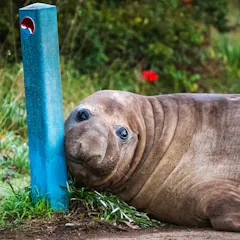
He also offers valuable lessons about how humans can interact – safely and responsibly – with marine wildlife.

Influencer culture is not a thing of the past, and yet the movers and shakers of post-revolutionary France are proof that writing lifestyle columns and trending is a centuries-old pursuit.

Support for banning social media among under-16s is growing. But a closer look reveals complex questions over privacy and digital inclusion.

Sextortion is arguably the most predictable serious crime on the internet. It follows a script – and it can be stopped.

A growing wave of content suggests what feels ‘real’ online is changing.

A study of over 6,000 posts by European football associations demonstrates that communities react very differently, depending on the type of diversity up for debate.

Plutarch’s practical ethics propose two ways we can live happier, more serene lives.

Paintings of early Christian saints were designed to show worshippers what sacred authority looked like, using books, clothing and gestures as symbols.

Science works at a much slower pace than social media, opening a large window for early findings to be taken at face value and misinformation to spread.
Research suggests ‘problematic porn use’ is a more accurate way to describe the potential harms of pornography.
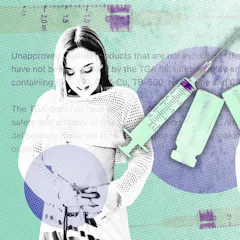
People are now taking peptides for a variety of reasons, including fat loss. But are they legal? And what are the risks? Here’s what you need to know.
Top contributors
-

Professor, Digital Media Research Centre, Queensland University of Technology
-
Professor of Information Systems, Michigan State University
-
Professor of Information Sciences & Director, Social Change Enabling Impact Platform, RMIT University
-
Professorial Fellow, University of Canberra
-
Researcher, Digital Wellbeing, Western Sydney University
-
Director of UWA Centre for Software Practice, The University of Western Australia
-
Professor of Internet Studies, Curtin University
-
Researcher at Microsoft Research, Cambridge UK. Previously, The University of Queensland
-
Research Fellow in Public Health, The University of Queensland
-
Professor of Formal Philosophy / Director of Center for Information and Bubble Studies, University of Copenhagen
-
Associate Professor of Visual Communication & Digital Media, RMIT University
-
Professor of Digital Communication, Director of QUT Digital Media Research Centre, Queensland University of Technology
-
Professor of Informatics and Computer Science, Indiana University
-
Senior Research Fellow, Centre for Advancing Journalism and Information Integrity, The University of Melbourne
-
Senior Research Associate in Media and Communications, University of Sydney