

Studies globally have made the link between the lack of adequate sanitation, particularly open defecation or shared community toilet facilities, and the increased risk of women and girls being raped.
Articles on Sexual violence
Displaying 141 - 160 of 273 articles

A scholar who studies Holocaust survivors sees an explanation for why women change their stories of sexual assault, even now in the
MeToo era.
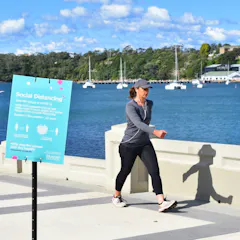
The Gender Equality Act in Victoria creates an obligation to understand how gender affects needs and experiences, and to design, assess and manage public spaces so women feel safe in those places.

In Mexico City, feminist groups spray-painted the names of Mexico’s murdered women on the pavement of the Zócalo, the capital city’s enormous main square, during the International Women’s Day March.

New research with survivors of sexual violence who have been forced to migrate reveals difficulties of COVID-19 lockdowns.

An international protocol to document and investigate sexual violence in conflict is falling short.

Our research on gender-based violence in mental health inpatient units in Victoria shows many women are not safe in these environments.

Dating app Tinder has come under increasing scrutiny over harassment facilitated by the platform. But its new safety measures, while undoubtedly an improvement, are unlikely to prevent abuse.
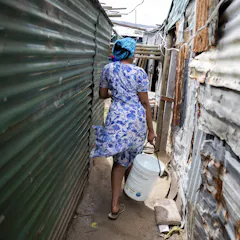
Two interventions proved effective in reducing men’s perpetration, but not women’s experiences of violence.

Gender stereotyping might be funny, but it’s no joke. A public health professor explains why she took action against everyday sexism when she heard it in a radio advert.

Government policy must do more to reflect the fact that rape isn’t just something that happens to women and girls.

We can teach young people to respond more critically to pornography, helping them assess and respond to pornography’s influence.

A Chilean feminist anthem is being sung across the world in protest at violence against women.
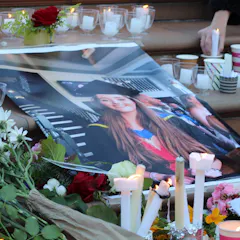
Grace Millane’s murder trial demonstrated it is still possible to question a woman’s behaviour without understanding the gendered nature of men’s violence against women.

Just as domestic violence was once misunderstood and tolerated, many today fail to grasp how nude photographs can be wielded as weapons of abuse.
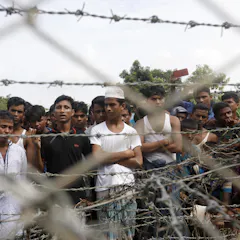
The sheer volume of pregnant women in the refugee camps was an early indicator of the extent sexual violence was used against Rohingya women and girls.

The Rape-aXe ‘female condom’, anti-rape underwear and an anti-groping stamp are all now on the market. But they put the onus on women to protect themselves, rather than on men not to attack them.
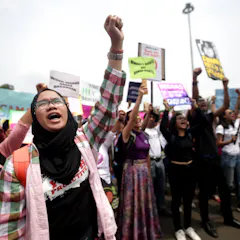
Indonesia’s populist morality movement considers talking about eliminating sexual violence against women is the same as supporting women’s right to have sex outside of marriage.

Changes to the criminalization of HIV nondisclosure in Canada must consider the vulnerability and violence experienced by women living with HIV.

Women in Mexico are lashing out against rampant sexual violence, police abuse and policies that hurt working mothers.
Top contributors
-

Professor of Family and Sexual Violence, RMIT University
-
Associate Professor in Criminology, The University of Melbourne
-
Canada Research Chair in Inequality and Gender, Western University
-
Professor of Global & Language Studies, RMIT University
-
Professor of Criminology, Durham University
-
PhD Candidate, International Relations, Australian National University
-
Managing Director, Her Story Consulting & Postdoctoral fellow, Australian National University
-
Associate Professor in Criminology, Deakin University
-
Professor (Practice), Faculty of Business and Economics, Monash University
-
Postdoctoral fellow, Sociology, Western University
-
Director, XYX Lab, and Professor, Faculty of Art, Design and Architecture, Monash University
-
Professor in Criminal Law, Durham University
-
Professor of Psychology, University of Birmingham
-
Senior Lecturer in Criminology, University of Wollongong
-
Senior Lecturer and Deputy Director, Reducing Gender-Based Violence Research Group, La Trobe University