
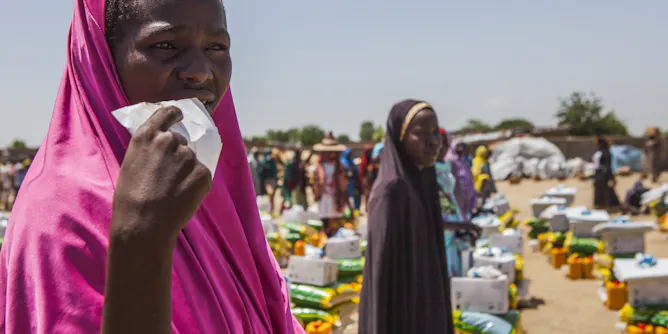
Sexual violence against women and girls in Nigeria’s northeastern region persists because of the Nigerian government’s lax response to cases of sexual offences.
Articles on Sexual violence
Displaying 101 - 120 of 273 articles

Hockey Canada has fallen short of its mission to ‘Lead, Develop and Promote Positive Hockey Experiences’ in its handling of sexual violence perpetrated by and against Hockey Canada players.
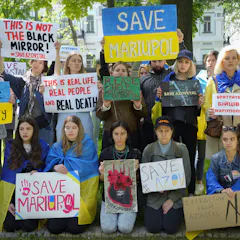
Survivors of conflict-related sexual violence in Ukraine deserve some measure of justice through co-ordinated, carefully planned action.

We need to question how gender is understood, constructed and performed by hockey players, teams, coaches and organizations to truly change the culture.

What appears to be normal social media activity exposes a much darker reality: fan culture often leads to deeply harmful conversations shaping how people address and redress violence.

Whole-life sentences are rarely handed down in the UK. Recent instances of their use point to gendered violence finally being taken more seriously.
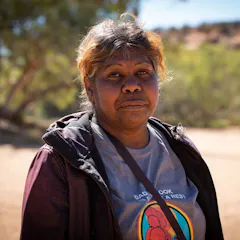
The murder of R. Rubuntja brings to light the ways Australian media and the Australian justice system continues to fail First Nations women.

An expert on rape during war examines the emerging evidence from Ukraine that Russian soldiers raped Ukrainian women and explains the role rape plays in conflicts.
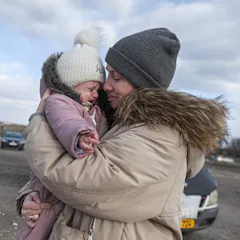
While most people offering support to Ukrainians are well-intentioned, it’s not always the case. There are a reports of women and girls fleeing Ukraine being raped in their new countries.
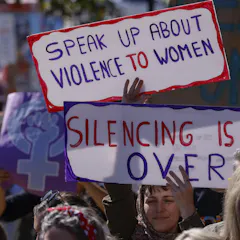
Today’s students are part of a generation demanding society-wide change in the culture that perpetuates sexual violence, and the students expect their universities to lead the way.
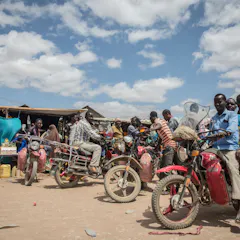
The entire transport sector in Kenya is extremely chaotic and in need of urgent policy and legal interventions.

The damning findings of five years ago did prompt universities to change policies and practices. The problem is we still lack evidence for what works to prevent sexual violence on campus.
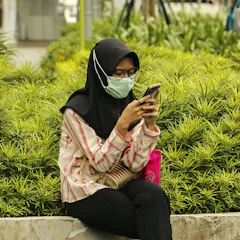
Female survivors of sexual violence in Indonesia tell stories of their experience on Twitter and Facebook to seek safe space and share fears, grievances, despair and anger.

The pandemic has led to an increase in online interactions, including sexually violent behaviours. Teens as young as 12 are affected, but many victims are not aware of their options in seeking justice.

Cancel culture is what is left when people who have caused harm fail to actively accept responsibility and work to repair that harm.

Governments declined to take part in the Uyghur Tribunal’s investigation. But the body of scholarly evidence for its claims, and its ruling, is thorough and extensive.
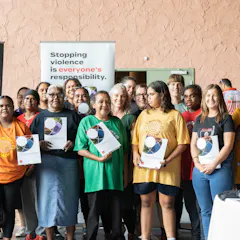
The Northern Territory has the highest rates of domestic, family, and sexual violence in Australia. The Tangentyere women’s group shows how prevention projects can address gender inequality.
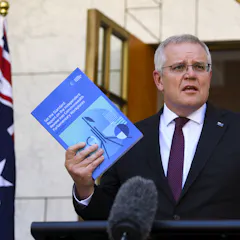
The review has been underway since March, speaking to current and former MPs and employees at parliament house.
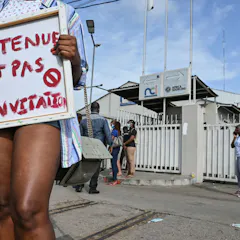
The practice of blaming and stigmatising rape survivors has devastating consequences. It silences them and protects rapists. It discourages survivors from accessing healthcare and pursuing justice.

The #MeToo movement has allowed survivors of sexual abuse to be heard in the public space. Children, however, remain voiceless.
Top contributors
-

Professor of Family and Sexual Violence, RMIT University
-
Associate Professor in Criminology, The University of Melbourne
-
Canada Research Chair in Inequality and Gender, Western University
-
Professor of Global & Language Studies, RMIT University
-
Professor of Criminology, Durham University
-
PhD Candidate, International Relations, Australian National University
-
Managing Director, Her Story Consulting & Postdoctoral fellow, Australian National University
-
Associate Professor in Criminology, Deakin University
-
Professor (Practice), Faculty of Business and Economics, Monash University
-
Postdoctoral fellow, Sociology, Western University
-
Director, XYX Lab, and Professor, Faculty of Art, Design and Architecture, Monash University
-
Professor in Criminal Law, Durham University
-
Professor of Psychology, University of Birmingham
-
Senior Lecturer in Criminology, University of Wollongong
-
Senior Lecturer and Deputy Director, Reducing Gender-Based Violence Research Group, La Trobe University