

Samoa and Fiji’s world cup runs showcased Pasifika talent. But opportunities for women and girls within Pacific nations remain limited.
Articles on Rugby league
Displaying 1 - 20 of 44 articles
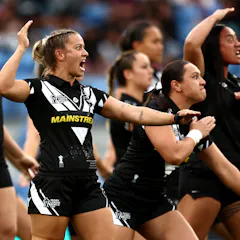
A delve into the Rugby League World Cup’s demographic data reveals a story about family ties, migration and opportunity across the ocean.
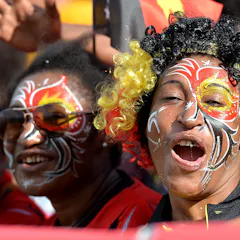
PNG is grappling with despicable rates of gender-based violence. Why isn’t a women’s team part of the Australian government’s $600m NRL deal?

The Knights’ new coach took his squad 100 metres underground into a coal mine to help his players better understand the region’s working-class history.
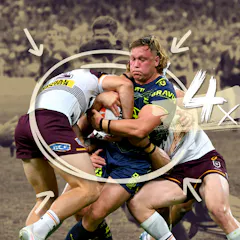
Rugby league today is almost unrecognisable to the sport’s early days. A key reason is the controversial move away from unlimited tackles.
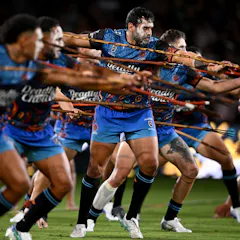
Sunday’s season-opener in Hamilton goes well beyond tokenism to showcase the extraordinary contribution of Indigenous athletes and fans to trans-Tasman rugby league.

As the Pacific Cup finals play out this weekend, the Pasifika influence on rugby league – on and off the field – has big implications for the trans-Tasman game.

If rugby league stays flexible and open-minded when it comes to national allegiances, it could be a way for the sport to win hearts and minds across the Pacific.

The AFL and NRL constantly claim to be the country’s premier sport – so what do the figures say in terms of profit, participation, attendance and TV audience?

How to understand the risks of head injuries in sport – beyond the alarming headlines.
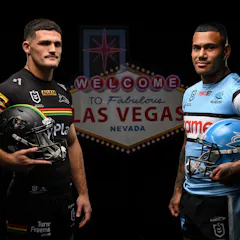
The NRL’s impressive vision to take the game into new markets could help it become the undisputed number one sport in Australia.
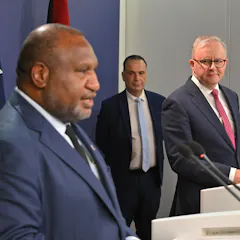
The Australian taxpayer will fork out $600 million for a new NRL team in PNG. It is a bold, expensive and untried sports diplomacy adventure.

The drama comes at an important time in the debate raging over the harms posed by concussion sports.
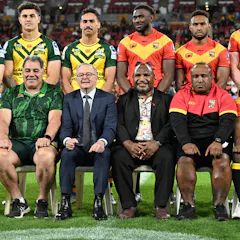
The NRL wants to expand to 20 teams by the end of the decade, with many pros and cons to consider for each hopeful vying to join the league.
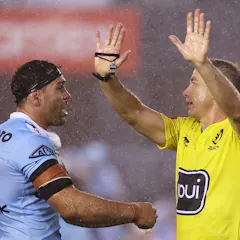
Referees would need to be superhuman to be immune to the risk of bias – maybe that’s something all sports fans could agree on.
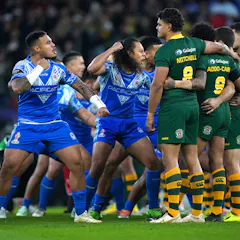
By choosing to play for their ancestral homes, Pacific footballers might lose the chance of bigger pay checks, but they still win at a cultural level. And the payoff for the game is immense.
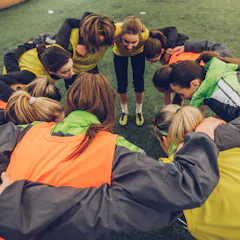
It remains to be seen how sports organisations implement and regulate transgender guidelines if some sporting bodies refuse to voluntarily adopt them.

In a country that has largely avoided political and cultural hyper-partisanship, the Barassi Line is perhaps our strongest sociographic dividing characteristic, and certainly novel globally.
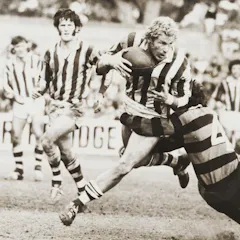
A 1971 High Court ruling on rugby league contracts set an important Australian precedent on human rights. Fifty years on, we need to decide if players deserve the right to a presumption of innocence.
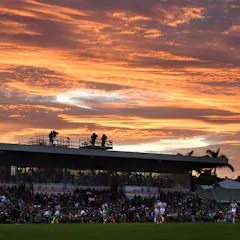
Research shows that hosting sport and other events rarely deliver the economic and tourism benefits commonly attributed to them.
Top contributors
-

Associate Professor of Mathematical Sciences, University of Technology Sydney
-
Associate Professor, Ngā Wai a Te Tūī (Maori and Indigenous Research Centre) and School of Healthcare and Social Practice, UNITEC Institute of Technology
-
Senior Lecturer - Faculty of Health (School Exercise & Nutrition Sciences), Queensland University of Technology
-
Industry Professor and Chief Economist, University of Technology Sydney
-
Senior Lecturer in Sport Management, Deakin University
-
Senior Lecturer, School of Business, Western Sydney University
-
Senior Lecturer (Above the Bar), Aotahi School of Maori and Indigenous Studies, University of Canterbury
-
Lecturer in Sport and Recreation, Auckland University of Technology
-
Associate Lecturer, University of Notre Dame Australia
-
Assistant Professor, Faculty of Law, Bond University
-
Professor of History, De Montfort University
-
Senior Lecturer of Pedagogy and Sports Studies, University of Sydney
-
Lecturer - UQ School of Journalism and Communication, The University of Queensland
-
ANU Visiting Professor, Politics and International Relations, Australian National University
-
Associate Professor, UTS Business School, University of Technology Sydney