
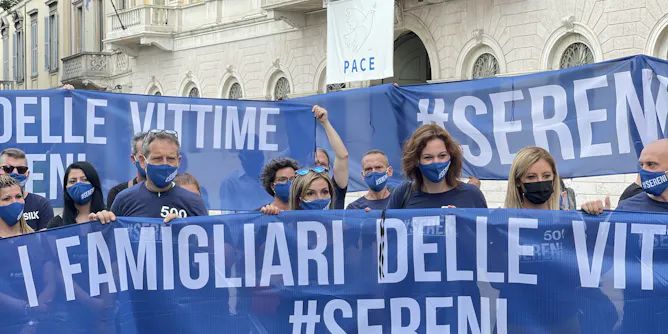
Six years after Italy became Europe’s COVID-19 ground-zero, successful action led by a victims’ association against health governance failings sets an encouraging precedent.
Articles on Public health crisis
Displaying 1 - 20 of 36 articles
The Epidemic Intelligence Service has been a crucial tool in fighting diseases at home and abroad. Its impact would be impossible to replace.

Complications from measles infection are surprisingly common.
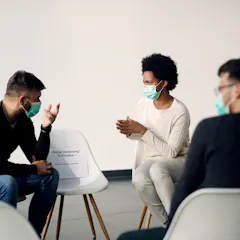
Community-engaged research was disrupted by COVID-19 restrictions, meaning researchers faced serious challenges when their results were most needed: during a public health crisis.

Pressure to ‘publish or perish’ and get results out as quickly as possible has led to weak study designs and shortened peer-review processes.
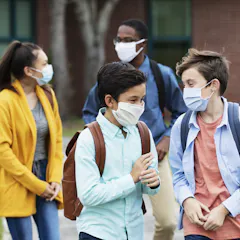
Making room for the input of children and adolescents in responses to the next pandemic would help maintain their health, education, well-being and more.

Responses to COVID-19 health guidelines have been polarized, including in churches. But religious communities have a long history of involvement in public health.

Years after the Sandy Hook massacre, school shootings are still frequent. Addressing the problem head-on takes more than ‘thoughts and prayers.’

Covid-19 has raised important questions about the many different ways of belonging to a country: where does the boundary between insiders and outsiders lie and who should be in or out?
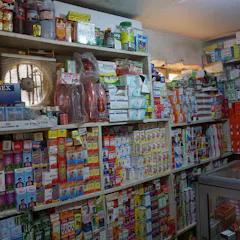
For many reasons, drug users are shifting from the use of conventional psychoactive drugs such as cannabis, cocaine and heroin to pharmaceutical drugs for non-medical purposes.

Stay-at-home orders and social distancing make technology all the more important for maintaining human connections. They also make it easier for abusers to use technology against their victims.
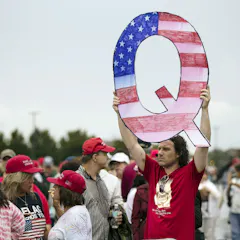
QAnon refers to the online community that believes in conspiracy theories about Donald Trump and the so-called deep state, and is spreading harmful misinformation about COVID-19.
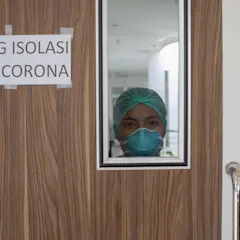
Massive COVID-19 rapid testing is starting this week in the several cities and regencies of coronavirus hot spot of Jakarta, West Java and Banten focusing on vulnerable groups.
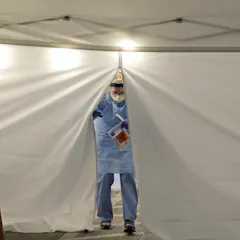
Citizens around the world look warily at the rates of illnesses and deaths at home and abroad as the economic effects of COVID-19 start to hit.

The problematical body-mass index method of measuring fatness means the number of people who are obese has been seriously underestimated.
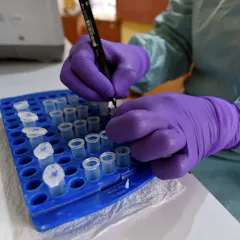
Concerned about rising cases and spread of Lassa fever, the Nigerian Academy of Science has called on government to declare it a national health emergency.
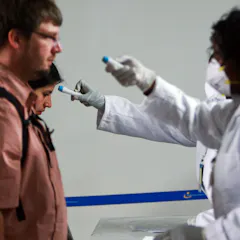
Airport public health officials have got better at screening at ports of entry especially for international arrivals.
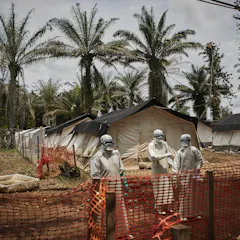
When done properly, a simulation exercise is a useful tool for evaluating preparedness for a public health emergency.
The web or network of exposed people can quickly grow from one case if steps aren’t taken early to avoid further onward transmission.
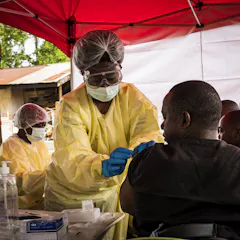
The Ebola outbreak in the DRC has been declared a Public Health Emergency of International Concern. What does this mean for the outbreak response?
Top contributors
-

Tutorial Fellow, School of Medicine, University of Nairobi, University of Nairobi
-
Researcher, consultant, lecturing professor, Drake University
-
Research Scientist, African Population and Health Research Center
-
Ophthalmologist at the School of Medicine, Aix-Marseille Université (AMU)
-
Lecturer, Mercer University
-
Professor of Microbiology and Immunology, University of British Columbia
-
Head of Education and Human Resources Programs at American Association for the Advancement of Science (AAAS); Trustee, California Institute of Technology
-
Medical Epidemiologist , Washington State University
-
Professor of Physical Activity and Public Health Science, University of Strathclyde
-
Research Manager at MRC/Wits Agincourt Research Unit, University of the Witwatersrand
-
Professor in the faculty of Medicine, Mbarara University of Science and Technology
-
Associate Professor & Director of Criminology, Le Moyne College
-
Research Director FNRS Director, Centre d’Etude et des Migrations (CEDEM) Directeur de l'IRSS,Faculté des Sciences Sociales, Université de Liège, Université de Liège
-
Associate Professor of Sociology, Kansas State University
-
Professor of Biochemistry and Biomedical Sciences, McMaster University