

The Privacy Commissioner’s decision is important for protecting renters’ rights. It must be matched with legal reform.
Articles on Privacy
Displaying 21 - 40 of 626 articles

As governments push for stronger data rights like the “right to be forgotten,” evidence suggests AI may not fully comply, raising new regulatory challenges.

International sport organizations must stop ignoring athletes’ data protection rights when regulating sport, including eligibility in the women’s category
Kiwis are using artificial intelligence in growing numbers, but trust is low. Could the push toward safer, more responsible AI offer NZ an economic opportunity?

What began as a tool to identify threats to national security is becoming a surveillance infrastructure that can be used to track everyone.
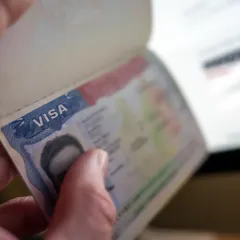
New US requirements for visa-free travel could involve sharing large amounts of biometric and law enforcement data, prompting concerns about privacy.

TikTok deal with Canada leaves critical gaps in ownership, data movement and security safeguards

Canada urgently needs stronger privacy laws, ones that deal explicitly with facial recognition.

In cases like the Tumbler Ridge shooter’s flagged ChatGPT account, Canada lacks a legal framework for assigning responsibility when an AI company possesses information that could prevent violence.

Private use of AI porn may not be illegal, but it doesn’t make it morally right. Here’s why.

Businesses using facial recognition cameras need customer consent – but a new ruling could open a loophole in the law.
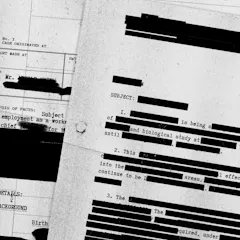
The US government has to balance the need to know with the right to privacy. It’s a delicate balancing act.

After two cyber incidents in as many weeks, attention has focused on how the hacks happened. The harder question is how to prevent a repeat.
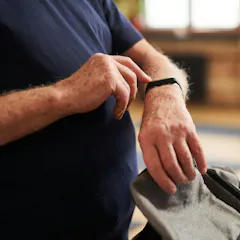
Continuous tracking using real-time location systems is becoming increasingly common in hospitals and long-term care homes, raising questions about ethics and data use.

Shadow AI is the unsanctioned use of AI systems without formal institutional oversight. In health care, it means pasting patient details into public chatbots.
As many as 311,000 Australians could be eligible for part of the payout. But the clock is ticking: claims close on December 31. See if you’re among them.

The Privacy Commissioner found Kmart should have tried other options before facial recognition systems – and told customers what it was doing.

Laws aimed at restricting children’s access to harmful content online may also undermine privacy and restrict free speech.

Griswold v. Connecticut, decided in 1965, set the precedent for several other landmark cases about sex and privacy.

As AI-powered chatbots become more popular, AI-human relationships are a new and growing phenomenon.
Top contributors
-

Associate Professor, School of Law, University of Canberra
-
Associate Professor, Faculty of Law & Justice; Lead, UNSW Public Interest Law & Tech Initiative, UNSW
-
Professorial Fellow, University of Canberra
-
Emeritus Professor in Law and Criminal Justice, Adelaide University
-
Professor of Cyber Security Practice, Edith Cowan University
-
Professor specialising in Internet law, Bond University
-
Dean of Global Business, The Fletcher School, Tufts University
-
Director of UWA Centre for Software Practice, The University of Western Australia
-
Associate Professor in Telecommunications Engineering, Swinburne University of Technology
-
Research Director of the Security and Surveillance Research group; Professor, The University of Queensland
-
Professor (adjunct) and Senior Fellow, Institute for Health Policy, Management and Evaluation, Dalla Lana School of Public Health, University of Toronto
-
Research engineer, Advanced Surveillance Project, CSIRO
-
Senior Lecturer, The University of Melbourne
-
Senior Researcher and Project Manager, Advanced Surveillance Project, CSIRO
-
Former data protection and surveillance stream lead, Allens Hub for Technology, Law and Innovation, UNSW Law Faculty, UNSW