
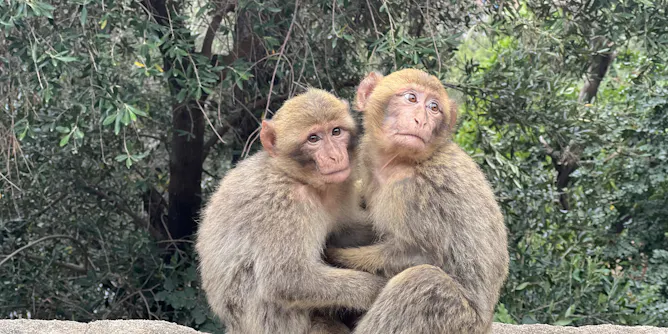
The Barbary macaque is legally protected in Algeria; however, crop losses could increase hostility toward the species if farmers lack practical ways to protect their crops.
Articles on Primates
Displaying 1 - 20 of 133 articles
New research looks for patterns in this sad phenomenon.
It’s not just humans who enjoy interacting with other animal species.
It’s rare for a completely new primate species to be named.

Tamarins and squirrel monkeys have babies with unspeakably large heads compared to their mother’s birth canal.
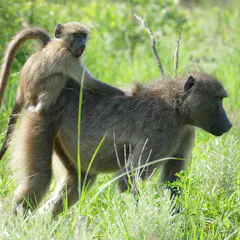
Understanding how female baboons benefit from social bonds helps humans understand their own origins.
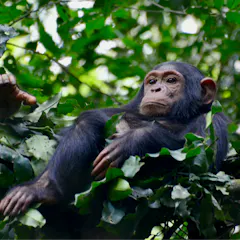
Chimps build a new nest every night – but how they choose what to build and where is surprisingly complicated.

For effective child-rearing outcomes, parenting should not be seen as fixed styles — authoritative or permissive — but as a flexible, adaptive process shaped by environment.
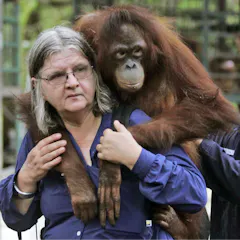
With Jane Goodall and Dian Fossey, Galdikas changed the face of science and opened the world’s eyes to how similar humans are to orangutans and other primates.

Japanese macaques are smart social animals. We expect that Punch will be able to learn how to find a place in his monkey group.
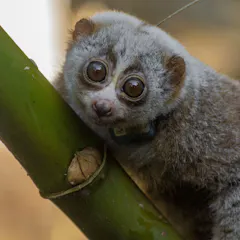
Many wild animals die when well meaning locals and tourists set them free.

Punch’s attachment to his plushie isn’t just the subject of a heart-wrenching video. It harks back to the story of a very famous set of 1950s psychology experiments.
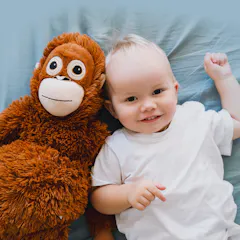
Tails may have disappeared from our earliest ape ancestors due to a genetic mistake.

Great apes are hugely popular with the public at zoos, but a dark illegal trade is affecting the survival of these much-loved animals.

What muscles feet have, how your brain controls them, and how humans evolved all play a part in why people can’t easily move individual toes.

Chimpanzees are capable of responding to wounds in inventive and sometimes cooperative ways.
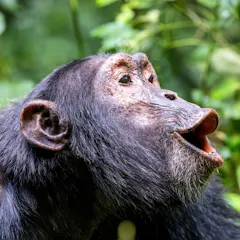
What chimpanzees can teach us about climate change
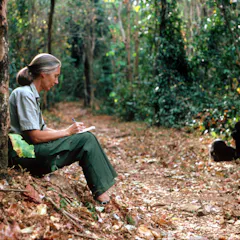
Jane Goodall showed tremendous courage in charting her own course as a pioneering researcher – and working to spread hope wherever she went.
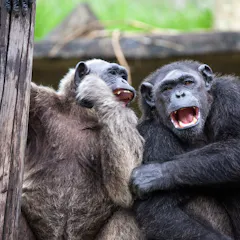
Alcohol consumption is common across human societies, but do animals other than humans regularly drink alcohol?
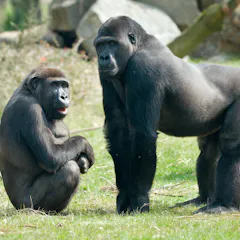
Most primate societies do not have clear-cut sex-biases when it comes to power.
Top contributors
-

Associate professor, Adelaide University
-
Senior Lecturer in Biological Anthropology, University of South Wales
-
Lecturer in Wildlife Conservation
-
Asso. Professor in Anthropology, University College London, UCL
-
Senior Lecturer in Zoology, Bangor University
-
Associate Professor of Evolutionary Biology, Anglia Ruskin University
-
University of Hull
-
Associate professor in Vertebrate Palaeontology, University of the Witwatersrand
-
Lecturer in the School of Applied Sciences, Edinburgh Napier University
-
Senior Lecturer in Biological Anthropology, Australian National University
-
Professor of Anthropology, Durham University
-
Postdoctoral Researcher in Evolutionary Biology, University of Oxford
-
Professor of Primate Biology, Liverpool John Moores University
-
Research Fellow in Biological Anthropology, Monash University
-
Professor of Earth System Science, UCL