

Lori Campbell, a ‘60s Scoop survivor, challenges the CBC’s motives in their exposé on the questionable Indigenous roots of legendary singer-songwriter Buffy Sainte-Marie.
Articles on Podcast
Displaying 101 - 120 of 652 articles
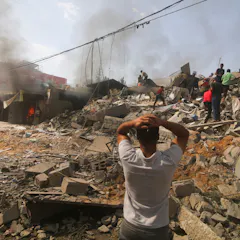
A historian whose family was taken hostage by Hamas, and a geographer with family in the West Bank, get together to discuss a way forward in the Middle East.
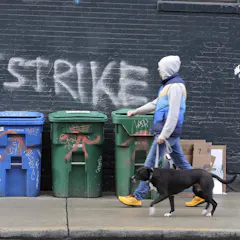
A major factor driving our housing crisis is a shift toward corporate-owned buildings. Today’s guest, Prof. Nemoy Lewis, explains how we got here.
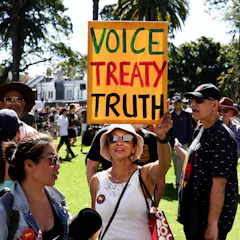
Plus a view on the Voice referendum from Canada. Listen to The Conversation Weekly podcast.
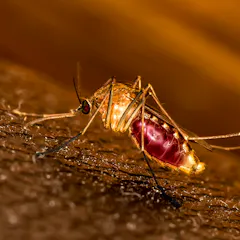
In this episode of The Conversation Weekly, we hear from the scientists behind a new malaria vaccine developed by the University of Oxford.

To honour Truth and Reconciliation Day, we spoke with Terri Cardinal, who headed up one of the many community searches for the children who went missing while attending an Indian Residential School.
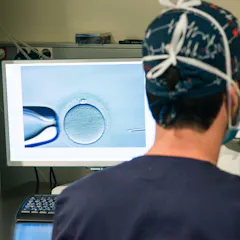
Spain is the egg donation capital of Europe. We hear what is driving women to donate in this episode of The Conversation Weekly podcast.

New research finds Australian listeners value news podcasts for enabling them to better participate in democratic life.
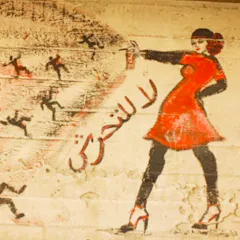
From the Arab Spring to the Belarus Awakening and the ongoing Iranian protest Women, Life, Freedom, female-centered imagery and social media are battlegrounds of resistance and oppression.
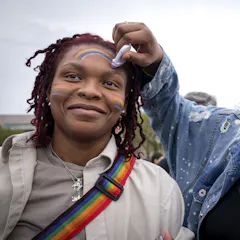
This year, there are more than 400 active anti-trans bills across the U.S. What do things look like in Canada? Are we a safe haven or are we following those same trends?
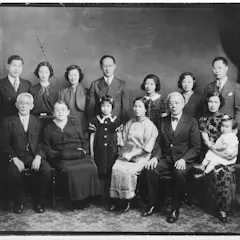
Author Ava Chin, a 5th generation New Yorker, traces the roots of today’s high rates of anti-Asian violence back to 19th century U.S. labour and immigration laws.

As we approach the start of gardening season, it’s a good time to ask some questions about what to plant and who gets to plant.
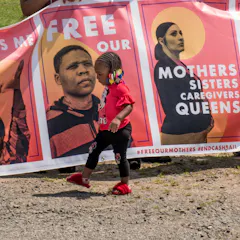
For Mother’s Day, we look at the fastest growing prison population in Canada — racialized women, many of whom are mothers. Experts connect the trend to rising poverty and the attempts to cope with it.
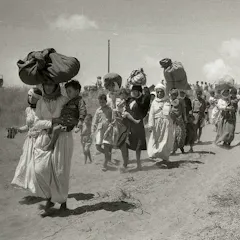
The UN’s resolution to recognize Nakba Day on May 15, to mark the expulsion of Palestinians from their homes in 1948, helps to acknowledge past traumas but does the resolution have other implications?

The brilliance of the new Netflix TV show, ‘Beef,’ which looks at loneliness and urban life, is threatened by the controversial history of one of its supporting actors, David Choe.
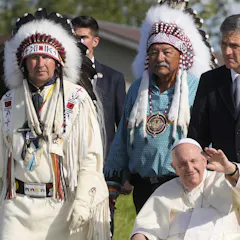
The Vatican has repudiated the Doctrine of Discovery, a 500-year-old decree used to justify settler colonialism. Scholar Veldon Coburn explains this symbolic victory and what still needs to happen.

The renegotiated Safe Third Country Agreement was politically expedient for Justin Trudeau’s government, but poses real policy and programming challenges.
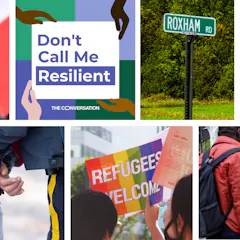
Migration expert Christina Clark-Kazak explains the devastating consequences of the recent change to the Safe Third Country Agreement made by U.S. President Biden and Canadian Prime Minister Trudeau.
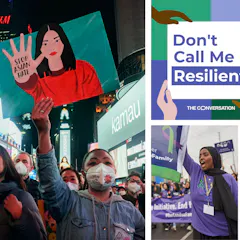
Host Vinita Srivastava goes deep with academic experts and those with lived experience to bring you your weekly dose of news, from an anti-racist perspective.

The U.S.-led invasion of Iraq in 2003 led to civilian death and displacement. Twenty years later, Iraqis are telling their stories of conflict and trauma as they move towards healing.
Top contributors
-

Professorial Fellow, University of Canberra
-
Host, The Conversation Weekly Podcast, The Conversation
-
Associate Science Editor & Co-Host of The Conversation Weekly Podcast, The Conversation
-
Professor of Journalism, The University of Melbourne
-
Head of Urbanism and Associate Professor of Urban Studies, School of Architecture, Design and Planning, University of Sydney
-
Professor of Political Communication; Director CAJII, The University of Melbourne
-
Professor in U.S. Politics and U.S. Foreign Relations, United States Studies Centre,, University of Sydney
-
Environment + Energy Editor and Host of the Climate Fight podcast series, The Conversation
-
Research Associate, US Studies Centre, University of Sydney
-
Honorary Associate Professor, Journalism, University of Wollongong
-
Professor of Communication, Deakin University
-
Host of The Anthill Podcast, The Conversation
-
Associate Professor, Social & Political Sciences, University of Technology Sydney
-
Adjunct Fellow, T.C. Beirne School of Law, The University of Queensland
-
Science + Technology Editor, The Conversation