
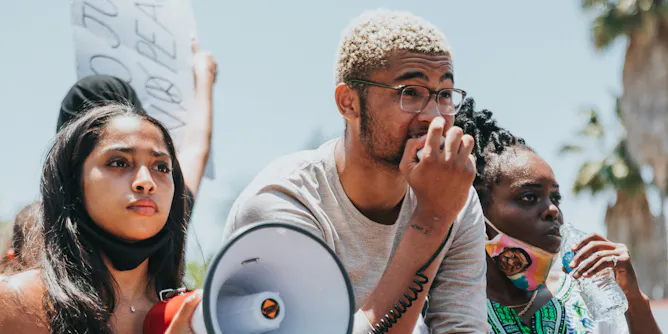
Globally, we’re witnessing a rise in far-right governments increasingly hostile towards universities, historically springboards for progressive change. What should the future look like for universities in Canada?
Articles on Don't Call Me Resilient
Displaying 1 - 20 of 122 articles

A Korean chatbot named Iruda was manipulated by users to spew hate speech, leading to a large fine for her makers — and providing a warning for lawmakers.
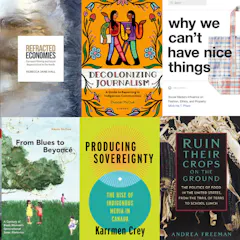
Thought-provoking reads for the critical thinker on your gift list. Each book connects with a past Don’t Call Me Resilient episode. Listen alongside reading to bring the scholar & their ideas to life.
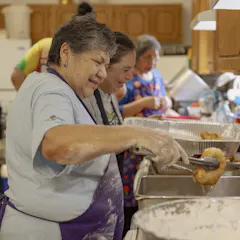
Frybread — a simple, versatile “comfort food” for many Indigenous communities — embodies the contradictions that have dictated Indigenous food and health in North America since colonization.
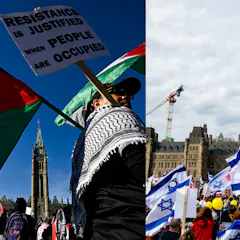
Revisit past episodes of Don’t Call Me Resilient that dive into issues related to the Israel-Gaza conflict, both at home and away.

This playlist of podcast episodes invites listeners to engage in learning and unlearning; to acknowledge the tragic legacies of residential schools and to move beyond a single day of remembrance.
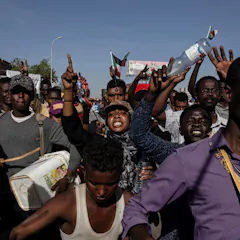
In Sudan, amid a growing humanitarian crisis caused by a year-long and ongoing war, neighbourhood organizations have stepped in as first responders, and to lead the call for peace.
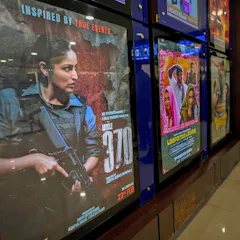
On today’s Don’t Call Me Resilient podcast, political scientist Sikata Banerjee and cinema studies scholar Rakesh Sengupta explain how cinema and social media in India may be helping to sway voters.

Student protests on campuses are calling attention to atrocities in Gaza and challenging university administrators to divest. What is the best way forward that avoids unnecessary violence?
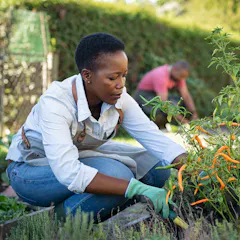
This episode explores how colonial history has affected what we plant and who gets to garden. We also discuss practical gardening tips with an eye to Indigenous knowledge.

Is a cellphone ban, along with increased surveillance, the right way to deal with the impact of addictive and harmful technology in classrooms?
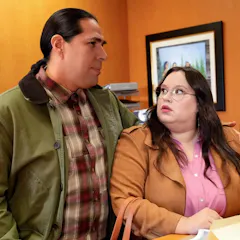
Indigenous media have rapidly expanded over the last 30 years with Indigenous media makers gaining greater control of their narratives.
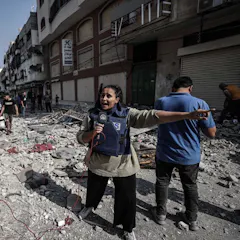
Experts say mainstream media coverage of the war in Gaza is severely skewed — with Palestinian voices getting stifled.

Refugee programs in Canada have always been politicized, but more so in recent years, evidenced in discrepancies between programs for refugees from Gaza and Sudan and those from Ukraine.

Beyoncé’s country-inspired album has caused a stir because the country music scene has a history of racial segregation that has erased its Black roots and gatekept it from Black artists.

For centuries, colonial powers have used starvation as a tool to control Indigenous populations and take over their land and wealth. A look back at two historic examples on two different continents.

We speak with Hilal Elver, the former UN Special Rapporteur on the Right to Food and current University of California professor about the looming famine in Gaza after months of Israeli attacks.

It’s been nine years since #OscarsSoWhite called out a lack of diversity at the Oscars. Has anything changed? Prof. Naila Keleta-Mae and actress Mariah Inger unpack the progress.
The DCMR team has been busy prepping new episodes and next week, we start releasing episodes for season 7, taking our anti-racist lens to the news and issues occupying a lot of our minds these days.

Our playlist is a collection of songs on the theme of resilience, reflection and revolution, inspired by the topics we cover on our Don’t Call Me Resilient podcast.
Top contributors
-

Canada Research Chair, Professor in Performance, Toronto Metropolitan University
-
Associate professor, McGill University
-
Professor, Public and International Affairs, L’Université d’Ottawa/University of Ottawa
-
Assistant Professor, Faculty of Land and Food Systems, University of British Columbia
-
Professor, Technoscience studies + History, University of Toronto
-
Professor of Geography and Environmental Science, Memorial University
-
Associate Dean (Arts and Humanities), Bucknell University
-
Adjunct Assistant Professor, Werklund School of Education, University of Calgary
-
Policy Lead on Technology, Cybersecurity and Democracy, Leadership Lab, Toronto Metropolitan University
-
Founder of Msit No’kmaq
-
President, Food Secure Canada
-
Professor, Jean Augustine Chair in Education, Community & Diaspora, York University, Canada
-
Associate Professor, Faculty of Education, Wilfrid Laurier University
-
Professor of Colonial History, University of Victoria
-
Assistant Professor of History, Thompson Rivers University