

Research regarding corporate social responsibility actions detected a pattern in terms of the benefits for brands.
Articles on Philanthropy and nonprofit research
Displaying 61 - 80 of 116 articles

Efforts to make donated food as healthy as possible backfire if the recipients throw it out.

To date, the program has provided nearly $10 million to roughly 137,000 of the country’s poorest citizens.

So much went wrong with the homes built by the Make It Right Foundation that its low-income homebuyers were deprived of the financial security they were promised.
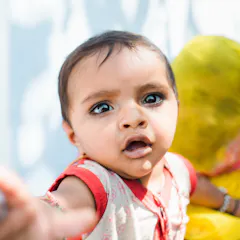
These photos tend to oversimplify the issues that cause poverty and the suffering of poor people in low-income countries.

When staff members learn how to acknowledge and talk about their social differences, nonprofits can get better at developing strategies, forming alliances and mobilizing people, a recent study found.

Little comprehensive research about what the charitable accounts, known as DAFs, are supporting has been conducted until now.

Decades of data indicate that over time, the foundations gave less to the founder’s own community and religious causes. But the share of their donations supporting social movements rose.

Muslims also gave more to causes tied to relief from economic and health problems that arose during the COVID-19 pandemic.

Asking for input is more common than letting stakeholders help set a foundation’s priorities or giving them any say where grant money flows.
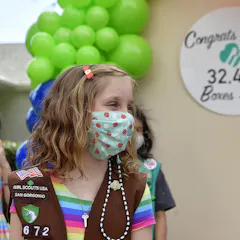
Even after the #MeToo movement hit its stride, support for these organizations still made up only a sliver of all charitable donations in 2018.
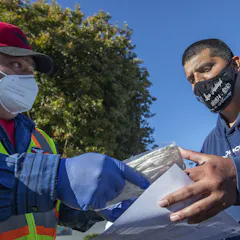
Experiments in the US and Italy that observed people’s charitable choices found similar results: People tend to prefer to help local communities.

Larger shares of Asian, Black and Hispanic people are donating to these nonprofits, compared with white donors. They are also more likely to give to others through less formal channels.
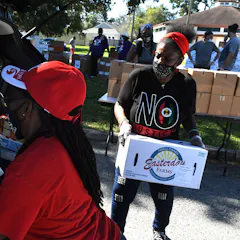
Normally, giving declines when the economy contracts. But charitable donations grew anyway, two researchers explain.

A research team found that crowdfunding is a popular way to support social justice causes. They also determined that little of this charitable giving supports strangers.
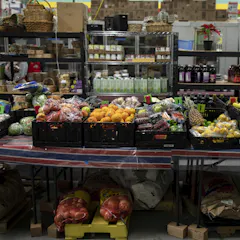
Behavioral economics, long employed in grocery stores to guide customers to certain products, could be employed by food banks and pantries to encourage healthier choices.

The first survey of its kind in 15 years also indicated that the number of couples in which one partner makes decisions about giving for the whole household is rising.
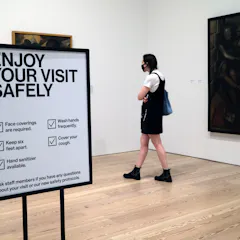
Arts organizations have been particularly hard hit, but many may benefit from new sources of emergency government funding.
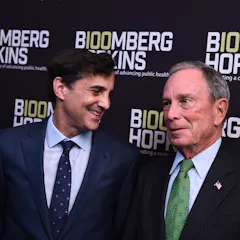
In some cases, big donors are supporting higher education to support a philanthropic strategy that includes racial and economic justice.

Whether they are single or married, giving as a group or on their own, women express their generosity in distinct ways.
Top contributors
-

Interim Director of Data & Research Partnerships at the Lilly Family School of Philanthropy, Indiana University
-
Associate Professor of Nonprofit Studies, George Mason University
-
Associate Director of Research, Lilly Family School of Philanthropy, and Managing Editor, Giving USA, Indiana University
-
Professor of Economics and Philanthropic Studies; Associate Dean for Research and International Programs, Lilly Family School of Philanthropy, Indiana University
-
Interim Director of the Women's Philanthropy Institute, Indiana University
-
Associate professor, Bowling Green State University
-
Assistant Professor of Philanthropic Studies, Indiana University
-
Professor of Public and International Affairs, Baruch College, CUNY
-
Associate Professor of Planning, Public Policy and Management, University of Oregon
-
Research Associate of Philanthropy, Women's Philanthropy Institute; Doctoral student of Philanthropy, Indiana University
-
Assistant Professor of Operations and Business Analytics, The Ohio State University
-
Assistant Professor of Economics, University of Missouri-Columbia
-
Associate Professor of International Business, University of South Carolina
-
Associate Professor of Philanthropic Studies, Indiana University
-
Associate Professor of Nonprofit Management, Indiana University