

Have some much needed non-Brexit news.
Articles on Paleontology
Displaying 121 - 140 of 184 articles
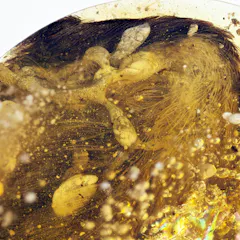
For the first time, feathers, bone and skin of the earliest birds have been found, trapped in amber.
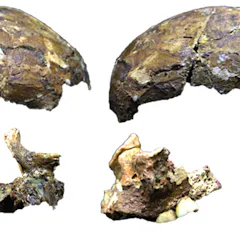
Another look at a skull unearthed in Malaysian Borneo 60 years ago can shed light on the mystery of how early humans moved throughout Southeast Asia thousands of years ago.

One of the enduring controversies in evolution is why snakes evolved their long, limbless bodies. A new study suggests snakes may have lost their legs at sea, before crawling ashore.

New study supports the idea that an asteroid, rather than climate changes, caused the mass extinction that wiped out the dinosaurs.
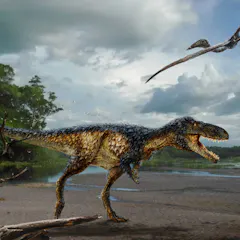
Fossils discovered in Uzbekistan help tell the story of how T. Rex evolved to become the biggest predator ever to live on land.
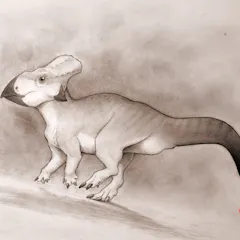
We don’t know much about dinosaurs from the east coast of the USA. But the discovery of a new sheep-sized dinosaur helps shed light on their mysterious evolution.
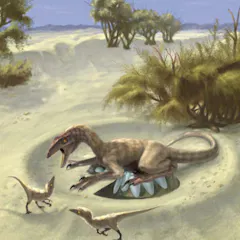
Scientists have come up with a way to tell how hot dinosaurs were by studying the remains of their eggs.
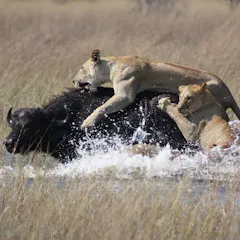
Being big – larger than a dog – increases the risk of being wiped out in a mass extinction.
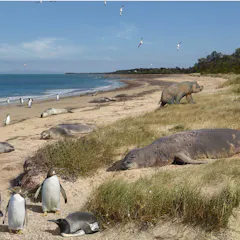
Palaeontologists say it’s rare to find a rich fossil site in an urban area. That’s why they’re worried such a site near Melbourne could be threatened by proposed development.
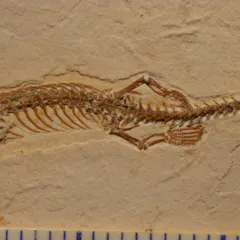
A new study of the first ever snake fossil with legs suggests that snakes evolved on land rather than in the ocean, as previously thought.
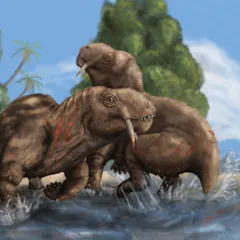
New evidence shows marked similarities between two fossils – one from Brazil, the other South Africa. This confirms compelling geological findings that continents were once one giant land mass.
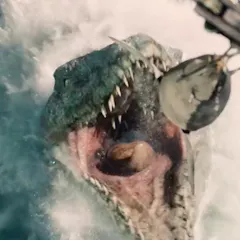
Palaeontologists have been lining up to complain about the inaccuracies in the new blockbuster. They need to focus on the positives.
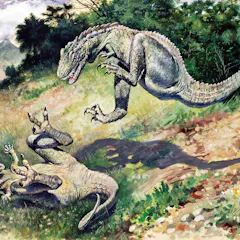
A “Pleistocene Park” might be a more realistic scenario.
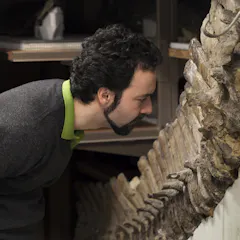
Organic dinosaur remains were thought to be extremely rare – until now.

Ever wondered what it would like if you carved up the biggest land-based carnivore of all time?

We used to think of sharks as primitive fish because the had cartilage instead of bones. Turns out there was a good reason why and it makes them anything but primitive.
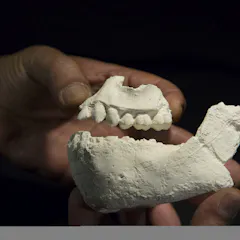
A completely new human ancestor dating back to 3.5– 3.3 million years ago has been discovered.
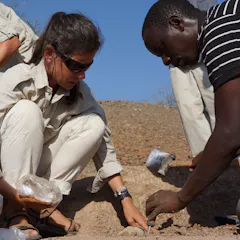
Stone tools excavated in Kenya date back 3.3 million years – making them about a million years older than the oldest known fossils from our own hominid genus Homo. Who made and used these tools?
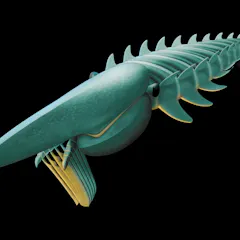
A 480 million year old fossil recently unearthed in Morocco fills in some of the evolutionary story for arthropods, members of the largest animal phylum on Earth.
Top contributors
-

Emeritus Strategic Professor in Palaeontology, Flinders University
-
Professor of Vertebrate Palaeontology, University of Bristol
-
Chancellor's Fellow in Vertebrate Palaeontology, University of Edinburgh
-
DeWitt Wallace Professor of Biology and Geology, Macalester College
-
Associate professor in Vertebrate Palaeontology, University of the Witwatersrand
-
Palaeontologist, University of Southampton
-
Adjunct professor, UNSW
-
Associate Professor in Ancient DNA, University of Otago
-
Professor of Palaeobiology, University of Leicester
-
John Curtin Distinguished Professor, Molecular and Life Sciences, Curtin University
-
Professor of Palaeobiology, University of Leicester
-
Professor of Earth and Atmospheric Sciences, Biology and Anthropology, Indiana University
-
Senior Research Scientist, South Australian Museum; Flinders University
-
Lecturer in the School of Applied Sciences, Edinburgh Napier University
-
Research Fellow in Biological Anthropology, Monash University