

In the old days, companies like Apple and Amazon went public early to access cash to grow. These days, soon-to-be-public companies are already flush with cash from private finance.
Articles on OpenAI
Displaying 41 - 60 of 158 articles
Because of the way generative AI works, there is no real way to prevent false information being presented as truth – or to correct it permanently.

What Canada’s response to AI protocols in the wake of the Tumbler Ridge tragedy gets wrong, and what durable governance actually requires.

AI might have ‘PhD-level’ intelligence. But substituting it for a PhD student sacrifices a special part of the academic ecosystem.
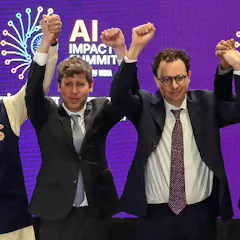
Questions about ethical AI may go out the window when democratic norms are collapsing.

In cases like the Tumbler Ridge shooter’s flagged ChatGPT account, Canada lacks a legal framework for assigning responsibility when an AI company possesses information that could prevent violence.

AI-generated racism does not spread because it is technologically convincing. It revives familiar narratives that audiences accept and circulate, even when they are exposed as false.

As ChatGPT moves toward ads, fears about manipulation are rising. But if designed well, advertising inside AI could help fund access while making shopping easier.

OpenAI’s restructuring may serve as a test case for how society oversees the work of organizations with the potential to both provide benefits and harm humanity.
AI companies are gearing up to follow the social media model of monetizing their platforms through advertising. The danger for consumers with AI goes beyond data privacy to covert manipulation.
AI systems began a major shift in 2025 from content creators and chatbots to agents capable of using other software tools and acting on their own.

AI wants to get to know you better, and then sell to you.
Money and morality are a challenging corporate combination.

To reduce emissions put into the atmosphere, Google is using carbon capture and sequestration. But not all CCS projects are the same.

Banking is set to be fundamentally rewritten by artificial intelligence, whether we’re ready or not. The real test is whether that transformation will be fair.
We’ve always relied on friends and family to confirm our sense of reality. Now we’re increasingly expecting AIs to do it instead.
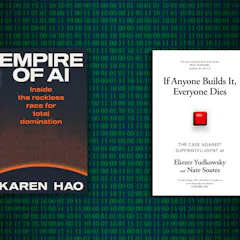
Two new books reveal the gap between the promises of AI companies and the reality. One exposes the industry’s questionable ethics. The other argues we’re racing to extinction.

With investor unease over AI stocks having just wiped a trillion dollars from markets, have we really learned the big lessons from 25 years ago?

Instead of banning AI and ChatGPT, students in the law sector should be taught to use them responsibly.

Workplace productivity and educational challenges get the headlines, but it turns out that ChatGPT and its ilk are more likely to be used for household tasks.
Top contributors
-

Senior Lecturer, School of Engineering, Australian National University
-
Professor of Philosophy and Director of Applied Ethics Center, UMass Boston
-
Professor in Business Information Systems, University of Sydney
-
Professor of Computer Science, University of California, Berkeley
-
Professor of AI, Research Group Leader, UNSW
-
Guest Research Fellow, School of Computing and Information Systems, The University of Melbourne
-
PhD Student, School of Computing, Australian National University
-
Professor of Design and Innovation, Nottingham Trent University
-
Director of Sydney Executive Plus, Business School, University of Sydney
-
Professor of Management, University of Essex
-
Assistant Professor, Faculty of Business, University of New Brunswick
-
Professor of Law, University of Wollongong
-
Senior Research Fellow in AI Accountability, Queensland University of Technology
-
Professor of International Business, The Fletcher School & Tisch College of Civic Life, Tufts University
-
Lecturer in Artificial Intelligence, King's College London