
The forced sale of the Chinese video app in the US could further deepen divisions.
Articles on Online misinformation
Displaying 1 - 20 of 29 articles

A machine learning study of millions of online posts found five basic kinds of users – including ‘disagreers’ who mainly like to contradict others.

Harmful stereotypes, misinformation and conspiracy theories have all found their way into meme format.

While social media has the potential to empower storytelling, it can also spread misinformation and lead to brain rot.

Researchers in climate change communication and environmental sociology propose potential ways to tackle climate change misinformation online

An expert on news consumption looks at how the popular new platform could shake up the industry.

The new proposal is aligned with approaches in the European Union and United Kingdom – and overcomes the flaws of banning people under 16 from social media.
It is expedient for politicians to blame online platforms rather than acknowledge their role in producing a toxic political discourse.

When political discourse is devoid of facts and high on demonization, it’s no surprise that political violence is the result. There is a way out, but it’s slow and will take effort.
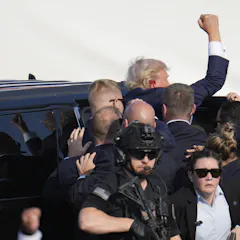
Politicians and other influential actors are amplifying conspiratorial content – potentially contributing to increased distrust in the US political system.

Contrary to assumptions that seniors are technologically averse, many older adults now show remarkable agility in navigating digital media.

These cases have asked the justices to consider how to apply some of the most sweeping constitutional protections – those of free speech – to an extremely complex online communication environment.

People who dive into misinformation are driven to satisfy an emotional need, according to our new research.

A new study unexpectedly found a way to help people assess social media posts with less bias and more care – pairing them up with partners who have a different perspective.

Fighting misinformation doesn’t have to involve restricting content or dampening people’s enthusiasm for sharing it. The key is turning bad habits into good ones.
How can fake news be managed without government overreach? Under the draft bill, platforms continue to be responsible for the content on their services – not governments.
The flood of misinformation on social media could actually be worse than many researchers have reported. The problem is that many studies analyzed only text, leaving visual misinformation uncounted.

Paid blue tick status could make it harder to tell if information is coming from a legitimate source.
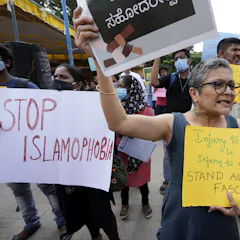
While the two incidents in Markham may not be directly linked to extremist groups, they have occurred within a global ecosystem of Islamophobia.
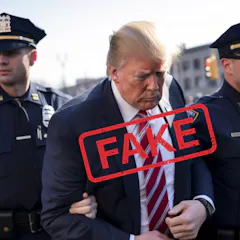
AI tools are now generating content that’s difficult to distinguish from reality.
Top contributors
-

Professor of Information Sciences & Director, Social Change Enabling Impact Platform, RMIT University
-
Professor of AI and Behavioral Data Science, University of Technology Sydney
-
Adjunct Instructor in Cybersecurity, Johns Hopkins University
-
PhD Candidate at the Digital Media Research Centre, Queensland University of Technology
-
Researcher, JD Candidate, Royal Roads University
-
Postdoctoral Research Associate, Social Decision-Making Lab, University of Cambridge
-
Senior Lecturer in Media & Communications Studies, The University of Melbourne
-
Emeritus Professor of Education, Stanford University
-
Assistant Professor of Communication, Texas A&M University
-
Research Fellow, Data Science Institute, University of Technology Sydney
-
Postdoctoral Research Associate, School of Management, Yale University
-
Associate Professor in Digital Media, Queensland University of Technology
-
Assistant Professor of Multiliteracies, Queen's University, Ontario
-
Associate Professor of Law, Quinnipiac University
-
Professor of Political Communication; Director CAJII, The University of Melbourne