
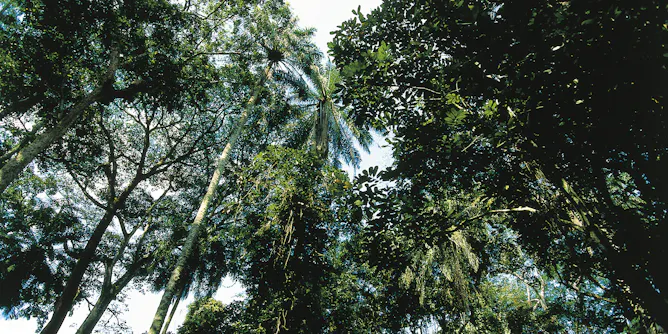
New research presents evidence of a wet forest environment 150,000 years ago in Côte d'Ivoire.
Articles on Oil palm
Displaying all articles

While tropical forests are home to rare species, logged forests still feel and sound like forests, while oil palm plantations are agricultural landscapes.
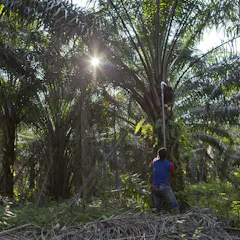
Palm oil is used in half the products sold in global supermarkets. Much of the oil comes from Indonesia where it is grown on plantations that are relatively inefficient, but occupy huge areas of land.
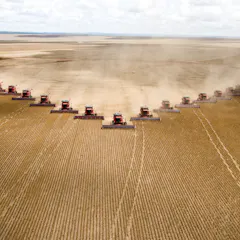
A new study finds that by 2030, less than one-third of the world’s major crop harvests will go directly to feed people.

The changing dynamic between Borneo’s pigs and Indigenous people is a powerful reminder of the fragility of the human-nature connection.
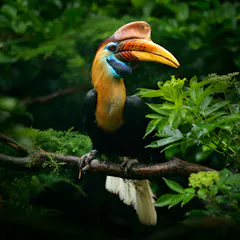
Instead of boycotting palm oil, source it from pastureland and not recently logged forests.
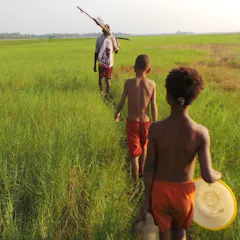
Indigenous Marind in West Papua consider the forest and its plants and animals as kin. These culturally valued multispecies relations, however, are being disrupted by oil palm development projects.
Top contributors
-

Postdoctoral Research Associate in History, University of Sydney
-
Senior lecturer, Universiti Malaysia Sabah’s Institute for Tropical Biology and Conservation, Indigenous Knowledge
-
Researcher and Lecturer in Conservation Science, The University of Queensland
-
Professor, Department of Anthropology, Universitas Gadjah Mada
-
Professor, S.J. Hall Chair in Forest Economics, University of California, Berkeley
-
Professor, Department of Anthropology, University of Toronto
-
Emeritus Professor of Biotechnology, University of South Wales
-
Professor, University of Minnesota
-
Postdoctoral fellow in Environmental Science, Trinity College
-
Research Fellow in Tropical Ecology, National University of Singapore
-
Professor of Ecology, Department of Biology, University of Oxford
-
Professor of Insect Ecology, University of Cambridge
-
Independent Group Leader, Max Planck Institute of Geoanthropology
-
MSCA Postdoctoral Fellow, Centro Nacional de Investigación sobre la Evolución Humana (CENIEH)