
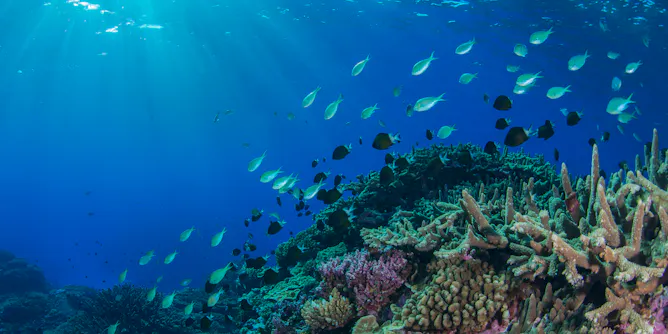
The 2016 heatwave that caused mass bleaching on the Great Barrier Reef didn’t just kill corals - it also significantly changed the makeup of fish communities that call these reefs home.
Articles on Ocean warming
Displaying 81 - 93 of 93 articles
The 2016 bleaching on the Great Barrier Reef was the worst on record. Now a new analysis points the finger squarely at human-induced warming, and warns that the entire reef’s future is at stake.
Reef Life Survey, a citizen science project where hundreds of volunteer scuba divers survey thousands of ocean sites, has revealed new insights into marine mysteries.
Corals on the Great Barrier Reef that are tolerant to warmer waters can be used to help repair other parts of the reef damaged by recent coral bleaching events.
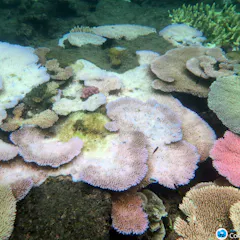
Regional variations in sea temperature can make all the difference between a coral reef suffering major bleaching or surviving as a refuge for corals, new research shows.
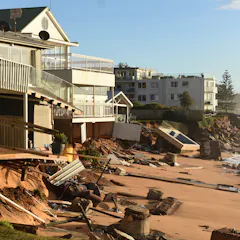
The ocean warming that might increase the threat of a catastrophic storm could also create the conditions for a natural defensive barrier.
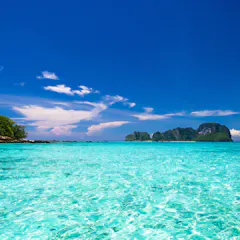
Regional solutions can spread across the planet.
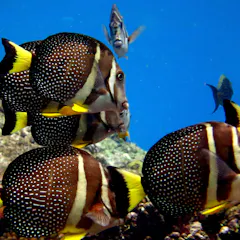
Plant-eating fish control the spread of seaweed and algae on coral reefs. New research explaining why populations of these fish vary from site to site could lead to better reef protection strategies.

They give us part of the air we breathe but microscopic phytoplankton can also be toxic. They are also on the move thanks to climate change so a new Australian database hopes to monitor any changes.

A warming Earth could see invading species arrive in Antarctica via the floating “taxi service” of the sea. That could be a threat to the southern continent’s delicate ecosystem.
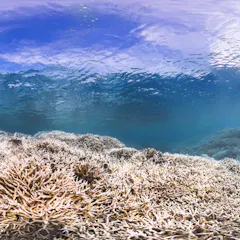
Corals are under threat from warming seas, and new research shows that even the toughest corals will suffer.
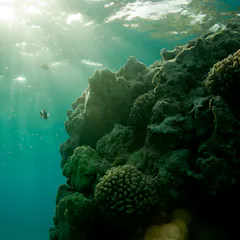
Corals are experiencing only the third global bleaching event in recorded history, caused by warming seas. But worse is yet to come.
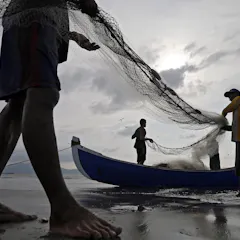
Failing to stick to the world’s agreed global warming limit of 2C won’t just affect the atmosphere - it will play havoc with the oceans too, potentially ruining ecosystems on which much of humanity depends.
Top contributors
-

Professor in Ocean Physics, University of Auckland, Waipapa Taumata Rau; Earth Sciences New Zealand
-
Professor of Marine Biology, Te Herenga Waka — Victoria University of Wellington
-
Climate Projections Scientist, CSIRO
-
Senior Climatologist, Australian Bureau of Meteorology
-
Lecturer in Marine Biology, Te Herenga Waka — Victoria University of Wellington
-
CEO and Scientific Director, Ocean Frontier Institute; Professor of Oceanography, Dalhousie University
-
Postdoctoral Researcher in Ocean and Climate, CSIRO
-
Professor, School of the Environment, The University of Queensland
-
Assistant Professor, University of Amsterdam
-
Professor in Marine Science, University of Otago
-
Professor of Civil Engineering and Director of the Beaty Water Research Centre, Queen's University, Ontario
-
Senior Marine Ecologist, Institute for Marine and Antarctic Studies, University of Tasmania
-
Director of the ARC Centre of Excellence for Our Future Oceans and Scientia Professor in Oceanography, UNSW
-
Distinguished Scholar, National Center for Atmospheric Research; Affiliate Faculty, University of Auckland, Waipapa Taumata Rau
-
ARC Future Fellow and Associate Professor in Climate Science, ARC Centre of Excellence for 21st Century Weather, The University of Melbourne