
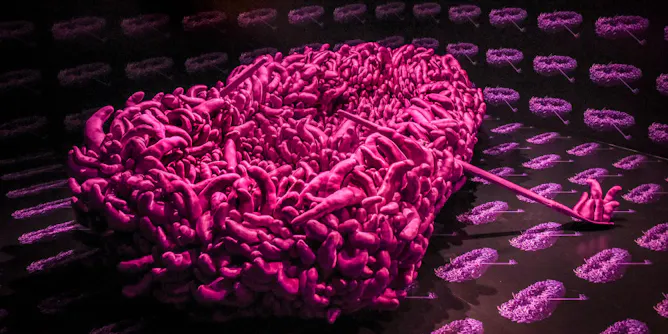
Critics have attributed the repetitive, labor-intensive nature of Kusama’s work to be a product of mental illness. But a closer look reveals deliberate choices and gender dynamics at play.
Articles on OCD
Displaying 1 - 20 of 40 articles

Monsters are often used to represent mental health struggles, in both literature and film.

Intrusive thoughts are sudden, unwanted and often negative. And they can be very distressing for new parents.

Unwanted, intrusive thoughts about infant harm are a normal, common feature of new parenthood, not necessarily a sign that a parent poses a danger to their child.

Some people with obsessive-compulsive disorder have experienced traumatic events as children, and develop a deeply held fear of who they are or might become.

A scary thought that keeps on popping into your mind doesn’t mean it’ll come true or you’ll act on it. But some types of intrusive thoughts are worth listening to.

Many of us have rituals or habits to cope with worry that give us more of a sense of control. But here’s when they might be something more serious.

It’s difficult to manage the stressors of work if you’re struggling with your mental health. Here are some recommendations for how to seek support.

Antidepressants aren’t only useful for managing depression symptoms.

Skin picking shouldn’t be dismissed as merely a bad habit. It’s a disorder that can have serious –even fatal – consequences.

Heartstopper is a celebration of ‘queer joy’ that uses the imaginative intimacy of graphic novels to invite the reader into its tight-knit world.
Research decisions made by clinical psychologists in the 1970s can help explain why so many people, myself included, struggle to make sense of our obsessional thoughts.
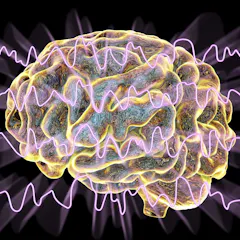
What do we know so far about this promising form of treatment and how it might help people with a range of neurological conditions? And is it living up to its promise for people with depression?
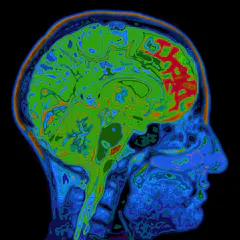
Completely new forms of drugs may soon be available to treat obsessive-compulsive disorder.

Queer disabled people struggle to be seen in queer spaces that often do not accommodate them.

People can be reluctant to discuss symptoms with their doctor. When they do, their symptoms can be mistaken for other illnesses. Even when people are diagnosed, they don’t always get the right treatment.
The early research suggests the drugs might be effective for some conditions. But scientists have safety concerns.
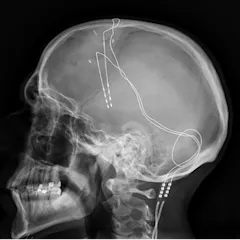
Deep brain stimulation and trasncranial magnetic stimulation treat mental illness by sending electrical currents into parts of the brain. Every new patient provides researchers with a wealth of information. Listen to The Conversation Weekly podcast.
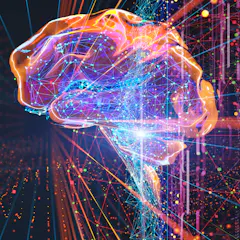
This rare procedure is offered by only a handful of centers in the US and around the world and should be used only when less invasive treatment options for OCD have been tried.

Understanding and changing the environment in which habits form is a critical step when it comes to breaking unwanted behaviors and forming healthy ones.
Top contributors
-

Professor of Clinical Neuropsychology, University of Cambridge
-
Professor of Psychiatry and Neuroscience, Wayne State University
-
Professor of Psychiatry, University of Colorado Anschutz
-
PhD Candidate in Psychology, UNSW ; Black Dog Institute
-
Postdoctoral Research Fellow and Clinical Psychologist, UNSW
-
Professor in Psychology, UNSW
-
Professor of Biological Psychology, Linnaeus University
-
Post-doctoral Researcher in Neuroscience, University of Cambridge
-
PhD Candidate, Instituto Cajal - CSIC
-
Professor of Psychology, Goldsmiths, University of London
-
PhD Candidate, University of Stuttgart
-
Chancellor's Fellow, History of Medicine, Emotions and Modern British History, University of Edinburgh
-
Professor of Clinical Psychology and Applied Science, Director, University of Bath and AWP NHS Trust Centre for Specialist Psychological Treatments of Anxiety and Related Problems (CSPTARP), University of Bath
-
PhD Candidate, University of Milan
-
Profesor Ayudante Doctor - Facultad CC Salud- Depto. Neurociencia y Ciencias Biomédicas, Universidad Carlos III