

ACT has been trying to pass a version of its Regulatory Standards Bill for 20 years. Opposed by the Waitangi Tribunal and others, it is now poised to succeed.
Articles on NZ National Party
Displaying 21 - 40 of 78 articles
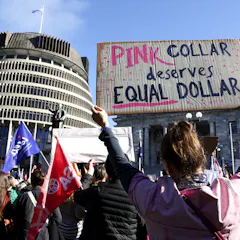
The National Party has always relied on electoral support from women. But that has eroded over time, and pay equity and KiwiSaver changes could hasten the decline.

There is global interest in limiting social media access for young people. But the arguments for a ban for people under 16 don’t really stack up.

As he prepares to blow out 80 candles this Friday, New Zealand’s Deputy Prime Minister Winston Peters continues to defy political gravity.

Standardised testing has been tried and scrapped before. But with a tender for a new ‘standardised assessment tool’, the government appears to be trying again.

The ACT Party leader believes government assets should provide a return or be sold. But a majority of New Zealanders are consistently opposed to more privatisation.
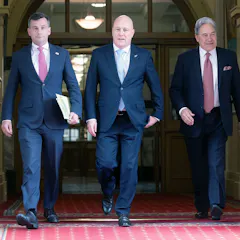
The National-led coalition has a challenging mandate to govern, given voter expectations and surprisingly high levels of satisfaction with the outgoing Labour Party.

A near majority of people are concerned government is unduly influenced by ‘big interests’. But party funding laws are complex and overdue for reform.
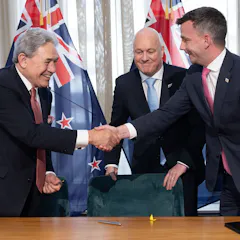
The tail wagging the dog is a risk in any coalition arrangement. But with two tails wagging vigorously, the National-led government is testing the limits of consensus and policy coherence.
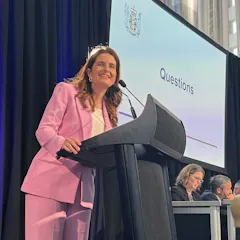
Finance minister Nicola Willis is promising to chart a ‘middle course’ in her first budget. Her bigger challenge is to bring middle New Zealand along with her.

City deals are being touted as the answer to NZ’s local infrastructure problems. Lessons from the UK and Australia suggest greater transparency and more coherent planning should be on the table too.
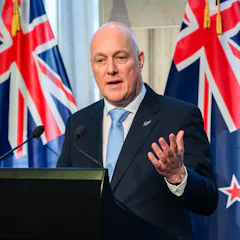
Poor personal and party polling early in the government’s term puts the spotlight on Christopher Luxon’s leadership. He has the power bases, but can he mobilise them effectively – and in time?

Punishing parents of truant children misses factors – such as poverty and hunger – keeping some children out of school.

History suggests the new NZ government’s pledge to cut budgets and jobs in the public sector will cost more in the long run – and damage morale in the process.

The ACT Party claims revisiting the principles of the Treaty of Waitangi is about political equality. But removing a Māori cultural dimension to New Zealand’s democracy would have an opposite effect.

The country’s first formal three-party coalition will test Christopher Luxon’s promise of ‘strong and stable’ government – and the minor parties’ patience if things don’t go their way.

Working for Families tax credits favour those in work, yet discourage them from working or earning more. But there is a cost-effective way to improve the system for those on welfare and low incomes.
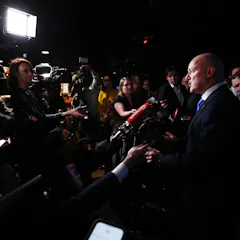
Beneath the obvious policy differences between Labour and National lies a tacit consensus on fundamental economic settings. Until that changes, political choice will be constrained.
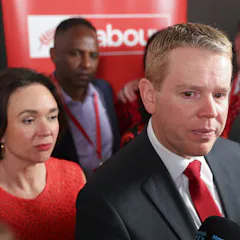
The final outcome of the general election may not be known for two weeks. But one thing is clear: the country has resoundingly rejected the government that led it through the pandemic.
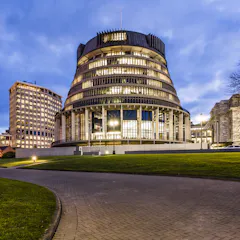
With final results awaiting the inclusion of special votes, the shape of New Zealand’s next parliament hangs in the balance. Here are the variables in play.
Top contributors
-

Professor of Politics, Te Kunenga ki Pūrehuroa – Massey University
-
Research Associate, Public Policy Institute, University of Auckland, Waipapa Taumata Rau
-
Election Analyst (Psephologist) at The Conversation; and Honorary Associate, School of Mathematics and Statistics, The University of Melbourne
-
Professor of Politics and Policy, University of Auckland, Waipapa Taumata Rau
-
Professor of Political Science, Te Herenga Waka — Victoria University of Wellington
-
Adjunct Professor, Stout Research Centre, Victoria University of Wellington and Auckland University of Technology, Professor of Political Science, Charles Sturt University
-
Associate Professor, School of Management and Marketing Te Kahui Kahurangi, Te Kunenga ki Pūrehuroa – Massey University
-
The Conversation
-
Honorary Adjunct Professor, Te Kawa a Māui - School of Māori Studies, Te Herenga Waka — Victoria University of Wellington
-
Senior Lecturer in Comparative Politics, Te Herenga Waka — Victoria University of Wellington
-
Professor of Politics, University of Canterbury
-
Honorary Associate Professor, Economic Policy Centre, Auckland Business School, University of Auckland, Waipapa Taumata Rau
-
Teaching Fellow, School of History, Philosophy, Political Science and International Relations, Te Herenga Waka — Victoria University of Wellington
-
Professional Learning and Development Facilitator in Literacy Education, Te Kunenga ki Pūrehuroa – Massey University
-
Professor of Public Administration, Te Herenga Waka — Victoria University of Wellington