
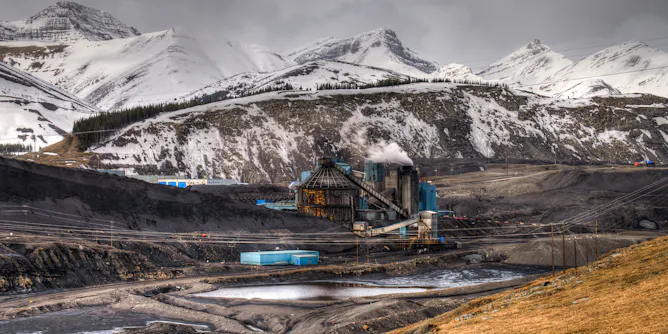
An American coal company is suing the Canadian government over Alberta’s plan to combat climate change.
Articles on North American Free Trade Agreement (NAFTA)
Displaying 41 - 60 of 120 articles
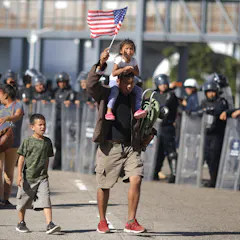
Donald Trump portrays migrants as a foreign problem ‘dumped’ on America’s doorstep. That view ignores the global forces that bind nations together, including trade, climate change and colonization.

Boasting the world’s biggest and strongest economy, the U.S. has enormous leverage when it sits down with a partner to negotiate a trade deal. Threats and tariffs are not really helping.

Canada needs to diversify its trade beyond the United States and increase links to rapidly growing emerging market economies, particularly in Asia, despite the “anti-China” clause in the USMCA.
While a divided Congress will likely mean gridlock, there are two economic policies likely to see significant change: trade and infrastructure.

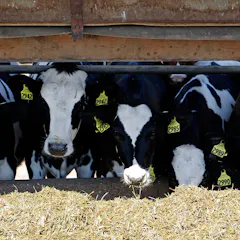
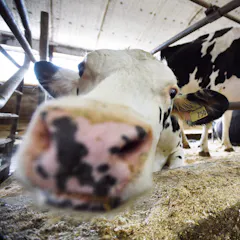
Countries that have phased out supply management systems in the dairy industry have seen an initial spike in production, then a steady decline. That’s why Canada should protect its dairy farmers.
The USMCA, if ratified, will fundamentally alter North America’s political and economic structures, increasing American dominance over its neighbours.
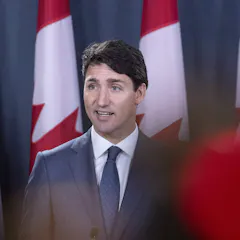
The USMCA, while imperfect, is overall a positive development for Canada. It has a number of structural elements that may very well leave us stronger when negotiating trade pacts in the future.
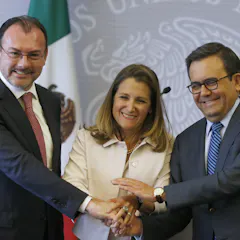
The death of the rules-based world order that supports the global economy and free trade has been greatly exaggerated.

There is a gap between free trade and free migration.
Canada, the US and Mexico have signed a deal to rip up the 25-year-old NAFTA and replace it with something new. But what’s actually changed?
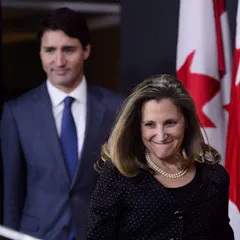
Who are the winners and losers in the new USMCA? It’s complicated, but one thing’s for certain: Canada should never again allow itself to be overly dependent upon one trading partner.

The relief that the U.S. didn’t make things even worse for Canada in the new NAFTA should be tempered by the realization that the moment of reckoning hasn’t passed; it’s only been postponed.
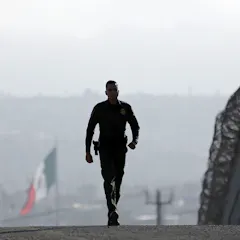
Free trade requires not just the free movement of goods, but of people too. If Donald Trump really wants the U.S. to have a competitive advantage, he should be encouraging more, not fewer, migrants.
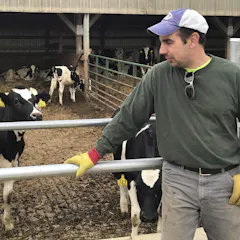
Canadian dairy farmers were already well-heeled and well-protected from world market forces, but their cash grab over something called diafiltered milk has put the entire Canadian economy at risk.

A political scientist explains why corporate lobbyists and other interest groups will thwart Trump’s efforts to strong-arm or ignore Canada.
Canada and the United States are back at the table to try to save NAFTA negotiations. Two key issues need to be resolved.
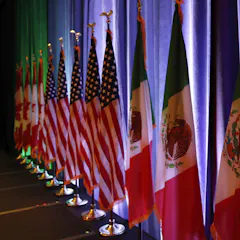
An announcement that the United States and Mexico were close to a new trade deal came as a surprise to many. How did Canada become an afterthought during the NAFTA negotiations?
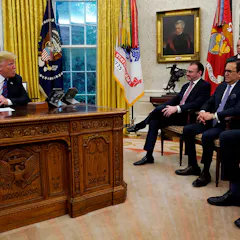
The US and Mexico announced a bilateral trade deal that pointedly excludes Canada. A economic law expert explains what it means.
The Gérard Comeau case was never just about beer. It was essentially about enabling Canada’s domestic economy across the country to thrive. Here’s how the Supreme Court of Canada got it so wrong.
Top contributors
-

Associate Professor of Political Science, Brock University
-
Associate Professor of Agri-Food Trade and Policy, University of Guelph
-
Director, Agri-Food Analytics Lab, Professor in Food Distribution and Policy, Dalhousie University
-
Associate Professor of Political Science, Georgia State University
-
Executive Fellow, School of Public Policy; Distinguished Fellow, Asia Pacific Foundation of Canada, University of Calgary
-
Professor and Distinguished Research Chair, Globalization and Health Equity, L’Université d’Ottawa/University of Ottawa
-
Assistant Professor of Economics, University of California, Merced
-
Senior Lecturer in Human Rights, Constitutional Law and Legal Theory, University of Wollongong
-
Canada Research Chair in Economy and Environment, Queen's University, Ontario
-
School of Social Sciences, Monash University
-
Lecturer in History, University of Exeter
-
Associate Professor of Political Science, Virginia Commonwealth University
-
Associate Professor of Agricultural Economics, Colorado State University
-
Associate Professor of Political Science, West Virginia University
-
FedEx Research Professor of Law, Vanderbilt University