

A new study has found that Tasmanian tigers had an adaptation found in no living carnivorous mammal.
Articles on New research, Australia and New Zealand
Displaying 41 - 60 of 782 articles

A new study in twins shows the likelihood of being trans is influenced by your genes.
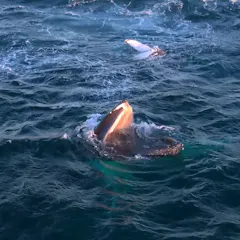
The discovery challenges a long-held assumption about where and when whales feed – and could help us better protect them.

The review found vapes containing nicotine were more effective at helping people quit cigarettes than these other methods.

Aviation safety is in the spotlight after four incidents at Sydney airport in almost as many weeks.

It turns out these little red dots might actually be evidence of supermassive black holes.
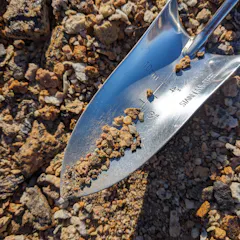
Existence is hard in the frozen Antarctic soil – and microbes use ‘horizontal gene transfer’ to share the tools that keep them alive.
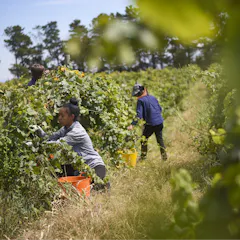
New research interviewing women involved with the federal government’s Pacific Labour Mobility Scheme shows why it needs urgent reform to stop worker exploitation.

New research suggests that with high levels of vaccination and immunity from previous infections, COVID antivirals are no longer working as well.

Brains scans show a signature linked to a dissolved separation between the self and the world.
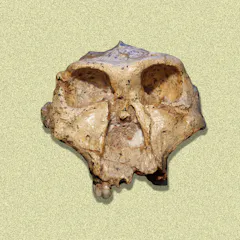
The way we classify humanity’s ancient relatives is a mess. But there’s a simple fix.

Rather than focusing only on what men should stop doing, we should also pay greater attention to the kinds of men we hope they become.

The Milky Way contains a fossil record of galaxies it has absorbed.
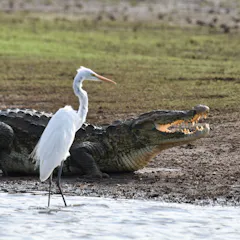
New research suggests crocodiles used to have hot blood and fast metabolisms, but gave it all up to lurk underwater waiting for prey.

What many people think of as ‘play’ may not be play at all. In fact, these interactions could cause cats stress.

Elders say there are many drivers of community violence and unrest that go unaddressed by typical law and order responses. Here’s what they’re doing instead.
Psychosis is not a diagnosis. It’s a cluster of symptoms that affect how you think and perceive reality.

The US president often provides meandering non-answers and strange speeches, but news reports omit the weirdness. Does it matter?

More than 98% of people have been tickled. But scientists still don’t understand why we do it.

In this study, interviewees saw clear connections between the psychological, economic, social and political aspects of their lives.
Top contributors
-

Senior Research Fellow, Melbourne Institute of Applied Economic and Social Research, The University of Melbourne
-
Adjunct Professor of Transport, University of Technology Sydney
-
Professor of Health Economics, The University of Melbourne
-
Professor of Geochronology, Curtin University
-
Matthew Flinders Professor of Global Ecology and Node Leader in the ARC Centre of Excellence for Indigenous and Environmental Histories and Futures, Flinders University
-
Visiting Fellow, School of Mathematical and Physical Sciences, University of Technology Sydney
-
Senior Lecturer, School of Earth and Planetary Sciences, Curtin University
-
Associate Professor, Centre for Youth Mental Health, The University of Melbourne
-
Professor of Psychology, The University of Melbourne
-
Sean Ulm is a Friend of The Conversation.
Director, ARC Centre of Excellence for Indigenous and Environmental Histories and Futures, James Cook University
-
Professor, School of Mathematical And Physical Sciences, University of Technology Sydney
-
Associate Professor of Visual Communication & Digital Media, RMIT University
-
Research Fellow, School of Biological Sciences, Monash University
-
University Fellow in Biodiversity, Charles Darwin University
-
Research Associate in Behavioural Science at the Institute for Climate Risk & Response, UNSW