

If you’re looking for #womenshealth on Instagram, a new study shows you’d better be prepared for lots of adverts dressed up as health advice.
Articles on New research, Australia and New Zealand
Displaying 21 - 40 of 782 articles

For coastal communities, understanding how tides are changing is increasingly important.

New research shares the stories of Australians with dementia who want a choice in how they live and die.

New research suggests upcoming housing investor taxes will have a less dramatic impact than many fear. But some, especially retired investors, will be worse off.

In inquiries and reviews, governments endlessly ask Indigenous communities what should be done, but rarely act on it. It’s time that changed.

Rent tech is an unavoidable part of modern renting – and renters have little control over what data they have to give up and what happens to it afterwards.

A new study unearths the deep Earth connection between Lord Howe Island and its sibling chain of drowned volcanoes.

It might appear featureless, but one of the world’s largest limestone regions hides a remarkable underground world.
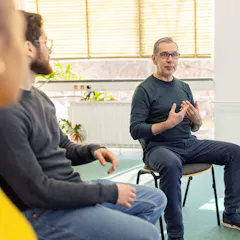
New research charts how preferences have changed over the past 45 years, and where they stand now.
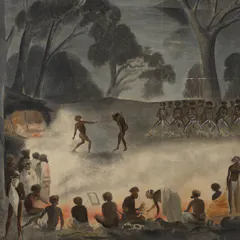
Genetic, archaeological and environmental evidence suggest the Indigenous population fell by more than 90% in the 70 years after the British invaded.

Meretneith was buried in a tomb fit for a male ruler. But for decades, debate has raged over her true royal status.

The rhythms aren’t necessarily tied to hormones, nor any other single cause.
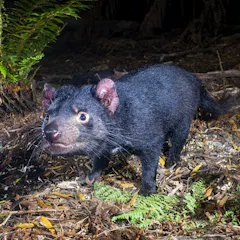
Despite their name, Tasmanian devils could be found across mainland Australia thousands of years ago.

The discovery of Gondwana’s buried bits helps settle the question of whether it was a supercontinent.
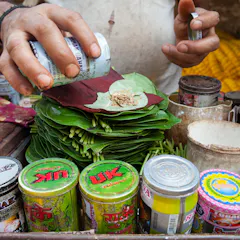
Betel nut is the fourth most-used psychoactive drug in the world – and new evidence suggests it was being used in Indonesia as long as 25,000 years ago.

Are we optimising too much?

R U OK? Day is Australia’s most recognisable mental health campaign. A study using nine years of data looked at how it affected wellbeing and access to care.
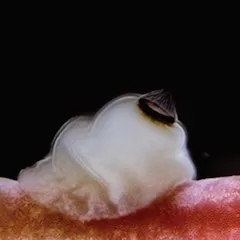
Sea sponges are some of the world’s simplest animals – but even so, the rhythm of night and day kicks off a crucial stage of their life cycle.
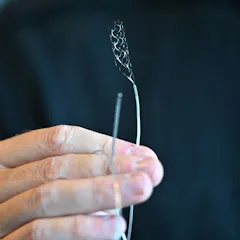
Brain implants can change people’s lives during clinical trials, but what happens next can be just as important.

A study of more than 1 million people found genetic influences on the Big Five traits that shape our personality.
Top contributors
-

Senior Research Fellow, Melbourne Institute of Applied Economic and Social Research, The University of Melbourne
-
Adjunct Professor of Transport, University of Technology Sydney
-
Professor of Health Economics, The University of Melbourne
-
Professor of Geochronology, Curtin University
-
Matthew Flinders Professor of Global Ecology and Node Leader in the ARC Centre of Excellence for Indigenous and Environmental Histories and Futures, Flinders University
-
Visiting Fellow, School of Mathematical and Physical Sciences, University of Technology Sydney
-
Senior Lecturer, School of Earth and Planetary Sciences, Curtin University
-
Associate Professor, Centre for Youth Mental Health, The University of Melbourne
-
Professor of Psychology, The University of Melbourne
-
Sean Ulm is a Friend of The Conversation.
Director, ARC Centre of Excellence for Indigenous and Environmental Histories and Futures, James Cook University
-
Professor, School of Mathematical And Physical Sciences, University of Technology Sydney
-
Associate Professor of Visual Communication & Digital Media, RMIT University
-
Research Fellow, School of Biological Sciences, Monash University
-
University Fellow in Biodiversity, Charles Darwin University
-
Research Associate in Behavioural Science at the Institute for Climate Risk & Response, UNSW