
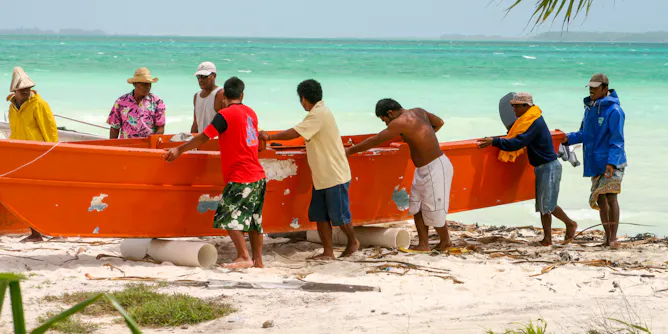
Households that relied on groundwater and rainwater consumed 381–406 grams more sugary drinks per week than those with access to a piped water system.
Articles on New research
Displaying 341 - 360 of 852 articles

Black Americans were disproportionately affected by COVID-19 infections, illness and death during the pandemic. But the long-term toll of long COVID among this group is still largely overlooked.

A narrower, more personalized ‘normal range’ could help doctors better diagnose and treat disease in individual patients.

Disarmament programs rarely collect all weapons, but handing them over is a deeply symbolic gesture.

Understanding how new neurons affect brain function throughout adulthood can offer new approaches to treating epilepsy and dementia.

Consuming adequate amounts of omega-3 fatty acids from food sources can help offset the need for obtaining the nutrients from vitamins.

Vacationers like gathering on social media to discuss their trips – like, really enjoy it. The travel industry should take note.

Summer is here and mosquitoes are ready to bite. Tracking them is important for staying on top of public health risks – and citizen scientists can help.
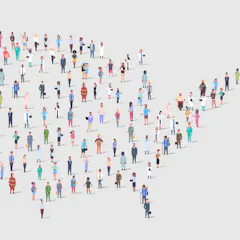
If obesity trends continue on the current trajectory, more than 80% of US adults will be overweight or obese.

The study shows cognitive processing speed increased even when participants were moderately active.

Research on artificial intelligence in marketing overwhelmingly neglects its potential negative consequences, a new study finds.
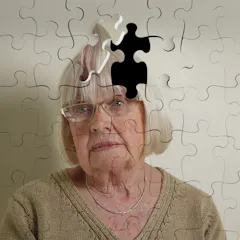
Adults who self-reported higher vulnerability toward financial exploitation showed lower thickness in a brain region that is affected early in Alzheimer’s disease.

Reading rates in Australia are falling – and price might be less of a factor than we think. We look at how Australia compares internationally, and what other countries are doing to boost reading.

Donors can get two different tax breaks when they give by turning stocks, bonds and other financial assets into charitable gifts.

New research shows melting ice is causing the Atlantic Meridional Overturning Circulation (AMOC) to slow down, with widespread consequences for the world’s climate and ecosystems.

Correspondence between Malaysia’s Mahathir Mohamad and Britain’s Margaret Thatcher showed how differently the Muslim world and the West viewed the book.

As world leaders gather at COP29 to consider reducing emissions, the latest global carbon budget shows CO₂ emissions from fossil fuels are still going up, not down, despite some promising signs.

The number of book bans in the US has soared in recent years. A new study shines light on which types of books and authors are the main targets.
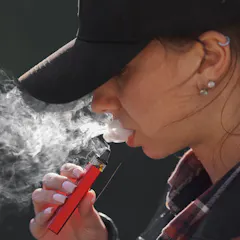
We found teenagers who’d had traumatic experiences by age 12 were more likely to be vaping regularly at 15.
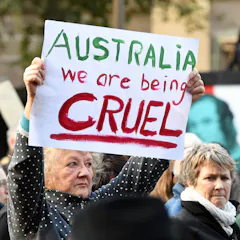
Even we were surprised at the levels of mental ill-health years after being released into the community.
Top contributors
-

Professor of Health Economics, The University of Melbourne
-
Director, Institute for Social and Health Equity, University at Albany, State University of New York
-
Senior Research Fellow, Melbourne Institute of Applied Economic and Social Research, The University of Melbourne
-
Distinguished Professor of Pharmacy Practice, University of Connecticut
-
Professor of Gerontology, UMass Boston
-
Professor of Economics and Education Policy, New York University
-
Assistant Professor of Philanthropic Studies, Indiana University
-
Assistant Professor of Educational Psychology, The University of Texas at San Antonio
-
Assistant Professor of Psychology, University of Pittsburgh
-
Associate Professor of Marketing, Wayne State University
-
Ben L. Fryrear Chair in Marketing and Associate Professor of Business Administration, University of Pittsburgh
-
Principal Research Fellow, Australian Research Centre in Sex, Health and Society, La Trobe University
-
Professor, Department of Archaeology and Palaeoanthropology, University of New England
-
Senior Research Fellow and Lecturer of Gerontology, UMass Boston
-
Associate Professor of Education, University of Southern California