
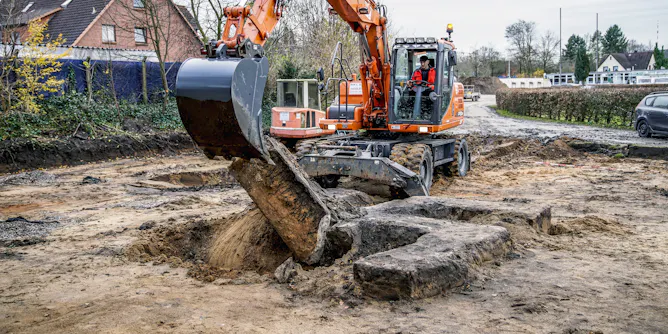
Responses to the recent discovery of a Nazi swastika raise some awkward questions.
Articles on Museums
Displaying 221 - 240 of 313 articles
What does society want and need from the arts and humanities?
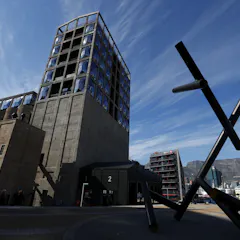
From a heritage perspective, the transformation of Cape Town’s grain elevator into an art museum delivers an innovative and creative solution to retaining and reusing industrial heritage sites.
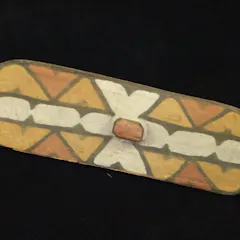
Ochre is more than just paint - it tells stories of culture and trade in Indigenous Australians. Using museum artefacts plus science can track ochre sources and untangle a lost history.
Dogs, rats, cats, cows, chickens and mice have also changed the world.
Bringing the past into a digital space creates so much more overt space for interpretation and different narratives.

Even our most anonymous objects, like the portable electric drill, are sources of cultural expression. It’s time to learn their history.

Politicians hope that a “museum of fascism” in Benito Mussolini’s hometown can help the country face its demons. Historians aren’t so sure.
Sales of antiquities legally excavated are just as ethically problematic as those likely looted.

His rise was just as swift as his fall. To mark the painter’s 100th birthday, an art historian explores the forces – cultural, political and personal – that created a polarizing legacy.
Do you fancy a virtual stroll through the Musee D'Orsay or printing your very own Vermeer? Technology is transforming museums in a myriad of ways.
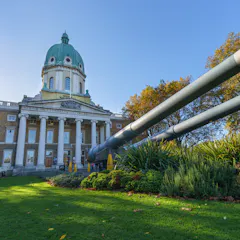
The Imperial War Museum was founded to do a very different task to that of today.
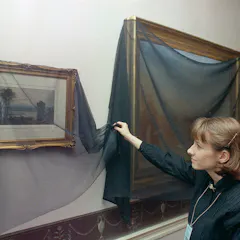
Trump has indicated he wants to eliminate the National Endowment for the Arts in his budget to save money. The impact on many US museums could be devastating.
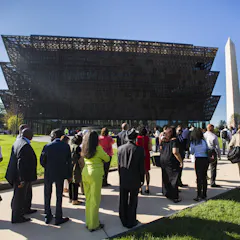
A visit to the US’s racially diverse capital finds a city girding up to survive in a racist world.
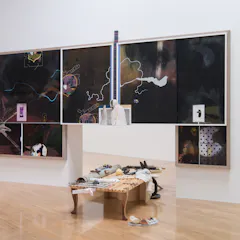
Helen Marten, this year’s winner, has revealed a sense of something progressive and pioneering.
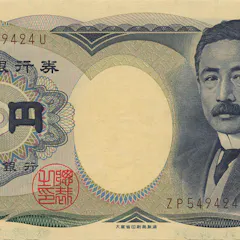
The centenary of Natsume Soseki’s death this year is being marked by numerous events, not least his resurrection in robotic form.
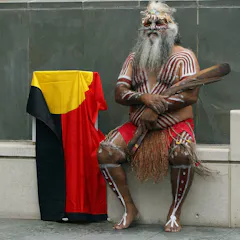
The question of repatriating objects is clearly more complex than returning human remains. It needs more debate, and more creative interventions to move beyond the current impasse.
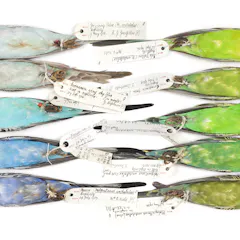
The way humans see and engage with the natural world is anything but natural.
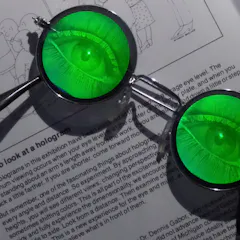
When technologies let us down, they tend to be forgotten. There’s a very good reason why this should be resisted.
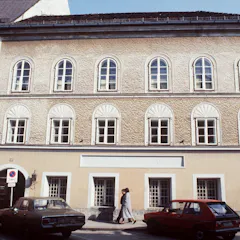
In the past, demolishing the dictator’s residences created a void exploited by Nazi sympathizers.
Top contributors
-

Professor of Public Humanities and Director of the ANU Humanities Research Centre, Australian National University
-
Assistant Director of the University Museum of Zoology, Cambridge, University of Cambridge
-
Ruth Coulter Heede Professor of Art History, Case Western Reserve University
-
Honorary Professor, Edith Cowan University
-
Professeur de Marketing, EDHEC Business School
-
Associate Research Professor of Anthropology, University of Colorado Denver
-
Lecturer, The University of Queensland
-
Associate Professor in Ancient History; Director, Australian Centre for Ancient Numismatic Studies, Macquarie University
-
Eminent Scholar and Professor of Economics Emeritus, Auburn University
-
Postdoctoral research fellow, RMIT University
-
Director, Centre for Cultural Materials Conservation, The University of Melbourne
-
Lecturer, University of Glasgow; University of Nigeria
-
Lecturer in School of Art History and Art Education, UNSW
-
Senior Lecturer School of Art History and Art Education, UNSW
-
Senior Curator of Australian and First Nations Art, National Gallery of Victoria, The University of Melbourne