

New research explores the wide-ranging consequences of record low summer sea ice in Antarctica. From more ocean warming to extra icebergs, it’s bad news we must hear.
Articles on Melting of polar ice caps
Displaying all articles
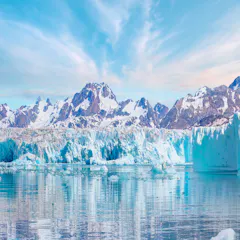
Greenland is key to understanding rising sea levels and the balance of global climate systems.
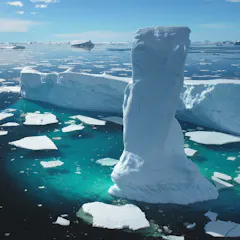
New research shows melting ice is causing the Atlantic Meridional Overturning Circulation (AMOC) to slow down, with widespread consequences for the world’s climate and ecosystems.
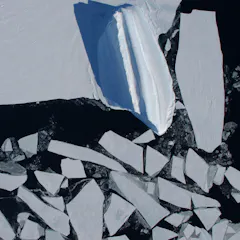
The rhythmic expansion and contraction of Antarctic sea ice is like a heartbeat. But there’s been a skip in the beat. Deeply concerned scientists have released a diagnosis for policy-makers.
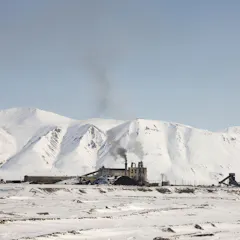
A Pandoravirus has been revived after remaining dormant in the Siberian permafrost for nearly 50,000 years.
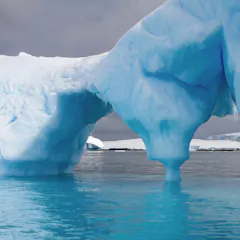
The findings underscore the urgency of limiting global warming to below 1.5°C, to avert the most catastrophic climate harms.

A particularly stormy winter has pushed perennial sea ice into the Arctic melt zone.
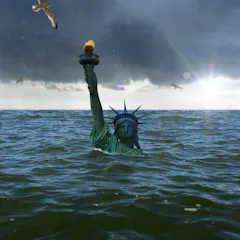
Cultures worldwide are awash with tales of great floods. What can they tell us about the reality of a wetter world?
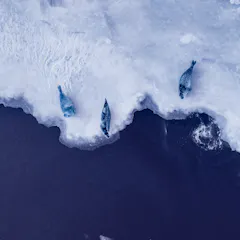
New research shows that warming by more than 2°C could be a tipping point for Antarctica’s ice sheets, resulting in widespread meltdown and changes to the world’s shorelines for centuries to come.
Top contributors
-

Senior Research Associate in Physical Oceanography, University of Tasmania
-
Professor of Medicine, University of East Anglia
-
PhD Candidate, London NERC DTP & Centre for Polar Observation and Modelling, UCL
-
Professor, National Oceanography Centre, University of Southampton
-
Transdisciplinary Researcher & Knowledge Broker, CSIRO
-
Professor in Earth Sciences, Te Herenga Waka — Victoria University of Wellington
-
Physical oceanographer, CSIRO
-
DPhil Candidate in Contemporary English Literature, University of Oxford
-
Professor, Climate Change Research Centre, UNSW
-
Post-doctoral Research Fellow, Climate Change Research Centre, UNSW
-
Profesor, Departamento de Geografía, Universitat de Barcelona
-
Catedrático del Centro Singular CRETUS. Departamento de Edafoloxía e Química Agrícola, Universidade de Santiago de Compostela
-
Profesor Ayudante Doctor. Departamento de Geografía y Geología, Universidad de León
-
Postdoctoral Research Assistant in Paleontology, GNS Science