

Scientists have discovered the most distant hydroxyl megamaser ever detected. This is a natural space laser.
Articles on meerkat radio telescope
Displaying all articles
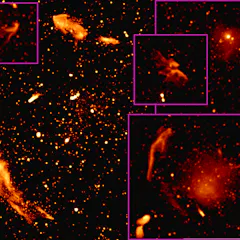
South Africa is using homegrown technology to answer questions about where our universe came from and where it is going.
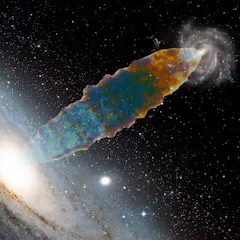
Understanding the evolution of radio galaxies is crucial for unravelling the broader processes that shape the universe.
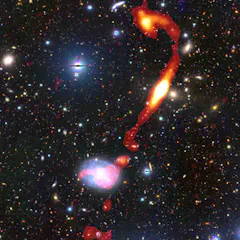
It’s been a bit troublesome to understand the physics behind what’s going on with Inkathazo.
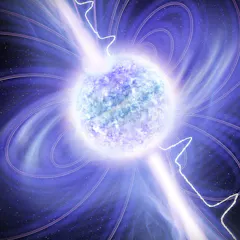
The slowest ‘cosmic lighthouse’ ever found challenges our understanding of how neutron stars work.
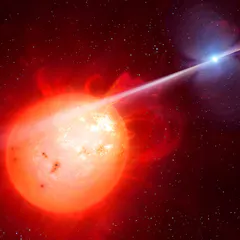
By searching sparsely populated regions of the galaxy, astronomers have for the first time found the source of a kind of signal that has puzzled them for years.
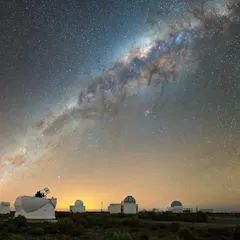
The first International Astronomical Union General Assembly was held just over 100 years ago, in Rome, Italy.
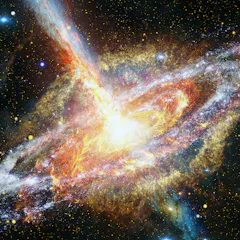
A slowly flickering source of radio waves that changes over time might be a neutron star or a white dwarf – but its behaviour doesn’t quite fit any of our theories.

MeerKAT has made remarkable contributions to South African and international science.
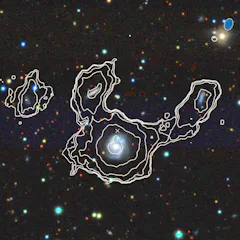
An attempt to study gas in one galaxy with the MeerKAT radio telescope detected 49 other galaxies instead.
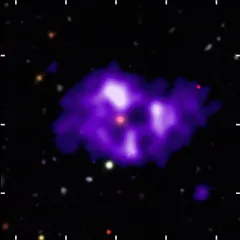
Machine learning is becoming an indispensable tool in astronomy by sorting through enormous datasets from telescopes.
Top contributors
-

Senior Lecturer in Astrophysics, University of Sydney
-
Research Associate, Curtin University
-
Staff Scientist at the South African Radio Astronomy Observatory and Senior Lecturer in Astronomy, University of the Western Cape
-
Research Scientist, Space and Astronomy, CSIRO
-
Distinguished Professor at the College of Science, Engineering and Technology, University of South Africa
-
Radio Astronomer, Curtin University
-
PhD Student in Radio Astronomy, University of Sydney
-
Lecturer, University of Cape Town
-
Postdoctoral researcher, University of Pretoria
-
Postdoctoral research fellow, Rhodes University
-
South African Radio Astronomy Observatory (SARAO) post-doctoral researcher, University of Pretoria
-
Associate Professor of Astronomy, University of the Western Cape
-
Director: Wits Centre for Astrophysics; SKA Chair in Radio Astronomy, University of Cape Town; Inter-University Institute for Data Intensive Astronomy