

A new study has identified seven types of teen readers. It also found about 30% do not read in their free time.
Articles on Literacy
Displaying 81 - 100 of 330 articles
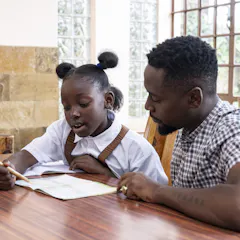
Studies show that teaching parents how to support their children can lead to improvements in literacy.
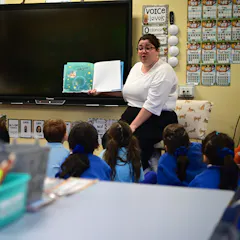
A new Grattan Institute report provides a plan to ensure at least 90% of Australian school students can read well.

Many English teachers are thinking seriously about how gaming applies in their classrooms. But opinions are divided about how to approach it.

The fanfare and hype around the results risks obscuring the big picture.
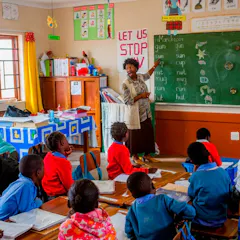
The teachers did not often adapt their practices to suit their specific cultural and linguistic contexts.

The good news is, it’s perfectly OK for children to watch and repeat. In fact, it can help them learn.

NAPLAN results alarmingly show almost one in three Australian children don’t meet the expected standard in Year 3.

The language and speech technology has been developed to provide linguistic accuracy and is grounded in teaching principles.

There is growing evidence suggesting difficulties with reading and mental health may be related in some children.

Most Ghanaian footballers have poor levels of financial literacy and financial behaviour.

A report from the Saskatchewan Human Rights Commission outlines government and school responsibilities for educating students with disabilities and calls for changes in reading instruction.

Low levels of literacy cost the US more than $2 trillion every year.

Overall, differences in teachers’ subject knowledge could explain a third of the differences in student learning between the 14 countries.
For many educators, structured literacy is a step in the right direction to improving New Zealand’s falling literacy rates. But educators need to remain adaptable as the science of reading evolves.
According to this year’s NAPLAN results, one third of Australian students do not meet minimum achievement levels in literacy and numeracy.

You stayed up all night to make a Book Week costume – but now your child won’t wear it. In fact they don’t want to go at all. Here are some ideas to try.

Students who perform below standards in Year 3 require more support to catch up to their peers.
School students can fall behind for many reasons. From missing school to learning difficulties and problems at home.

A new study investigated children’s use of Kriol language at the Wugularr School in the Northern Territory.
Top contributors
-

Professor, School of Education, University of Southern Queensland
-
Associate Professor in Language, Literacy and TESL, University of Canberra
-
Associate Professor, University of Southern Denmark
-
Professor, Werklund School of Education, University of Calgary
-
Associate Professor, Institute for Learning Sciences and Teacher Education, Australian Catholic University
-
Professor of Education Futures, The University of Melbourne
-
Deputy CEO (Research), Australian Council for Educational Research
-
Professional Learning and Development Facilitator in Literacy Education, Te Kunenga ki Pūrehuroa – Massey University
-
School Education Program Director, Grattan Institute
-
Professor at the Australian Centre for the Advancement of Literacy, Australian Catholic University
-
Professor, Canada Research Chair in Determinants of Child Development, Owerko Centre at the Alberta Children’s Hospital Research Institute, University of Calgary
-
Professor of Cognitive Psychology, School of Education, La Trobe University
-
Professor in Language Education, member bua-lit collective, University of Cape Town
-
Associate Professor, Literacy, Edith Cowan University
-
Professor in Early Childhood Education and Community, University of Canberra