

Home languages can help children learn English and become stronger readers.
Articles on Language
Displaying 21 - 40 of 861 articles

Listen to the The Conversation’s Curious Kids podcast to hear anthropologist April Nowell explain the origins of language.

Spoonerisms can be silly and make you laugh. But linguists see something more: a rare glimpse of how the mind plans speech before we even open our mouths.

Language that fails to explicitly name women has historically excluded them. And that exclusion is an active, reversible mechanism that’s now resurfacing.

AI-powered translation tools are certainly impressive. But there is an important frontier for translation technology, one AI might never be able to breach: the poem.

Adults need to guide kids’ interactions with AI, and teach the difference between talking to a machine and a human.
The way African language courses are offered at South African universities keeps social divisions in place.

Federal protections promise a fair trial in a language you understand, but for millions who speak lesser-known languages, courts can’t keep that promise.

A linguistic expert explains the techniques Enron traders used to build and retain trust in their criminal strategies.
In 1866, the topic became so controversial that the Société de Linguistique de Paris banned discussions about language origins altogether.
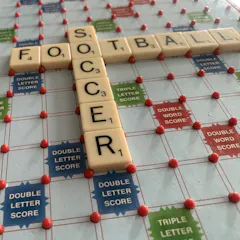
‘Soccer’ originated as a slang term in the 1880s and continues to be used around the world today. So why are some people squeamish about the term?

Chad’s language policy has inherent potential for conflict.

When someone offends us, mood has a much stronger influence than personality over how we react.
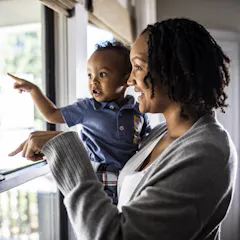
Exaggerating phrases and talking in a sing-song way can actually help, not make it harder, for young children to master speaking a language.

What should we call the words that this ultramodern technology produces? For clues, a professor looks to some of the world’s earliest authors.

There’s a difference between using a tool to assist you, and using one to replace cognitive effort.

Bubble, hoop, wiggle, bed: Some words bear an uncanny resemblance to the shape of the object or action they describe. And we tend to process them faster.
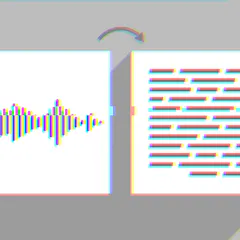
Automated speech recognition is a powerful tool – but it comes with a host of assumptions.

‘Typoglycemia’ is often shared online as a quirky insight into how our brains work. But this viral claim is only part of the story.

Lingua franca refers to any language used between people who have no other language in common.
Top contributors
-

Senior Lecturer in Linguistics, Monash University
-
Professor of Linguistics, Monash University
-
Roger J. Kreuz is a Friend of The Conversation.
Associate Dean and Feinstone Interdisciplinary Research Professor, University of Memphis
-
Honorary Associate Professor in Writing, The University of Queensland
-
Professor of English Language and Literature, University of Oxford
-
Professor of Linguistics, University of York
-
Associate Professor in Linguistics, Macquarie University
-
Professor of African Language Studies, University of the Western Cape
-
Senior Research Fellow of Linguistics, University of Colorado Boulder; Griffith University; University of New England
-
Associate professor, Universidad Nebrija; UCL
-
Associate Professor of Linguistics and Director of Language Lab, The University of Western Australia
-
Postdoctoral research fellow (Forensic Linguistics/ Language and Law), University of the Western Cape
-
Associate Professor in Language, Literacy and TESL, University of Canberra
-
Professor of Linguistics and English, Florida International University
-
Director, Office of Scholarly Communication and Publishing, University of Pittsburgh