

There’s a disconnect between how many low-wage workers are being described, and what they’re experiencing on the ground.
Articles on Language
Displaying 381 - 400 of 861 articles

New research shows that babies around the world love baby talk — and when adults baby talk to them it is good for their language development.

Second-language learners from different age groups seem to have equal chances of becoming highly proficient speakers as long as they are placed in a supportive environment.
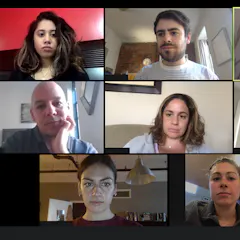
It’s remarkable how quickly we’ve all taken on a set of new words and phrases to describe the pandemic.

Most of the accused in criminal cases in South Africa would not be able to understand the record of their court proceedings.

Coronavirus reveals how macho stereotypes like toughness, aggression and control can create harm.

A new book, which weaves fiction into the origin story of the Oxford English Dictionary, was declared a hit even before its release. Readers will judge whether it lives up to the hype.

Do you know your antigen from your endemic?

A group of scientists studying Madagascar’s natural treasures also wanted to respect the island’s language.

On the month of the Francophonie’s 50th anniversary, it’s time to think about the untold story of French connections across the Canada-U.S. border

Forensic linguists are called as expert witnesses in court cases to provide linguistic analysis of legal documents and other forms of oral and documentary evidence – including emojis.

TERF is not a slur. Instead, we should use words that accurately describe how some feminists are actually anti-trans activists.

It’s all about context.

On International Mother Language Day, Canadians can celebrate multilingual heritage by recognizing flexible uses of languages.

Accents differ depending on where we’re from, even in the same country.

We created a reading-machine that finds poetry hidden in plain sight in popular books. In doing so, we are exploring Natural Language Processing, Machine Learning and reading in a digitised world.

Irony is a slippery concept. Sometimes it’s used in speech, other times it’s used to describe a situation – oh, and it can also characterize an attitude. Is its versatility its downfall?

The official naming of COVID-19 has the tone of a committee decision. Historically, names for diseases have not been quite so well thought out and were more likely to offend.

In the 1950s, ‘coming out’ meant quietly acknowledging one’s sexual orientation. Today, the term is used by a broad array of social movements.

African American Vernacular English is part and parcel of Black identity. Its distinctive linguistic features are — wrongly — denigrated.
Top contributors
-

Senior Lecturer in Linguistics, Monash University
-
Professor of Linguistics, Monash University
-
Roger J. Kreuz is a Friend of The Conversation.
Associate Dean and Feinstone Interdisciplinary Research Professor, University of Memphis
-
Honorary Associate Professor in Writing, The University of Queensland
-
Professor of English Language and Literature, University of Oxford
-
Professor of Linguistics, University of York
-
Associate Professor in Linguistics, Macquarie University
-
Professor of African Language Studies, University of the Western Cape
-
Senior Research Fellow of Linguistics, University of Colorado Boulder; Griffith University; University of New England
-
Associate professor, Universidad Nebrija; UCL
-
Associate Professor of Linguistics and Director of Language Lab, The University of Western Australia
-
Postdoctoral research fellow (Forensic Linguistics/ Language and Law), University of the Western Cape
-
Associate Professor in Language, Literacy and TESL, University of Canberra
-
Professor of Linguistics and English, Florida International University
-
Director, Office of Scholarly Communication and Publishing, University of Pittsburgh