

China’s rise to EV dominance may seem sudden – but it’s the result of more than 20 years of state investment.
Articles on internal combustion engine
Displaying all articles

More EVs are appearing on Australian roads. But the pace of change is well short of what’s need to reach emission cut goals.

A new road charge mooted for electric vehicle drivers is based on a fundamental misconception.
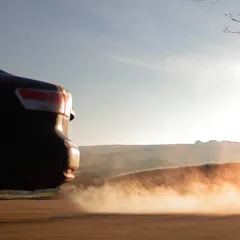
An estimated 1.5 billion petrol, diesel and LPG cars are on the world’s roads – and will be for decades. Ensuring they run cleanly is vital.

Ending Labor’s EV tax break would make it much harder to cut surging emissions in Australia’s transport sector.
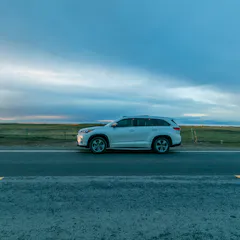
Emissions from city drivers have largely fallen, while emissions from rural and regional drivers have risen.
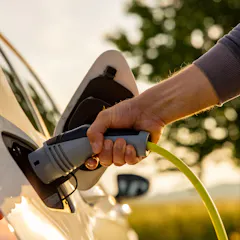
This seemingly cutting-edge technology isn’t entirely new to our century.
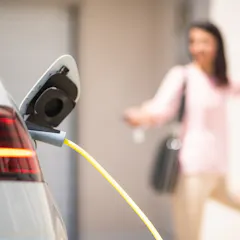
Research on how people adopt new technologies suggests the transition is now well under way.
Internal combustion engine cars still dominate global sales – it could be to do with the emotive influence they hold over drivers.
Faced with a Germany-led coalition seeking to ban internal-combustion-engine car sales from 2035, the EU needs to stay firm on its core economic principles.
Whether safety-related fixes demand a software upgrade or a trip to the dealership, carmakers must notify the National Highway Traffic Safety Administration and all affected drivers
Noise pollution is a serious problem, and cars make a lot of it. But roads are also a factor.
The sale of traditional vehicles would have to cease completely by 2038 to reach the government’s target. So where’s the plan to get there?

Ford’s electric F-150 pickup won’t roll off assembly lines until early 2022, but the company has received thousands of preorders already for a vehicle aimed at the mass market, not eco-buyers.
EVs will have lower sticker prices than gas vehicles when batteries are cheaper. Getting there comes down to knowing where to cut costs.
Time’s up for the internal combustion engine.
Top contributors
-

Professor, School of Economics, The University of Queensland
-
Senior Lecturer in Operations and Supply Chain Management, Anglia Ruskin University
-
Ph.D. Candidate in Mechanical Engineering, Carnegie Mellon University
-
Ph.D. Candidate in Mechanical Engineering, Carnegie Mellon University
-
PhD Candidate, La Trobe University
-
Professor of History, La Trobe University
-
Associate professor, Binghamton University, State University of New York; Indiana University
-
Associate Professor of Mechanical Engineering, Carnegie Mellon University
-
Emeritus associate Professor, Law Economics & Humanities, ESCP Business School
-
Distinguished Professor of History and Environmental Studies, Penn State
-
Assistant Professor of Epidemiology, Brown University
-
Affiliate Professor in Strategy/Innovation & Researcher at Square Management, ESCP Business School
-
Lecturer, School of Electrical Engneering and Computer Science, The University of Queensland; The University of Western Australia
-
Honorary Professor of Planning, The University of Queensland
-
Associate Professor, Social Science, The University of Queensland