
Some First Nations women who sustain head injuries from family violence don’t access health care and support. We studied why and found one reason is a fear their children will be taken away.
Articles on Indigenous health
Displaying 61 - 80 of 262 articles
We estimate more than 200 communities across Australia do not have community drinking water fountains. That must change.

For remote Indigenous communities, reductions in alcohol use are linked with the strength of culture, empowerment and community.

If we are to reduce the numbers of Aboriginal and Torres Strait Islander people smoking we need to consider a whole suite or approaches.
We used yarning and photoyarning to gather insights from staff and residents about the changes five decades of housing stability and support can bring about.

Alcohol and drug addiction impacts families as well as the people afflicted. Some First Nations-led centres involve families in their patients’s treatment, with beneficial outcomes.

Here’s where we could lift our game to ensure reliable, equitable and culturally safe telehealth for First Nations people in Australia, whether living remotely or in our cities.
Despite Australia spending so much money on prisons, incarcerated women’s reproductive health care is lacking to the point of being degrading.

Fetal alcohol spectrum disorder can cause problems with movement, behaviour or learning or a mix of these. In communities where alcohol use is high, a focus on FASD is warranted.

While statistics tell us the proportion of Aboriginal and Torres Strait Islander people with cancer who die is increasing, the reality is likely worse.

Cultural load is the invisible workload Aboriginal and Torres Strait Islander people take on in addition to their regular work. It’s often not formally recognised or remunerated.

Higher levels of parental wellbeing while children were young was linked with children being more physically active as they got older.
Health and service workers are not asking women about a potential traumatic brain injury, there’s a lack of referral options, and often no diagnosis.
Sometimes you just can’t wait to see a doctor. With the addition of more virtual services during COVID, these days you have more options.
The budget gets on with the job of implementing the health policies already promised. But there’s still more to do to get the new government’s policy settings right.

Government health organisations need to provide better support for Indigenous people suffering from musculoskeletal conditions.

A recent report has found First Nations children in Victoria have better health outcomes, however culturally appropriate research can better highlight what’s going well for First Nations kids’ health.
Caregivers of children with ear disease said they’d noticed them talking loudly, turning up the TV or devices, being distracted, talking in class, ‘not listening’ or not responding.
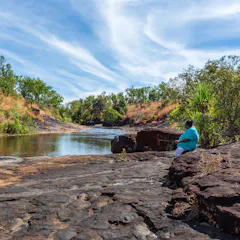
Reports of barriers facing Indigenous people with disability in remote communities are not new. Let’s stop relying on old excuses.
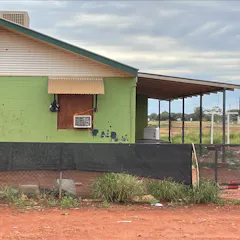
In parts of Australia that are already very hot, we show how climate change is driving inequities even further – in housing, energy security and health.
Top contributors
-

Director of POCHE Centre for Indigenous Health, The University of Queensland
-
Team Lead, Healthy Skin and Acute Rheumatic Fever Prevention, The Kids Research Institute Australia
-
Purple House Medical Advisor. Honorary ANU., Australian National University
-
Associate Professor, Indigenous Studies, UNSW ; Macquarie University
-
ARC Research Fellow in Indigenous Health, Disability and Community Development, University of Sydney
-
Honorary Enterprise Professor, School of Population and Global Health, and Department of General Practice and Primary Care, The University of Melbourne
-
Professor, Public Health Policy, The University of Queensland
-
Scientia lecturer, UNSW
-
Associate Director of Research and Senior Fellow, Yardhura Walani, National Centre for Aboriginal and Torres Strait Islander Wellbeing Research, Australian National University
-
Senior Lecturer in Social Research and Policy, UNSW
-
Professor of Indigenous Health, Executive Director, Carumba Institute, Queensland University of Technology
-
Professor of Economics and Public Policy, ANU College of Arts and Social Sciences, Australian National University
-
Associate Professor in Public Health, The University of Queensland
-
Professor and Head Clinical Research Domain, Baker Heart and Diabetes Institute
-
Head of Diabetes Clinics, Baker Heart and Diabetes Institute