
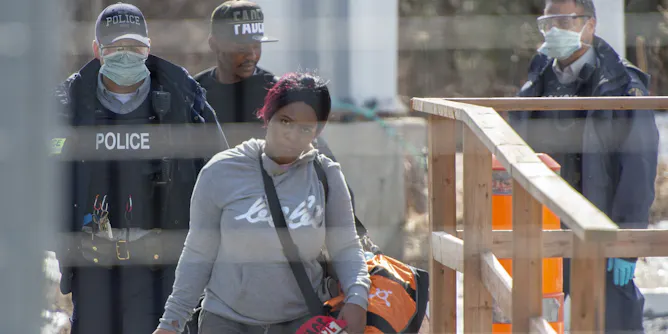
People don’t give up their right to be mobile or their right to make decisions about their lives simply because they are forced to flee untenable circumstances.
Articles on Human rights
Displaying 301 - 320 of 1134 articles
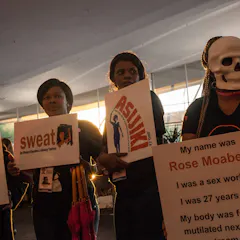
Regulating the sex work industry is the only way to protect sex workers from abuse and violence.

Politics in Ghana is heavily influenced by the Christian majority of the population.
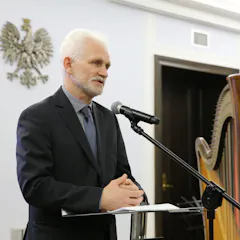
A co-laureate of the 2022 Nobel Peace Prize, the founder of the human rights centre Viasna is the fourth person in the history of the Nobel to receive this award while in prison.

Humanitarian organisations have been calling on Frontex to leave the country for months.

Australia is one of the last nations holding out against legislating the human right to a healthy environment

Every day, tens of thousands of American prisoners are locked up in solitary confinement. This is how that looks for those behind bars, and those guarding them.

Memorial embodies resistance to the radical evil of modern totalitarianism.

Imprisoned Belarus activist Ales Bialiatski, Russian human rights organisation Memorial and the Center for Civil Liberties in Ukraine have shared the award.
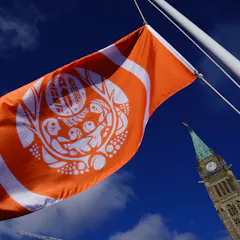
To fully implement the UN Declaration on the Rights of Indigenous Peoples, Canada must engage in genuine and inclusive law reform.

An energy crisis means the world is less likely to call out Saudi Arabia’s human rights abuses, an expert argues.
Kenya has not carried out the death penalty since 1987, but executions could resume while the law remains on the books.
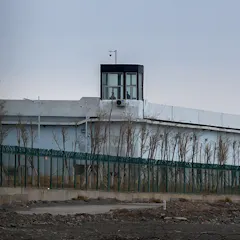
The Chinese government’s action in Xinjiang may constitute crimes against humanity, says a long awaited report from UN Office of the High Commissioner for Human Rights.
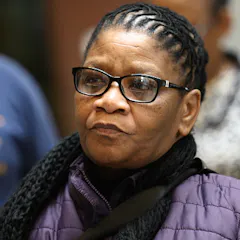
South Africa’s foreign policy is supposed to be guided by the principle of ubuntu (humanness), so a visit to an aggressor is hard to explain.

Armed conflicts today involve slavery in many different forms, from forced marriage to child soldiers.
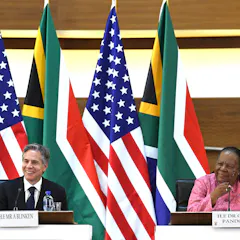
It’s unclear what practical purpose the drafters of South Africa’s foreign policy document envisaged it serving, and who its intended audience is.

Academic freedom has a positive effect on democracy, as measured by the quality of elections and executive accountability.

The lack of sexuality education, and common myths and misconceptions about the sexuality of people with intellectual disability can lead to caregivers being reluctant ‘jailers’.
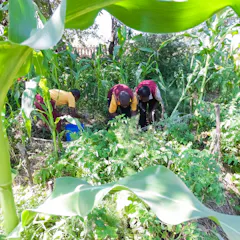
Removing a pre-existing right like cancelling the school nutrition programme is a retrogressive measure, and should only be done under very specific circumstances.
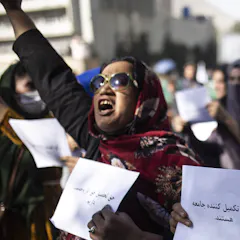
Afghan women activists, leaders and former politicians who are now in exile are telling of the continued struggle for women’s rights in Afghanistan and women’s diverse strategies of resistance.
Top contributors
-

Professor of Law, Conflict and Global Development, University of Reading
-
Professor in Human Rights and International Law, University of Newcastle
-
Sarah Joseph is a Friend of The Conversation.
Professor of Human Rights Law, Griffith University
-
Professor of Human Rights Law, Monash University
-
Professor of Law, University of Waikato
-
Professor of International Human Rights Law, SARChI Chair in International Constitutional Law, University of Pretoria
-
Professor/Senior Research Fellow, Centre for Advancement and Senior Non-Resident Fellow, Global Development Policy Center, Boston University of Scholarship, University of Pretoria
-
Professorial Fellow, University of Canberra
-
Pro Vice-Chancellor Academic Advancement & Diversity, The University of Western Australia
-
Fellow, Saint Mary’s University
-
Associate Professor of Law, Member of Deakin Cyber and the Centre for Law as Protection, Deakin University, Deakin University
-
Professor of Law, University of Waikato
-
Professor of Law; Kim Santow Chair of Law and Social Justice, University of Sydney
-
Assistant researcher, University of Sydney
-
PhD Candidate, University of Technology Sydney