
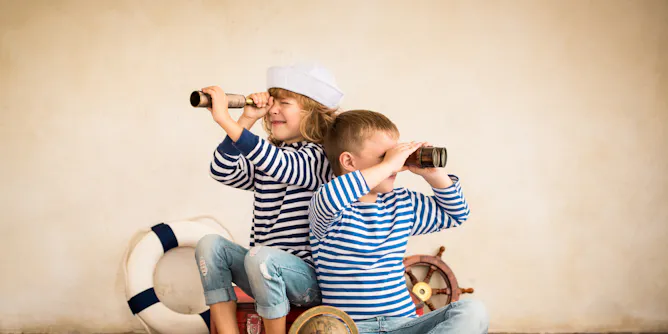
Summer can likely be full of activities that you do with your child. Here’s what research shows on how to boost your child’s creativity.
Articles on How children learn
Displaying 21 - 40 of 41 articles

Research shows that even four-year-olds feel better after an apology and view people who apologize as nicer than those who don’t.
New research has questioned the nature of humans’ impressive capacity to imitate.
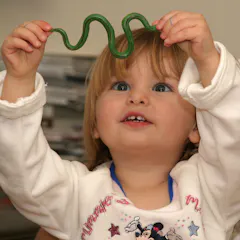
When 9- to 12-month-olds with presented with two images at once – one snake and one flower – researchers found that the babies turned their heads more quickly to look at snakes than at flowers.
What effect does music have on the developing brains of babies who haven’t even learnt to talk?
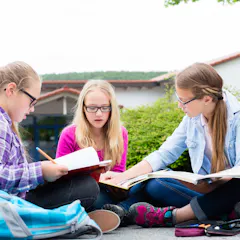
Emotional competence can help children do better at school.
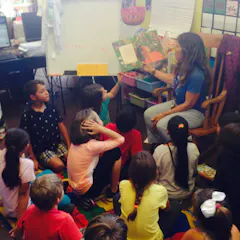
When you read to children, they develop abilities to express emotions through language.
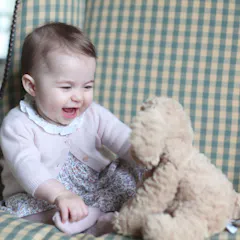
If you thought babies’ babbling was just nonsense, it’s time to think again.
Research shows babies begin to learn language sounds before they’re even born. What about babies who hear two languages from birth? Can a baby brain specialize in two languages?
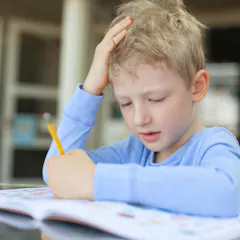
The development of ‘handedness’ and language are closely linked.

Gender is more of a flexible state than most people think. And as children, we start out thinking more flexibly about gender than we end up as adults.

Children are increasingly being exposed to more violence. The impact? They could get desensitized to violence and come to believe that it is an acceptable way to solve problems.
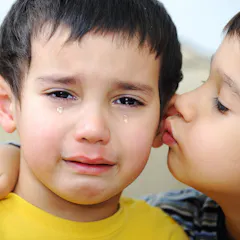
A child mainly learns empathy through imitating adults – yet another reason to treat others well.

Children have their own idea of justice, which develops fairly early. So, what’s fair sharing for children? What do they think about rewards and what is their idea of fair punishment?
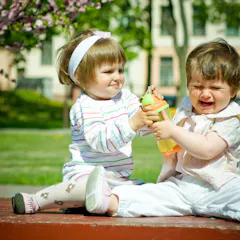
Learning how to be friendly is a longer and harder process for children than you may think.
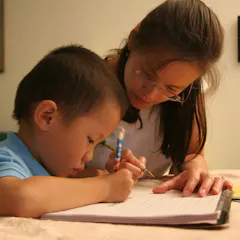
Don’t dismiss children’s early writing as scribbles. Children know more about writing, even before they learn to read.
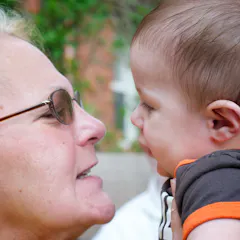
Just a few hours after birth, infants show a preference for human faces. Over the next few months, they learn from facial expressions.
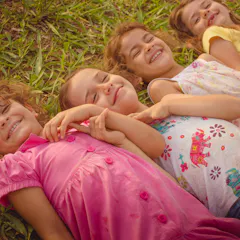
Parents take note: most kids develop a sense of self-esteem as early as age five.

The world outside the womb is full of new sensations for a newborn. New research is explaining how they navigate it.

Unless young children are totally immersed in a foreign language, they actually learn it better when they’re a bit older.
Top contributors
-

Professor of Psychology, Rutgers University - Newark
-
Research Investigator, University of Michigan
-
Postdoctoral Research Associate, Goldsmiths, University of London
-
Lecturer, Goldsmiths, University of London
-
Professor of Learning Analytics, Institute of Educational Technology, The Open University
-
Professor of Psychology, University of Reading
-
PhD candidate, Institute of Educational Technology, The Open University
-
Professor of Psychology and Head of Department, Goldsmiths, University of London
-
Senior lecturer, School of Psychology, University of Aberdeen
-
Lecturer in Early Years & Education, University of Hull
-
Former Senior lecturer in Psychology
-
Professor of Language and Literacy Education, Georgia State University
-
Associate Professor of Literature and Translation, University of East Anglia
-
Senior Clinical Lecturer in Child Psychiatry, University of Aberdeen
-
Assistant Professor of Cybersecurity Education, University of South Florida