
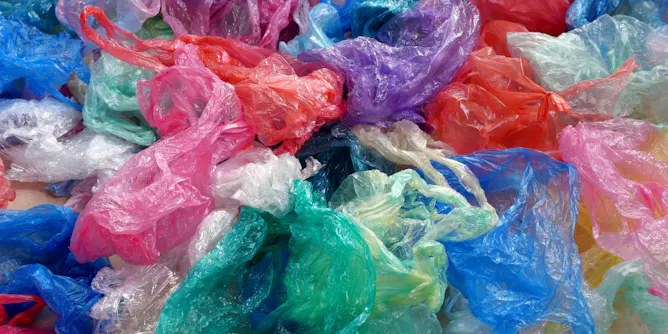
Our whole system is built to reward recyclability. But what actually matters is how much we’re manufacturing in the first place.
Articles on Household waste
Displaying all articles

Many multi-unit residential buildings are designed or managed in ways that make recycling and proper waste disposal difficult.
Damaging as it is, food waste has an end point: it decomposes, breaks down, and returns to the soil. Plastic packaging persists indefinitely.
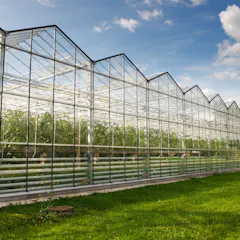
The proposed Rivenhall greenhouses could burn all household waste but the project must prove its low-carbon credentials to be more than just hot air.

A survey shows people with healthy eating habits tend to waste less food than those who focus on choosing ethical and environmentally friendly products.

Many Australians are involved in Buy Nothing groups that allow locals to ask for and give away unwanted stuff for free. They bring circular economy principles to life, but depend heavily on women.

A household survey has revealed three distinct patterns of consumer behaviour around food waste.
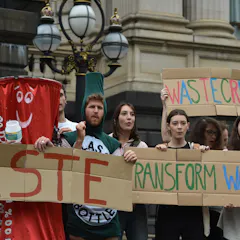
Experimenting with low-waste living shows it’s not easy being green. But householders can help policymakers design better waste management systems.
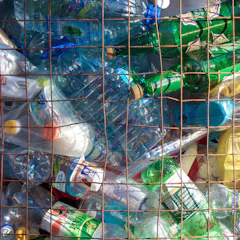
From larger-than-life Lego blocks to bird-nest inspired structures, researchers are finding innovative ways to reuse and recycle the plastic we throw away.

Cities around the world are struggling to manage their mountains of waste. We can use the Internet of Things for smart waste systems that collect, sort, reuse and recycle most of what is thrown out.
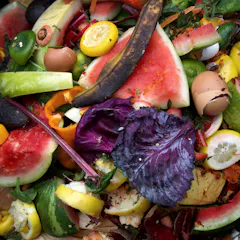
The nutritional, financial and environmental cost of an average family’s weekly food waste is shocking. It equates to five adult meals, 143 showers, $18 and 23 kg of CO2.
Top contributors
-

Research Fellow, Centre for Global Food and Resources, Adelaide University
-
Professor in Natural Resource Economics, Adelaide University
-
Professor of Sociology, Monash University
-
Assistant Professor of Applied Nutrition & Registered Dietitian, University of Guelph
-
Senior Lecturer in Accounting, RMIT University
-
Associate Professor in Human Geography, Monash University
-
Lisa Kowalchuk is a Friend of The Conversation.
Associate Professor of Sociology, University of Guelph
-
Academic, College of Business, RMIT University
-
Professor and Deputy Director (Research), Monash Sustainable Development Institute, Monash University
-
Associate Professor in Mechanical Engineering, De Montfort University
-
Research affiliate, King's College London
-
Lecturer, School of Design, Queensland University of Technology
-
Senior Research Assistant, School of Design, Queensland University of Technology
-
Grant-funded Researcher, Adelaide University
-
Postdoctoral Research Associate, Sustainability Assessment at the Grantham Centre, University of Sheffield