
The small blue Energy Star label has become one of the most recognizable environmental certifications in the US.
Articles on Household appliances
Displaying all articles
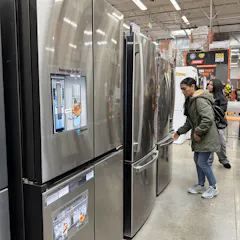
About 40% of total US energy consumption is used by household and industrial appliances, such as heating and cooling systems, refrigerators and lighting.

Australian consumers deserve a legal right to repair beyond the warranty. If we fail to keep up with the UK and EU, we risk becoming a dumping ground for cheap and nasty appliances.

A 4-year study of households has shown how the increasing focus on our homes as sites of work, rest and play can increase energy use despite soaring prices.
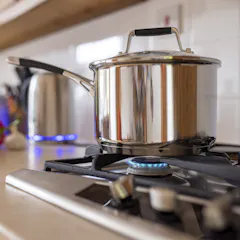
Natural gas has been marketed for decades as a clean fuel, but a growing body of research shows that gas stoves can contribute significantly to indoor air pollution, as well as climate change.

The EU energy label, showing customers the energy consumption of what they’re buying, can be upgraded to help make more homes and buildings energy efficient.
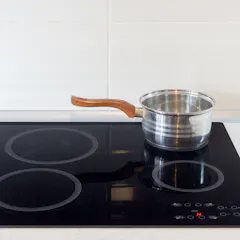
Shifting from fossil fuels to electricity is climate-friendly, but serious cooks don’t think much of electric stoves. Will induction cooking finally catch on as an alternative?
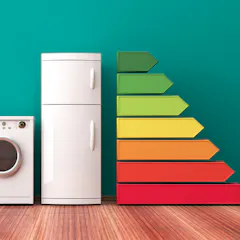
The increasing energy performance of household appliances makes it necessary to re-evaluate these informative stickers.

From its roots as an electric version of snake oil, by the 1930s vibrators were just another household electric appliance that could soothe your pains at the end of a long day.

People who use an appliance a lot save more from an energy efficient model. With the right app, they could easily get a sense of their own potential savings when they shop.
We use our fridges, washing machines and air conditioners every day. That means that we should consider much more than the up-front retail price when choosing to invest in a new one.
Top contributors
-

Associate Professor of Public Policy, Rochester Institute of Technology
-
Professor and Chair, Department of Environmental Health, Boston University
-
Director, Glowpear, Board member, ISDRS, Vice President, AHA and Senior Lecturer in Industrial Design, RMIT University
-
Associate Professor in Property, Construction and Project Management, RMIT University
-
Postdoctoral Fellow, Energy Systems Transformation (EST) Research Group, The University of Texas at Austin
-
Professor of Sustainability, Rochester Institute of Technology
-
Professor of Law, Griffith University, Griffith University
-
Research Fellow Emerging Technologies Research Lab, Monash University
-
Professor of Systems Science and Director, Clinical Science and Engineering Research Laboratory, Binghamton University, State University of New York
-
Professor of Energy Economics, co-coordinator of the Chaire Européenne de la Transition du Territoire, GEM
-
Professor of Marketing, Co-coordinator of Chaire Européenne de la Transition du Territoire, GEM
-
Professor of Economics and Behavioural Science, University of Stirling
-
Professor, Emerging Technologies Research Lab, Monash University, Monash University
-
Postdoctoral Lecturer in English, New York University
-
Professor Emeritus of Business Ethics and Political Science, University of California, Berkeley