
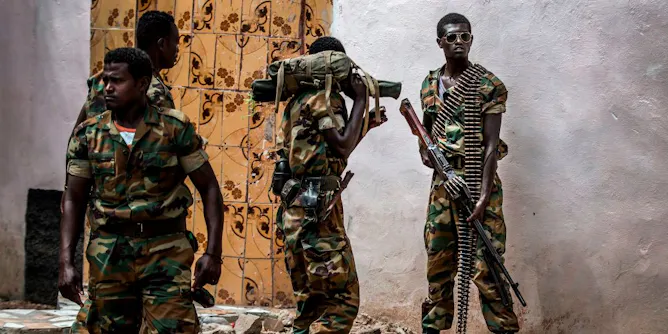
Egypt’s potentially destabilising presence in the Horn of Africa is a direct consequence of Ethiopia’s port agreement with breakaway Somaliland.
Articles on Horn of Africa
Displaying 21 - 40 of 87 articles

Turkey’s investment in Somalia is driven by regional and domestic security considerations.
The United Arab Emirates is emerging as the foreign player most invested in Sudan’s conflict.
The world’s youngest nation set a date for its first post-independence elections as intense anticipation reflects both an urgent need for stability and the high stakes involved.
Ethiopia’s macroeconomic policy shift holds the promise of significant progress, but success is far from certain.

Giraffes show remarkable genetic differences between populations.

Tehran is supplying weapons to the Sudanese Armed Forces as they fight a paramilitary group for control of the nation.
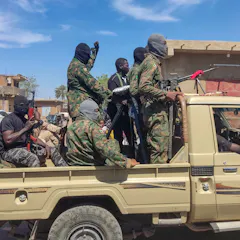
With both sides in Sudan’s civil war accused of recruiting Islamist militiamen, terrorist groups look set to capitalize on a power vacuum.
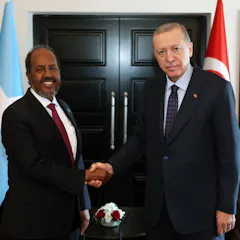
All states have limited security capabilities and they generally prioritise them close to home. where it matters.
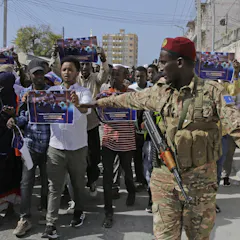
Somalia has demanded that a memorandum of understanding – which would see Ethiopia gain access to the Red Sea via a Somaliland port – be ripped up.
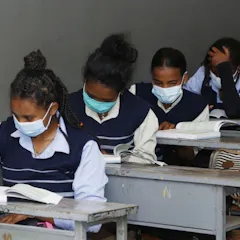
The shockingly poor exam results indicate underlying structural issues that extend far beyond the realm of individual student performance.
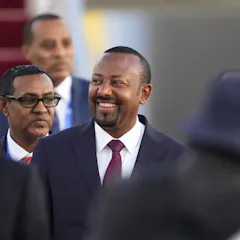
Ethiopian Prime Minister Abiy Ahmed claims his landlocked country has a right to demand maritime access to a Red Sea port from its neighbors in the Horn of Africa − Somalia, Eritrea and Djibouti.
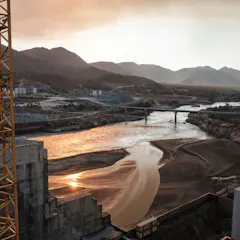
Hundreds of rivers are shared between two or more countries – this could be a source of cooperation or conflict.

Musicians established themselves in the US, where they continued to practice their cultural life, which flourished.
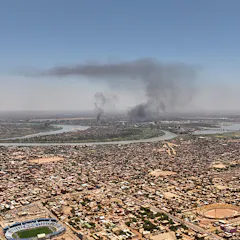
Sudan’s current conflict will have economic, social and political ripple effects across a number of countries
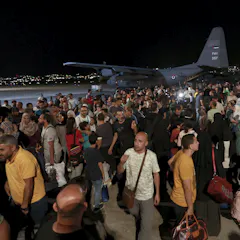
Sudan’s location and natural resources have attracted international partners keen to benefit either geopolitically or economically.
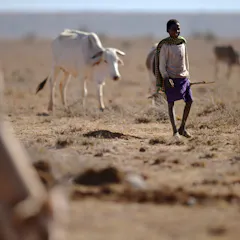
Instead of the deluge of external interventions, ways must be found to build resilience from below, drawing on local practices and networks.
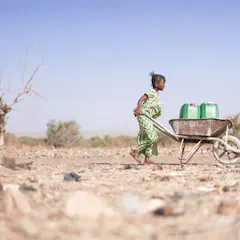
It is not the drought that causes disease outbreak, but instead the way society deals with dry conditions.
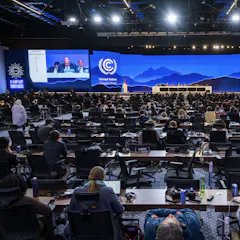
African leaders must take radical actions to strengthen the continent’s voice and participation in future events.
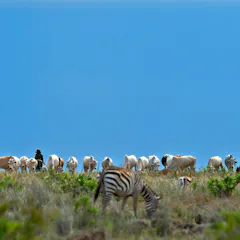
Conservation that places less emphasis on who may or may not use a piece of land could result in better outcomes for people and wildlife.
Top contributors
-

Associate Professor, Khalifa University
-
Associate Professor of International Relations, University of Trieste
-
Senior Research Fellow, Horn of Africa and Southern Africa, Institute of Commonwealth Studies, School of Advanced Study, University of London
-
Adjunct Professor and Ph.D. Fellow, Center for Constitutional Democracy, Indiana University
-
Associate Professor of Politics and International Relations, Florida International University
-
Associate Professor, History, La Trobe University
-
Researcher in Environmental Change, Vrije Universiteit Amsterdam
-
Professor of Development Studies, SOAS, University of London
-
Professor, Weber State University
-
Recognised Researcher, Imperial College London
-
Associate Professor of History, University of Washington
-
Associate Professor of International Relations of the Middle East, University of Birmingham
-
Professorial Fellow, Institute of Development Studies
-
PhD candidate, University of the Pacific
-
Assistant Professor of International Security, Department of Humanities & Social Science, Rabdan Academy