

Bereaved families strive to comprehend that there is nothing they could have done to prevent the death of their loved one. Viewing the crime-and-accident scene images can offer a path to healing.
Articles on Grief
Displaying 201 - 220 of 237 articles
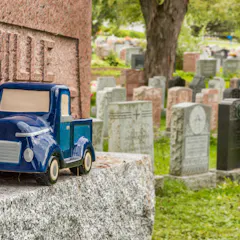
The ritual might seem strange, but a sociologist spent eight years studying it – and found that there really is a therapeutic benefit.
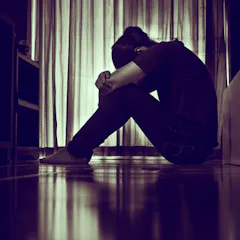
When a patient dies, grieving family and friends too often languish in neglect.
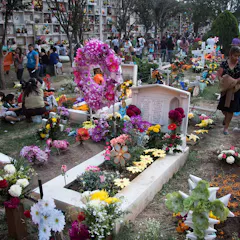
Many in the Western world lack the explicit mourning rituals that help people deal with loss. On Day of the Dead, two scholars describe ancient mourning practices.
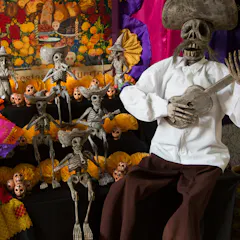
Australia has few public rituals around death, leaving people to figure out how to process grief alone. But Mexico’s Day of the Dead, with its focus on art and community, could help us cope better.

The pain of grief is part of human existence. Daoist and Confucian philosophy can help find meaning in grief.

Stillbirth deeply and profoundly affects parents and families. Here are five actions in response to this hidden tragedy.
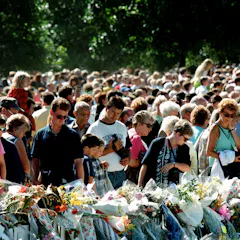
In August 1997, the death of Diana, Princess of Wales was followed by a huge outpouring of grief. Here’s why.

From spontaneous mass singing after a terror attack to Irish laments, music reflects the painful, complex and laborious task of mourning.
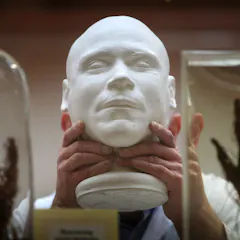
Saints’ relics, locks of hair, the laying of flowers: keeping the dead close took many forms in the past. We could learn from them today.

Mechanisms such as rhythm, shared emotions and the memory of specific events make music a powerful tool for connecting with other people.

Many are embarrassed to publicly show too much grief over the death of a dog. But research has shown just how devastating the loss can be.

After Donald Trump’s victory, a scholar says the biblical prophets can help show us the way forward: Just as there is no peace without justice, there is no healing without grief.

It’s easy to imagine the sadness that comes with a loved one’s disappearance, but there’s anger too – and admin.
The lack of suicide training provided in nursing programmes can leave nurses feeling like there is a risk of further harm to the patient.

Because we all have it in us to be strong and courageous.
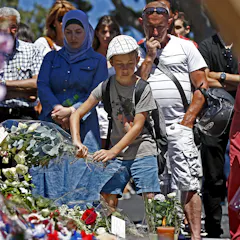
Families and friends bereaved after a sudden trauma may need both formal and informal support to help cope with their grief.
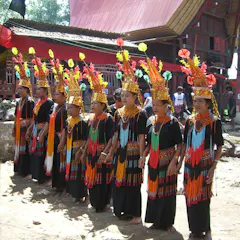
Death rituals help us to cope with loss and perhaps even feelings of guilt associated with disposing of a corpse.

Children’s perceptions of death vary with developmental stages. Understanding these is key to helping them normalise their thoughts and feelings when someone they know dies.

How do we deal with people whose emotional responses we don’t understand? Demolition does not have the answers.
Top contributors
-

Reader in Education with Psychology and Centre for Death and Society, University of Bath
-
Professor of Social Work, CQUniversity Australia
-
Honorary Research Fellow, Director of Bereavement Services Counselling & Mental Health Clinic, York St John University
-
Lecturer in Sociology, Deputy Director of the Centre for Ageing and the Life Course, University of Liverpool
-
Professor of Psychology, Curtin University
-
Professor, Social Work, University of Waterloo
-
Emeritus Professor of Creative Writing, The University of Melbourne
-
Professor of Classical Studies, Brandeis University
-
Lecturer, The Cairnmillar Institute Melbourne, La Trobe University
-
PhD Candidate, Creative Writing, The University of Melbourne
-
Professor of Sociology, Drake University
-
Personal Chair, Literary Studies, Deakin University
-
Associate Professor, School of Social Work, Lakehead University
-
Dean's Professor of Sociology and Professor of Spatial Sciences, USC Dornsife College of Letters, Arts and Sciences
-
Counseling Psychologist, Catholic University of Eastern Africa