

Human health depends on having a liveable planet and this is inextricably linked to food systems.
Articles on Greenhouse gas emissions (GHG)
Displaying 161 - 180 of 838 articles

More efficient water use is one of the most cost-effective steps we can take to cut emissions.
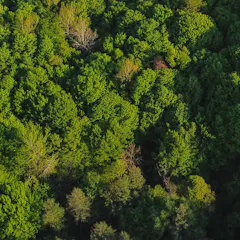
Planting trees to remove carbon from the atmosphere will only be effective alongside other strategies to reduce greenhouse gas emissions.

Australian vehicle emissions are even worse than official figures show and are likely to fall even further behind the rest of the world unless much more ambitious policies are adopted.

Large parts of Appalachia’s forests, once owned by coal companies, now make money for investors by storing carbon. But the results bring few jobs or sizable investments for residents.
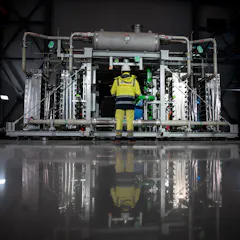
There are two approaches to producing low-emission hydrogen, and public acceptance (or rejection) of each method will be important for hydrogen and its place in the energy transition.

Technological approaches could help reduce the carbon impact of artificial intelligence systems.
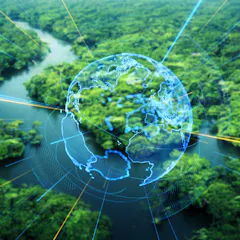
From making journeys more fuel-efficient to reducing food waste.
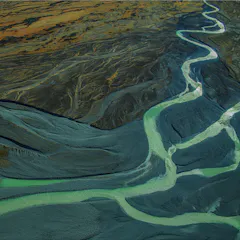
By allowing a case against local greenhouse gas emitters to go ahead, the Supreme Court of New Zealand has opened the door to a new front in climate law – one that takes tikanga Māori into account.
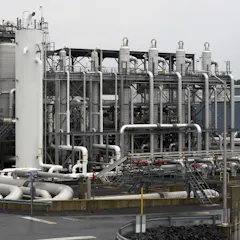
The US, a minor liquefied natural gas supplier a decade ago, now is the world’s top source. That’s good for energy security, but bad for Earth’s climate. An energy scholar explains the trade-offs.

We don’t yet fully understand what global climate tipping points mean for Australia. But we know enough to conclude the impacts of passing one or more tipping points must now be considered.
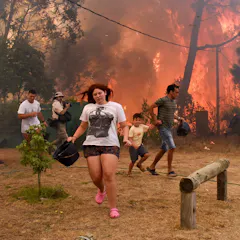
Without urgent action, Earth is heading for climate catastrophe. Yet there are reasons for hope in 2024 – including a possible peak in global greenhouse gas emissions.
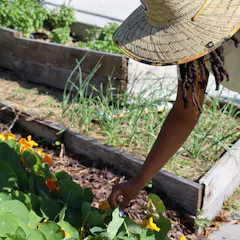
A study of dozens of city gardens and urban farms across the US and Europe found several ways to boost their benefits, not just for their neighborhoods, but for the planet.
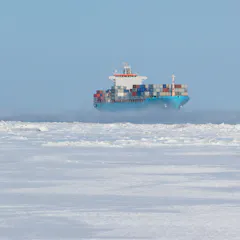
Houthi attacks on ships in the Red Sea have disrupted trade between Asia and Europe – could ships cross the Arctic instead?
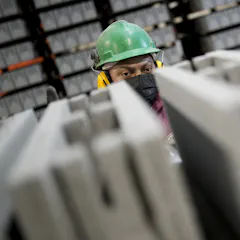
The combination of the source of the CO₂ and its end use determines its environmental and economic benefits or consequences.

Modular building techniques offer sustainable, affordable and adaptable solutions for a rapidly changing world.
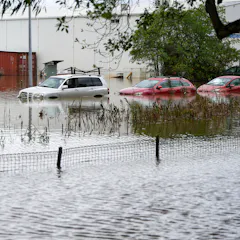
The impacts of record heat on the global water cycle were severe and wide-ranging – and the trend will continue in 2024.
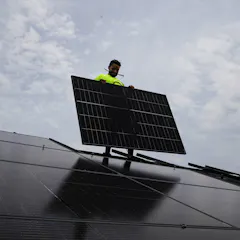
Looking to go solar? While small-scale solar delivers the best results with the least life-cycle impact, a mixed approach offers the best long-term path towards an all-electric future.

The wine industry has a major sustainability problem. Informed consumer choice can help drive real change.
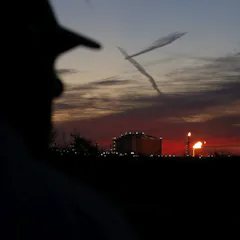
Any efforts to tackle methane emissions must first begin with measuring the intensity of those emissions.
Top contributors
-

Chief Research Scientist, CSIRO Environment; Executive Director, Global Carbon Project, CSIRO
-
ARC Future Fellow and Associate Professor in Climate Science, ARC Centre of Excellence for 21st Century Weather, The University of Melbourne
-
Research Group Leader, CSIRO
-
Associate Professor, The University of Western Australia
-
Senior Researcher, Center for International Climate and Environment Research - Oslo
-
Royal Society Research Professor of Climate Change Science, University of East Anglia
-
Director, Queen's Institute for Energy and Environmental Policy, Queen's University, Ontario
-
Professor of Physical Climate Change; Director of the Priestley Centre for Climate Futures, University of Leeds
-
Senior Research Fellow and Associate Professor, Melbourne Climate Futures initiative, The University of Melbourne
-
Honorary Fellow, CSIRO
-
Professor, School of Economics, The University of Queensland
-
Professor, Crawford School of Public Policy and Director, Centre for Climate and Energy Policy, Australian National University
-
Professor, Department of Earth System Science, and Chair of the Global Carbon Project, Stanford University
-
Research Associate, Institute for Climate Risk and Response, UNSW
-
Professorial Fellow, School of Geography, Earth and Environmental Sciences, University of Birmingham