

From the International Space Station to the twin Mars rovers, scientists and astronauts often form a deep emotional bond with the space objects they work with.
Articles on Friday essay
Displaying 81 - 100 of 400 articles
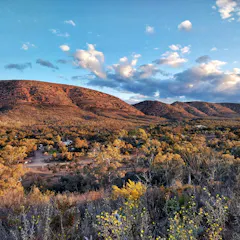
Lauren Fuge visits the Flinders Ranges with the Adnyamathanha owner-operator of an Indigenous cultural tourism centre. She asks: how did his people change the land, and how has it changed them?
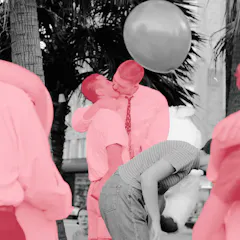
Personal activism has achieved major legislative change, such as no-fault divorce and the decriminalisation of homosexuality and abortion. But it’s also used by groups who want to reverse that change.
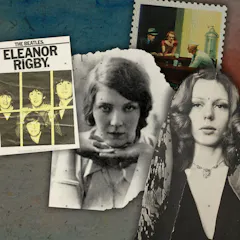
Loneliness is an enduring theme across art, music and literature. What makes us lonely, and how can we address it as a society?

Authoritarian leaders are increasingly decrying “LBGT ideology”. In Australia, we have a successful mainstream queer movement but there is no longer a broader quest to reimagine society.

For Preeti Maharaj, growing up Fiji-Indian in Australia has meant living with threats of violence.
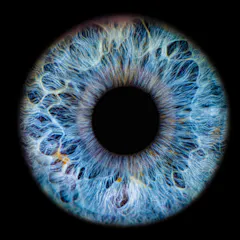
Hessom Razavi – an ophthalmologist and poet – explains the workings and wonder of the eye, and the range of emotions he experiences treating diseases caused by modern life or without a cure.

Critics have long wrestled with the question of how artists and writers influence each other. For Luke Johnson, an encounter with a painting took him in a wholly unexpected direction.

What happens when people form romantic relationships across class? Eve Vincent and Rose Butler interviewed 38 people to find out. Their candid answers are revealing.
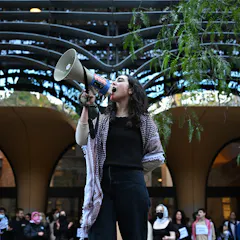
Nothing Hamas has done was comparable to October 7, and nothing Israel has done is comparable to what it continues to do since that day. Student protests, in this context, inspire a measure of hope.

The culture wars have been around forever, but keep taking new forms, and US variants threaten to spill over to Australia – as seen in the recent (overturned) ban on same-sex parenting books in Sydney.
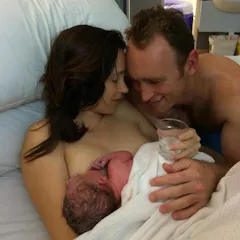
People rarely speak plainly of birth, and even more rarely spell out the details in positive terms.
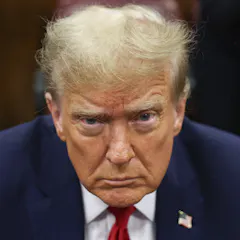
Project 2025 is iconoclastic and dystopian. Those who wish to understand Trump and the movement behind him, and the active threat they pose to American democracy, are obliged to take it seriously.

Indigenous people have long spoken about coercive practices of officials and experts around birth control, as late as the 1960s. Now historians are finding evidence in the government’s own records.

So much is being lost due to climate change, one can feel deranged. But the world still hums with beauty and astonishment – there is much for us to save.
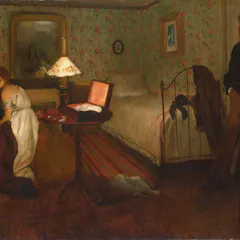
At a time when women had limited rights, writers found ways to raise the issues of coercion and control.
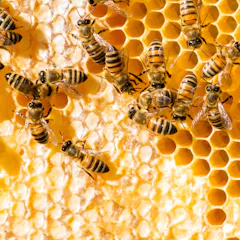
What makes us human? Greek and Roman thinkers were preoccupied with this question. And some of their observations of animals foreshadowed recent findings in the behavioural sciences.

From Russian Doll to Severance, a spate of conceptual TV series are rehearsing thought experiments challenging our assumptions about the world.
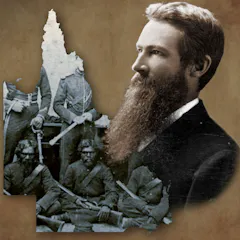
Many argue Samuel Griffith, twice Queensland premier and our first chief justice, is guilty of colonial war crimes. Raymond Evans searched for the evidence to nail him but found a different story.
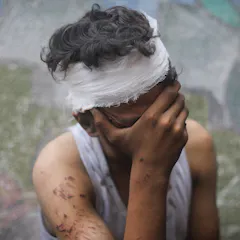
An innovative project pairs young Palestinian writers with overseas mentors. Even now, writers in Gaza are continuing to tell their stories, despite their very real fear that they might die.
Top contributors
-

Professor in Politics and Journalism, University of Notre Dame Australia
-
Associate Professor in Literary Studies, Monash University
-
Associate Professor in Creative Writing, Griffith University
-
Visiting Research Fellow, Department of English and Creative Writing, Adelaide University
-
Emeritus Professor in the History of Religious Thought, The University of Queensland
-
Honorary Professor of Classics and Ancient History, School of Historical and Philosophical Inquiry, The University of Queensland
-
Joanna Mendelssohn is a Friend of The Conversation.
Honorary Senior Fellow, School of Culture and Communication, The University of Melbourne
-
Senior Lecturer, Discipline of English and Writing, University of Sydney
-
PhD Candidate, Creative Writing, The University of Melbourne
-
Associate Professor (adjunct) in Creative Writing, Flinders University
-
Emeritus Professor of Creative Writing, The University of Melbourne
-
Lecturer, Deakin University
-
Professor Emeritus of Media and Culture, Griffith University, Griffith University
-
Professor of English, Flinders University
-
Research Fellow, Digital Cultures & Societies, The University of Queensland