
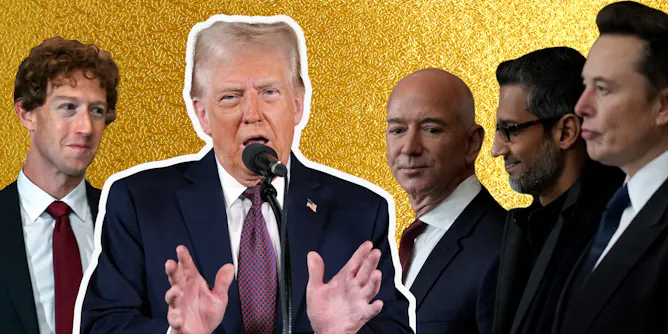
Donald Trump has cited the Gilded Age era as an inspiration – but experts say it was rife with government and business corruption, social turmoil and inequality.
Articles on Friday essay
Displaying 61 - 80 of 405 articles
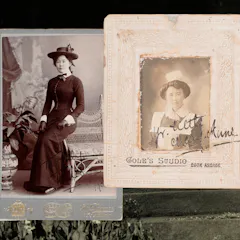
In 1903, Miles Franklin went undercover to investigate the ‘servant question’. The exploitation she saw continues today.
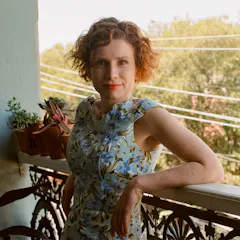
It wasn’t until she’d been in the medical system for around 17 years, being treated for anorexia, that Fiona Wright was diagnosed as autistic.
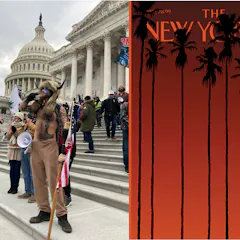
On its 100th anniversary, Matthew Ricketson considers The New Yorker’s remarkable journalism and vital role in our chaotic, algorithm-driven world.
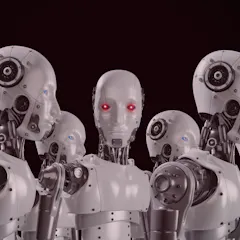
How might a super-intelligent machine take control? And what can be done to stop it happening?
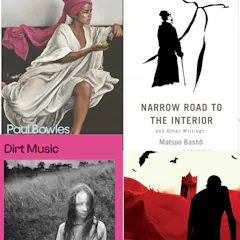
Reading, writes Edwina Preston, is a way of journeying on the wings of others without moving from the armchair (or bed). Here are some books to transport us.
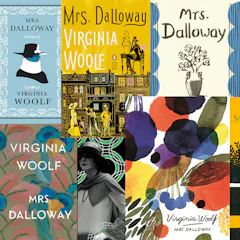
Virginia Woolf’s classic Mrs Dalloway was revolutionary for its challenge to the novel form and its representation of time.
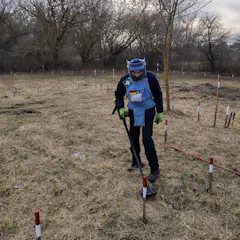
‘Smart-mines’, ‘toe-poppers’, trip-wire: Russia has planted millions of such devices in Ukraine. One NGO, now employing Australia’s former ambassador to the country, is bravely tackling the problem.

Paradoxically, the very scale of the crisis in Gaza makes worthwhile even the tiniest gesture of solidarity.
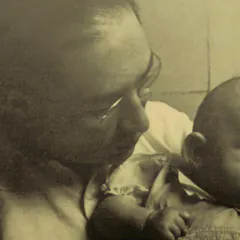
On May 15, 1938, Chaim Manne, his wife Leonora and their young son tried to escape Nazi Austria by gassing themselves. Leonora succeeded. Chaim’s ordeal was just beginning.
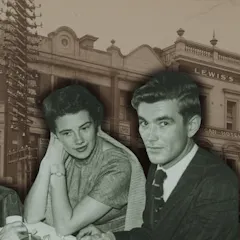
Mid-century Melbourne was an exciting place, writes Lisa French. And her artist father, like others including Germaine Greer and Barry Humphries, found his tribe at a packed, beer-soaked city pub.
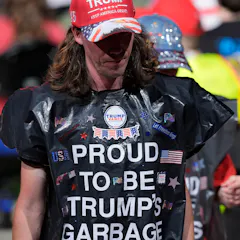
It’s claimed that more information can solve our crises, from climate change to Gaza. But the world today shows how this vision of reason has tipped over into unreason, anger, and barbarism.
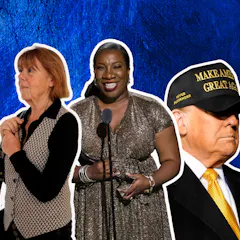
With the re-election of Donald Trump, the sex-trafficking allegations against Sean ‘Diddy’ Combs and the Gisele Pelicot case, #MeToo is in the news. Three new books reflect its key themes.

Prudence Gibson meets the woman behind the world’s most poisonous garden, and explains why even common plants such as azalea and dumbcane deserve our respect.
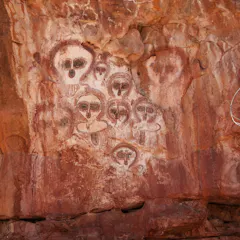
About 65,000 years ago, people started making art in the country we now call Australia. This is their story.
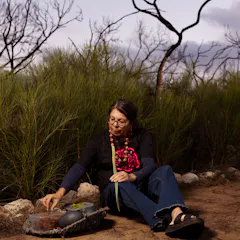
Charmaine Papertalk Green sifts through the violent, traumatic colonial archive, to know more about her Old People. It’s heartbreaking work, but a sliver of information can make a world of difference.

War is escalating in the Middle East and continuing in Ukraine, Sudan and Myanmar. Gun violence in the US is ballooning, too. How do our cultures nurture violence? And can we change?
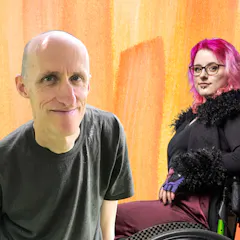
In our post-COVID age of climate change catastrophe, disabled people are ideally equipped to imagine how to overcome barriers to an inclusive world. Andy Jackson led a collaboration of disabled writers.
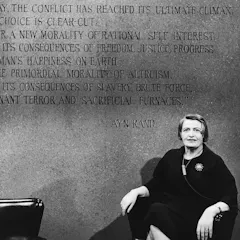
The shadow of Ayn Rand (beloved by Donald Trump and Elon Musk) looms large over new novels by Lexi Freiman and Lionel Shriver, which satirise cancel culture. One of them is a useful critique of our age.
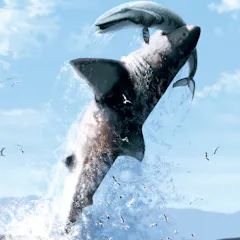
Megalodon, the giant shark species that disappeared around 3.6 million years ago, was the most ferocious creature that ever lived. What do we know about it?
Top contributors
-

Professor in Politics and Journalism, University of Notre Dame Australia
-
Associate Professor in Literary Studies, Monash University
-
Associate Professor in Creative Writing, Griffith University
-
Visiting Research Fellow, Department of English and Creative Writing, Adelaide University
-
Emeritus Professor in the History of Religious Thought, The University of Queensland
-
Honorary Professor of Classics and Ancient History, School of Historical and Philosophical Inquiry, The University of Queensland
-
Joanna Mendelssohn is a Friend of The Conversation.
Honorary Senior Fellow, School of Culture and Communication, The University of Melbourne
-
Senior Lecturer, Discipline of English and Writing, University of Sydney
-
PhD Candidate, Creative Writing, The University of Melbourne
-
Associate Professor (adjunct) in Creative Writing, Flinders University
-
Emeritus Professor of Creative Writing, The University of Melbourne
-
Lecturer, Deakin University
-
Professor Emeritus of Media and Culture, Griffith University, Griffith University
-
Professor of English, Flinders University
-
Research Fellow, Digital Cultures & Societies, The University of Queensland