
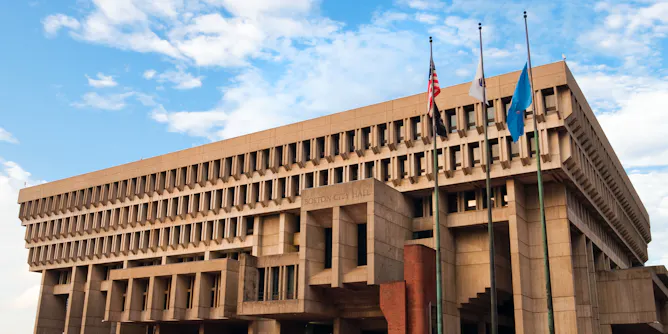
Shurtleff v. Boston, a case argued before the Supreme Court on Jan. 18, raises important questions about free speech and religion in public spaces.
Articles on Freedom of speech
Displaying 81 - 100 of 228 articles

A higher quality discussion emerged among commenters allowed to use personas instead of their real names.
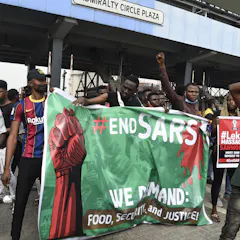
Young people’s use of technology such as Twitter shows that they are interested in politics and governance and have found a way to participate.
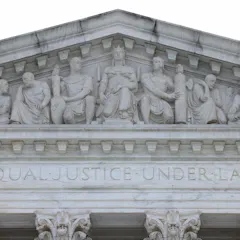
The Supreme Court is a leading player in enacting policy in the US. But it has no army to enforce its decisions; its authority rests solely on its legitimacy.

Freedom of speech is a human right. But it comes with limitations, such as using the right to incite violence. Conversations around these concepts are a part of democratic education.

The Indonesian government is criticised for using the pandemic as an excuse to repress.
The court has lived up to its promise in most cases, issuing some progressive and ground-breaking decisions and remedies.
Recent changes to defamation laws may give political commentators more room to manoeuvre, but up-and-coming satirists will still face challenges to safely practice their craft.

Will recent acts of violence against Muslims in Canada lead us to see what we should have seen earlier — that anti-Muslim works are hate speech that encourage violence against Muslims?
In a 6-3 ruling, the court’s majority said the requirements violated donors’ First Amendment rights by subjecting them to potential harassment.
A Supreme Court ruling about a student’s free-speech rights won’t stem the torrent of crude, disrespectful speech in American society.

The Mahanoy v. B.L. ruling did not give schools or free-speech advocates the clear lines they may have wanted, but it did attempt to address some of the complexity of modern-day speech.
The decisions made by Facebook through its content moderators and Oversight Board have significant implications for the exercise of worldwide freedom of expression and speech.
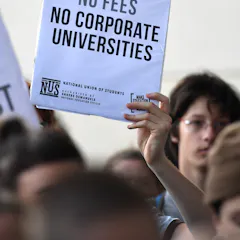
The issues dominating public debates about academic freedom are not where the greatest threats lie.

The First Amendment to the US Constitution protects Americans’ freedom of speech, so much so that even the most hateful speech has the right to be quoted.
In a country where judicial review is not constitutionally guaranteed, hate speech legislation could shackle freedom of expression and limit citizens’ rights to express themselves.
It’s concerning that tech executives can exercise so much power over who can use their platforms. But the alternative – government intervention – could be much worse.
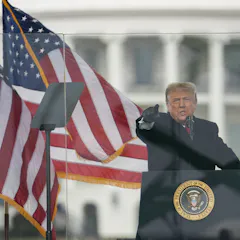
Freedom of speech emerged as a concept after the invention of the printing press, and that’s worth revisiting in the context of social media and Trump’s presidency.

Enshrining the Model Code on Freedom of Speech and Academic Freedom in legislation won’t ensure disagreements on campus remain civil. Here are some practical guidelines on how to disagree well.

Nine months into the pandemic, Indonesia has seen serious threats to civil liberties, involving not only privacy but also freedom of expression and of the press in the digital realm.
Top contributors
-

Professorial Fellow, University of Canberra
-
Deputy Executive Dean and Associate Dean (Academic), Faculty of Humanities, Arts and Social Sciences, The University of Queensland
-
Senior Research Fellow, Centre for Advancing Journalism and Information Integrity, The University of Melbourne
-
University Research Professor of Education, University of Kentucky
-
Professor Emeritus of Communication and Rhetorical Studies, Syracuse University
-
Joseph Panzer Chair in Education and Research Professor of Law, University of Dayton
-
Emeritus Professor of Sociology, University of Technology Sydney
-
Professor of Private International Law and EU law, University of Aberdeen
-
ERC Postdoctoral Fellow, Hebrew University of Jerusalem
-
Lecturer in Commercial Law, University of Aberdeen
-
Associate professor, The University of Western Australia
-
Brechner Eminent Scholar in Mass Communication, University of Florida
-
Associate Professor of Philosophy and Law, Wayne State University; Institute for Humane Studies
-
Assistant Professor of Political Science, American University in Cairo
-
Honorary Research Fellow, Department of International Politics, City St George's, University of London