
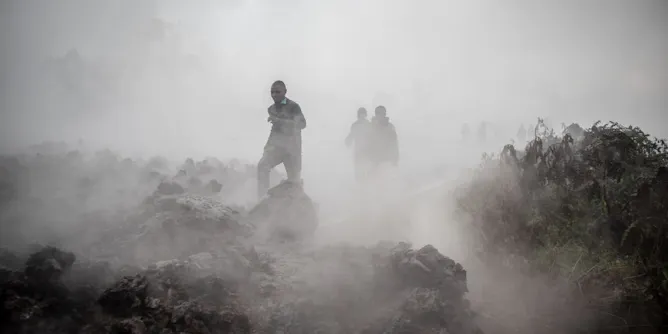
Nyiragongo is one of the most dangerous volcanoes in the world because of its fast-moving lava. It can flow at a speed of about 100km per hour.
Articles on Earthquakes
Displaying 141 - 160 of 338 articles
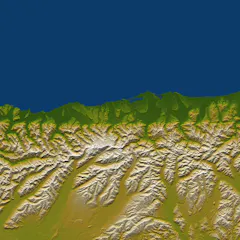
New Zealand’s Alpine Fault has ruptured in a major earthquake on average every 250 years. New research shows a 75% chance of the next one within 50 years, and it’s likely to be magnitude 8 or more.
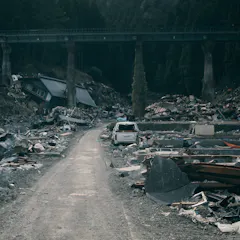
The fault line that ruptured causing the Fukushima disaster hadn’t done so for over 1,000 years.
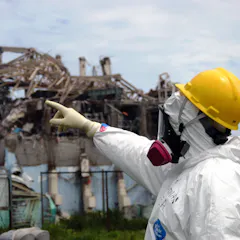
On the 10th anniversary of the Fukushima nuclear disaster, two experts explain why human choices are more important to nuclear safety than technology, and why the job is far from finished.
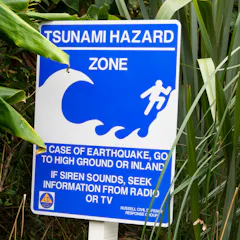
Three major earthquakes, including one magnitude 8.1 shake, ruptured along the Tonga Kermadec subduction zone, the longest such system on Earth.
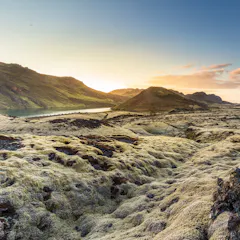
The last time south-west Iceland experienced a turbulent period of earthquakes and volcanic eruptions was in the 1300s.

When sea sediment melts inside the Earth, it helps tectonic plates slide over one another smoothly.
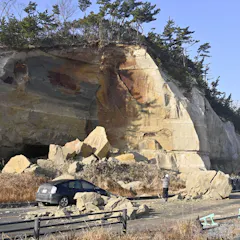
Aftershocks of a major earthquake can continue for years or even decades.
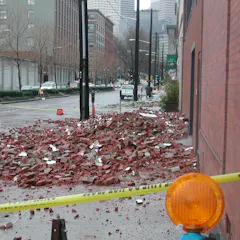
Even though Canadians and Americans living in the Pacific Northwest share the same earthquake risk, far more Canadians than American homeowners buy earthquake insurance. Why?

CC BY-NC-ND13.2 MB (download)
Earthquakes can be caused by human, or seismic, activity. Is South Africa adequately prepared?
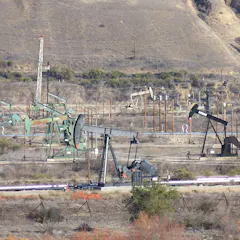
California was thought to be an exception, a place where oil field operations and tectonic faults apparently coexisted without much problem. Not any more.
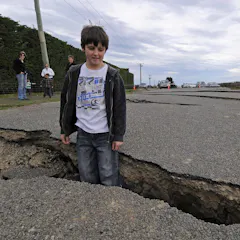
We might not be able to predict the next big earthquake, but we can make sure we’re ready for it and understand the risks.

In a recent survey, 64% of youths said they’ve experienced bushfires, heatwaves and drought in the past three years. But 88% believe they’re not taught to protect themselves and their communities.
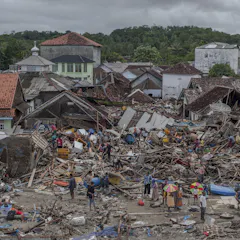
Massive landslides can trigger destructive and deadly tsunamis, and climate change could make them worse.
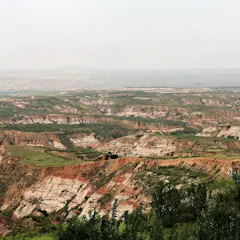
A big dip in the Earth’s crust may record an ancient continental collision from the dawn of plate tectonics.
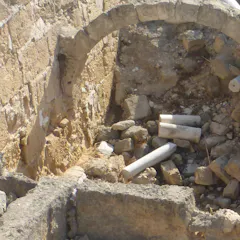
Medieval disaster response was not so different to the measures we use today.
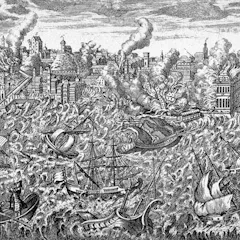
PODCAST: The second part of a series from The Anthill Podcast on how the world recovered from major crises throughout history.
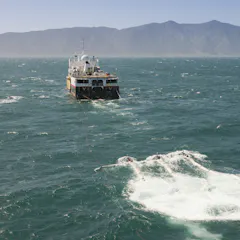
New research confirms that massive plumes of buoyant hot rock once rose from near the Earth’s core to the surface and triggered vast volcanic eruptions - and that New Zealand sits on top of one.
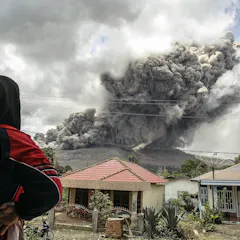
What is political will or political commitment to disaster risk reduction? Why is it important to measure political commitment? And how to measure it?
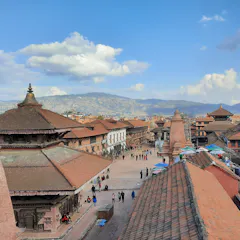
Bhaktapur suffered 300 deaths, 2,000 wounded and over 30,000 houses damaged in the 2015 earthquake. Heritage restoration has become crucial to community recovery.
Top contributors
-

Professor of Earthquake Science, The University of Melbourne
-
Earthquake Scientist, Monash University
-
Professor in Earth Sciences, Nanyang Technological University, Singapore, and Emeritus Professor of Mineral Physics, University of Cambridge
-
Adjunct Research Fellow, Curtin University
-
Reader in Physical Geography and Natural Hazards, Coventry University
-
Professor of Geophysics, Durham University
-
Professor, Australian National University
-
Honorary Professor of Tsunami Research, PANGEA Research Centre, UNSW Australia, UNSW
-
Honorary Fellow in Structural Geology and Tectonics, The University of Melbourne
-
Senior Scientist in Disaster and Climate Risk at Earth Sciences NZ & Senior Research Fellow (adjunct), Humanitarian Emergency and Disaster Management, Charles Darwin University
-
Professor of Geophysics and Department Head, Colorado State University
-
Redmond Barry Distinguished Professor Emeritus, The University of Melbourne
-
PhD Candidate & Researcher, School of Architecture, Université de Montréal
-
Honorary Professor of Hazards and Disaster Risk Sciences, University of Sydney
-
PhD Candidate in the Department of Earth Sciences, Durham University